
Vandaag of morgen in huis

Kwaliteit gegarandeerd

Welkomstaanbiedingen ontgrendelen: GRATIS bezorging | Tot 80% korting | Gratis 30 dagen JoyPlus-proefperiode
Download de app
A hand blender is ideal for soups, smoothies, sauces and baby food. With the right accessories, the same appliance can also whisk, chop or mix batter. Yet many people buy a model that does not suit the way they use it. A high wattage on the box does not tell you everything about performance, for example, and a long list of accessories will go unused if cleaning them is a chore.
This buying guide helps you assess the key differences between a stick blender, hand mixer and multifunctional hand blender.
A 800-watt hand blender sounds powerful, but the stated wattage is not the only factor that determines performance. Blade design, gearing, maximum operating time and the ingredients being processed all play a part. A 150- or 300-watt model may be suitable for soft vegetables and sauces, while a more powerful appliance offers greater reserve for thick soups or hard ingredients.
Also pay attention to the difference between rated power and maximum or peak power. Some hand mixers state a peak wattage that does not correspond to their continuous power.
A hand blender with accessories may look appealing, but check what is actually included in the box. A whisk is suitable for whipped cream or light mixtures. A chopper is practical for herbs, nuts and small portions of vegetables. For bread dough, you generally need a proper hand mixer with dough hooks.
A hand blender with whisk does not automatically replace a hand mixer. If you mainly bake, it is better to look for a model with beaters and dough hooks. If you mainly make soup, pesto and smoothies, you will get more use from a stick blender with a metal shaft and measuring jug.
With a dishwasher-safe hand blender, usually only the detachable accessories are suitable for the dishwasher. The motor housing, plug and sometimes the drive lid are not. Check the instructions before placing any parts in the dishwasher. Also pay attention to the maximum temperature; for example, the ROUNY hand blender specifies a limit of 60 °C for dishwasher-safe accessories.
For everyday use with smoothies, sauces and soup, a power rating of around 450 to 650 watts is often practical. If you regularly process thick mixtures, pesto or hard ingredients, consider a powerful hand blender rated at 800 watts or more.
More speed settings do not automatically produce better results, but they do allow you to start more gently. This helps prevent splashing. A hand blender with turbo function also provides extra speed for a limited time when processing compact or heavy mixtures. Use the turbo setting according to the instructions and avoid placing prolonged strain on the motor.
A stainless-steel hand blender has a stainless-steel blending shaft. This material is durable and is often chosen for hot preparations. Always check the safety instructions: some manufacturers recommend allowing hot liquids to cool first. The motor unit must not be immersed in water.
A plastic shaft may be lighter and is perfectly suitable for cold drinks, sauces and soft ingredients. Pay particular attention to whether it is detachable, its splash guard and how the shaft locks into place.
A non-slip handle, well-positioned buttons and a simple release mechanism make everyday use more comfortable. A rotary dial with multiple settings, as found on some Royalty Line models, allows precise adjustment. The Braun MultiQuick 1 uses a single push button for straightforward operation.
Also check:
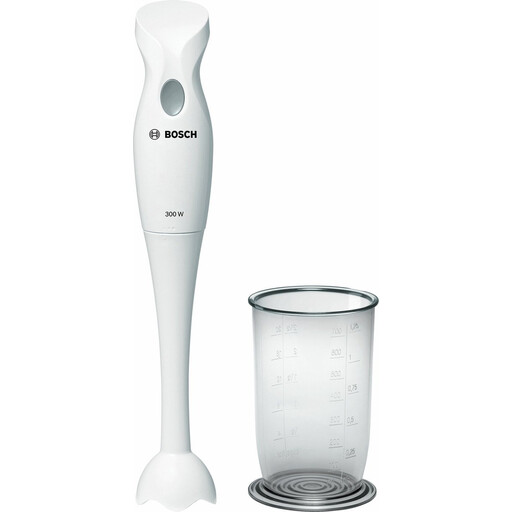
Why it suits this profile: This model is suitable for simple preparations such as smooth soup, sauce or a smoothie, without a large collection of accessories.
The specifications are clear: 300 watts, one speed and a measuring jug included. No unnecessary extra accessories are promised.
Compact design, one speed, turbo function according to the product information, and detachable parts that can be placed in the dishwasher according to the description.

Why it suits this profile: Home cooks who regularly switch between smooth sauces, chunkier preparations and chopping will have plenty of control options.
The 25 speeds and turbo function let you control the difference between gentle mixing and more powerful processing directly on the appliance.
1000 watts, a 3-in-1 chopper with three texture settings and an EasyClick system; according to the product information, the accessories are dishwasher-safe.
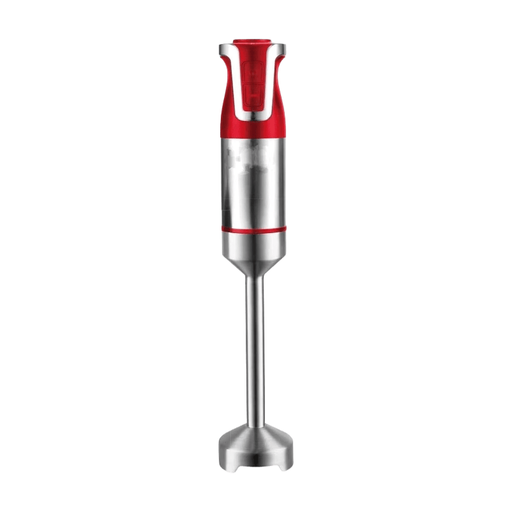
Why it suits this profile: If you often make thick soup, pesto, batter or sauces, the wide range of speed settings can be adjusted to suit different preparations.
The product listing specifically states 800 watts, 20 speeds and a turbo setting. It also states that the blending section is detachable.
Stainless-steel blending shaft, 20 speeds, turbo function, and whisk and chopper accessories according to the product description.
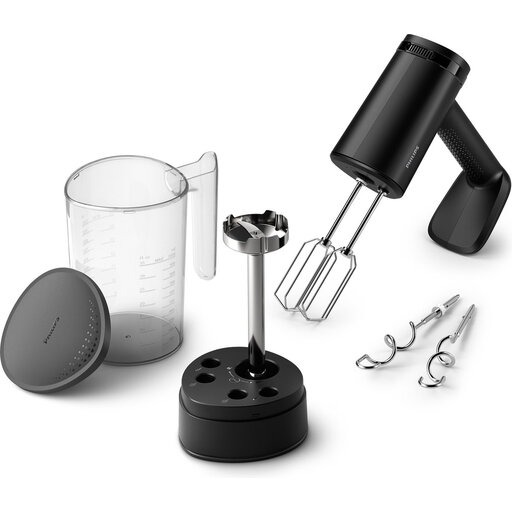
Why it suits this profile: This is a hand mixer with a blending function for anyone who makes both batter and dough as well as sauces or other soft preparations.
The functions are clearly separated: five speeds and turbo for mixing, plus a blending attachment. This means it is not a stick blender incorrectly marketed as a dough mixer.
500 watts, five speeds, turbo, blending accessory and storage cup; the product information states that the accessories are dishwasher-safe.
We have put together a complete, up-to-date list of products that fully meet these strict selection criteria and the applicable European safety regulations.
Yes. In the Netherlands, “hand blender” and “stick blender” are often used to refer to the same type of appliance: a motor unit with a vertical blending shaft. A hand mixer uses beaters or dough hooks and is primarily intended for batter, whipped cream and dough.
Its lifespan depends on how it is used, how well it is maintained and whether the maximum operating time is followed. Allow the appliance to cool down when instructed to do so in the manual, do not force hard ingredients into a small jug and clean the blades carefully. The motor unit must not be immersed in water. In the EU, many consumer products also come with a minimum two-year legal guarantee; any additional manufacturer’s warranty varies by brand and model.
A hand blender usually runs for only a few minutes per preparation. The wattage indicates the power consumed, not the total cost directly. An 800-watt model running for two minutes theoretically uses around 0.027 kWh. Actual consumption depends on the selected speed and operating time.
