
Vandaag of morgen in huis

Kwaliteit gegarandeerd

Welkomstaanbiedingen ontgrendelen: GRATIS bezorging | Tot 80% korting | Gratis 30 dagen JoyPlus-proefperiode
Download de app
A hand blender may seem simple: a motor, blending shaft and a button. However, models vary considerably in power, accessories, controls and cleaning. You often only notice you have made the wrong choice when the stick blender splashes, cannot reach deep enough into a pan or is difficult to take apart after use.
For UK households, these are the main pitfalls to watch out for:
Power is measured in watts. A basic 450 W stick blender is suitable for soft ingredients, sauces, desserts and smaller portions. For thicker purées, chopping or more intensive daily use, a model offering 600 to 1000 W may be more practical.
Also consider the number of speed settings. A single button keeps things simple, while two or more settings or variable speed control give you greater control. A powerful hand blender with 1000 W and 21 speeds, such as certain Braun models, offers more adjustment options on paper than a single-speed model. According to Braun’s product information, the MultiQuick 5 models feature a 1000W motor and 21 speeds.
Also check the maximum operating time. Some models may run for no more than one minute at a time and then need to cool down. This is particularly relevant when preparing large quantities of soup, nuts or hard vegetables. Always follow the instructions in the manual.
A well-designed blade guard helps to reduce splashing and prevents the blades from scraping directly across the bottom of a pan. This is especially important when using non-stick pans. According to the product description, the Monsga S100 has an anti-splash and pan-protection design. This is a product claim made by Monsga; treat it as a specification to check, rather than a guarantee for every preparation method.
Pay attention to the material used for the blending shaft. Stainless steel is sturdy and suitable for hot preparations, provided the manufacturer allows this. For plastic parts, check whether they are suitable for food contact and whether they are BPA-free. A blender for soup and baby food should also be easy to clean thoroughly, as residue can build up around the blade guard.
Never use a hand blender in boiling liquid if the instructions do not permit it. Portable models often have stricter restrictions: according to the product information, the Nutribullet Blender To Go must not be used with hot or carbonated liquids.
Think in advance about which functions you will actually use:
A 600 ml measuring jug is suitable for one or a few portions. For larger quantities, a 1.5-litre blender jug or a 1.8-litre food processor may be a better choice. Bear the maximum fill line in mind; a full jug may splash during blending.
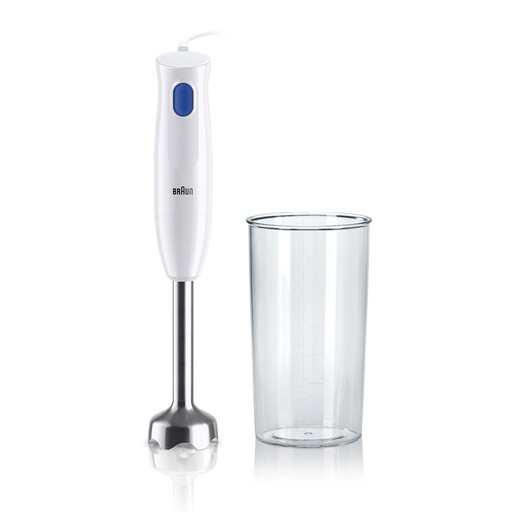
Why it suits this profile: A straightforward model for smoothies, sauces and small portions, with one control button and a supplied 600 ml measuring jug.
The product information states 450 W and simple controls. This means you do not pay for features you may not need. However, check which accessories are included with your version.
450 W, 600 ml measuring jug, EasyTwist system and several accessories that are dishwasher-safe according to the product information.

Why it suits this profile: For those who cook regularly and value control, a powerful motor and quick accessory changes.
Here, the wattage is complemented by 21 adjustable speeds and variable control. For intensive use, always check the maximum operating time in the manual.
1000 W, 21 speeds, EasyClick Plus, anti-splash function and dishwasher-safe parts according to the product information.

Why it suits this profile: A complete set for users who want to blend, whisk and chop with one appliance.
The set includes a whisk, 500 ml chopper and 500 ml measuring jug. The accessories are detachable and, according to the product information, dishwasher-safe.
Normal and turbo settings, a 36.5 cm blending shaft and an anti-splash design according to the product description.
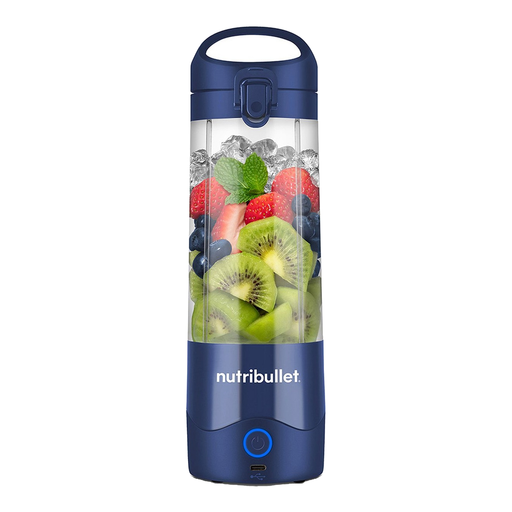
Why it suits this profile: This mini blender is designed for individual smoothies and shakes in places where no power socket is available.
The capacity is 475 ml and the blender is not designed for hot liquids. This makes it clearer what it is suitable for: cold, individual drinks rather than large hot meals.
Rechargeable battery, USB charging, 17,000 revolutions per minute, handle and leak-proof drinking lid according to the product information.
A stick blender takes up very little space and can be used directly in a pan or bowl. This makes it suitable for soup, sauces and baby food. A conventional blender usually has a fixed jug and is more convenient when you want to prepare several portions at once.
A smoothie blender, mini blender or portable blender is better suited to individual drinks. When choosing one, consider the cup capacity, battery life and cleaning requirements. The Nutribullet Flip, for example, has a capacity of 590 ml, a rechargeable battery and a stainless-steel thermal cup. According to the product information, it keeps drinks cold for up to 24 hours; this is a claim from Nutribullet’s product description.
We have compiled a complete, up-to-date list of products that fully meet these strict selection criteria and the applicable European safety regulations.
For soups, sauces, soft vegetables and smoothies, 600 W is often suitable. For hard ingredients, frequent preparation or chopping, the blade design, speed, accessories and maximum operating time are also important.
This varies by model. Check the manual and use only a suitable blending shaft and bowl. According to their product information, portable blenders often must not process hot liquids. If in doubt, allow the soup to cool first and avoid blending when the container is overfilled.
Its lifespan depends on how it is used, cleaned and whether the maximum operating time is followed. Allow the motor to cool between demanding blending sessions, clean the detachable parts immediately afterwards and never immerse the motor unit in water. In the European Union, consumers are entitled to at least the statutory guarantee of conformity; the exact rights may depend on the circumstances and applicable national rules.
