
Vandaag of morgen in huis

Kwaliteit gegarandeerd

Welkomstaanbiedingen ontgrendelen: GRATIS bezorging | Tot 80% korting | Gratis 30 dagen JoyPlus-proefperiode
Download de app
A hand blender may seem simple at first glance: switch on the motor, blend the ingredients and you’re done. Yet models vary considerably in power, controls, accessories and cleaning requirements. You often only notice you’ve made the wrong choice when you want to blend a pan of soup, mix heavy dough or find that the chopper is left in the cupboard after just a few uses.
This buying guide helps you translate marketing claims into verifiable specifications. That way, you can choose confidently between an immersion blender, a powerful hand blender, a hand blender with whisk or a model with multiple accessories.
A higher wattage does not automatically mean that every recipe will be processed faster or more smoothly. The shape of the blending foot, blade design, speed control and recommended usage time all play a part. A 450-watt model may be sufficient for smoothies, sauces and soft vegetables. For thick mixtures or frequent chopping, a more powerful model with several speeds is more practical.
Also pay attention to the difference between rated power and peak power. Some hand blenders quote the maximum peak power, while the normal operating power is lower.
A 4-in-1 hand blender sounds versatile, but check which parts are actually included. A whisk, chopper, beaker and blending foot are useful if you use them. Otherwise, you are paying for parts that take up space and require extra cleaning.
Also check the capacity of the beaker and chopper. A 500 or 600 ml beaker is suitable for smaller portions, while families may benefit more from a larger bowl or from preparing several batches one after another.
A detachable foot makes cleaning easier, but not every part is dishwasher-safe. The motor unit should generally not be submerged. Always check the manual and the information about dishwasher-safe parts.
Also check the maximum continuous operating time. Some models need to rest after one minute of use, while other product descriptions specify a longer period. This difference matters when processing large quantities of soup or heavy ingredients.
For everyday blending of soup, baby food, fruit and soft vegetables, around 450 to 650 watts is often a practical starting point. A powerful hand blender with 800 to 1000 watts provides more reserve for thicker mixtures, nuts or intensive use, but it does not automatically require less effort.
A hand blender with multiple speeds gives you greater control. A low setting is useful for gentle mixing and helps limit splashing. A high setting or turbo function can be useful for thick soups and dense ingredients. One speed may be preferable if you mainly want to blend quickly and do not need extensive controls.
A metal blending foot can withstand regular contact with warm ingredients, but always follow the temperature limits stated in the manual. Allow boiling liquids to cool first to prevent splashes and burns.
Splash protection around the blade foot helps reduce the amount of liquid escaping from the pan or beaker. Manufacturer claims about finer results or reduced splashing should be read as information provided by the brand. According to Braun’s product description, for example, PowerBell VPlus technology is designed to produce finer results; this is a brand claim, not a universal guarantee for every preparation.
Would you also like to whip cream or mix batter? Choose a hand blender with whisk. A hand blender with chopper can be useful for herbs, onions, nuts or small quantities of meat. If you regularly make bread or pizza dough, it is better to consider a separate hand mixer or stand mixer with dough hooks. A hand blender is primarily designed for blending and mixing, not as a replacement for every kitchen appliance.
Look for a push button, rotary dial, soft-start function, non-slip handle and a simple system for changing accessories. A long cord is useful when the socket is not directly next to the worktop.

Why it suits this profile: One-button operation is simple for smoothies, sauces and small everyday preparations. The set specifies a 450-watt motor, a 600 ml measuring beaker and a 350 ml chopper.
The key components and capacities are clearly specified. You are not automatically paying for a long list of accessories that you may never use.
450 watts, EasyTwist system, 600 ml measuring beaker and an included 350 ml chopper.
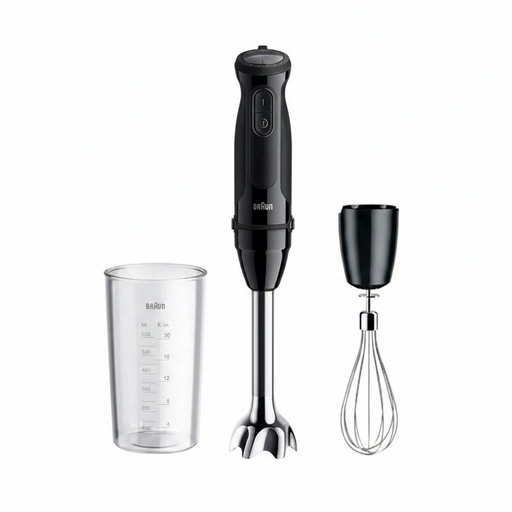
Why it suits this profile: This model is aimed at users who want precise control. The product information specifies 1000 watts, 21 speeds, a whisk and an EasyClick system.
The wattage is combined with control through 21 settings. This means you do not have to rely solely on a high number when comparing models.
1000 watts, 21 speeds, whisk, splash-reducing design and dishwasher-safe food-contact components according to the product description.
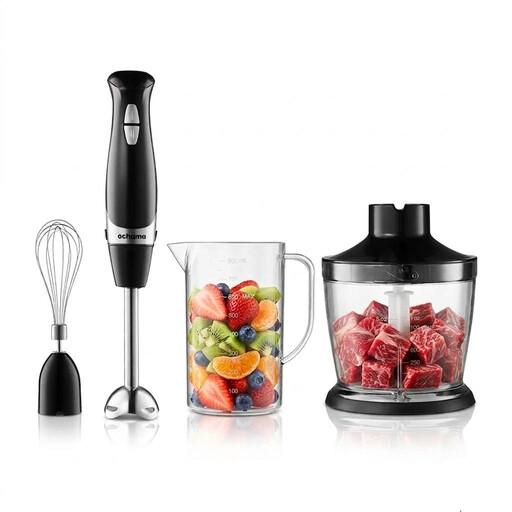
Why it suits this profile: This set combines blending, whisking, chopping and mixing. The delivery includes a whisk, 500 ml chopper and 800 ml mixing beaker.
The accessories are listed clearly, including the capacities of the containers. However, check whether you genuinely need all the functions.
600 watts, 4-in-1 setup, 500 ml chopper, 800 ml mixing beaker and two speeds.
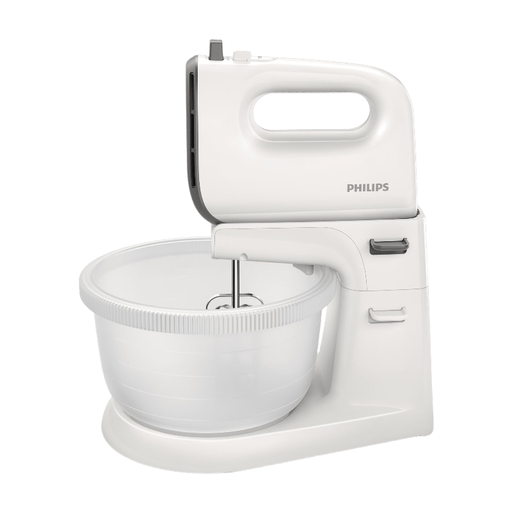
Why it suits this profile: This is a hand mixer for batter and dough, not primarily a hand blender. The set includes a 3-litre automatically rotating bowl, six speeds, beaters and dough hooks.
The clear division of tasks prevents you from using a hand blender for prolonged kneading. Check in advance whether you mainly want to blend or bake.
450 watts, six speeds, automatically powered 3-litre bowl and included dough hooks.
We have put together a complete, up-to-date list of products that fully meet these strict selection criteria and the applicable European safety regulations.
A hand blender uses a blade at the bottom of the blending foot and is suitable for soup, sauce, smoothies and purée. A hand mixer uses beaters or dough hooks and is designed for cream, batter and dough. A stand mixer with a fixed bowl offers greater stability when working with larger quantities, but it also takes up more space.
So start by identifying the main function you need. A hand blender makes more sense for everyday blending. For baking with beaters and dough hooks, a hand mixer is the better choice. A combination appliance is only practical if you use the additional functions regularly.
That depends on the model. Only use the hand blender within the temperature limits specified in the manual. Allow boiling soup to cool first and keep the blade foot fully below the surface to reduce splashing. The motor unit must not be submerged in liquid.
Its lifespan depends on how often it is used, what you are preparing, how it is cleaned and how it is stored. Overloading the appliance or using it for longer than recommended can cause wear or overheating. A detachable foot, clearly stated operating time and available original accessories make everyday maintenance easier.
A hand blender is usually only used for short periods, so total consumption per preparation remains limited. The wattage indicates the power used during operation, not automatically the energy consumption per recipe. As a result, an appliance that you use briefly may consume less electricity than a more powerful appliance that runs for longer.
