
Vandaag of morgen in huis

Kwaliteit gegarandeerd

Welkomstaanbiedingen ontgrendelen: GRATIS bezorging | Tot 80% korting | Gratis 30 dagen JoyPlus-proefperiode
Download de app
A hand blender is useful for soup, sauces, smoothies and baby food. Even so, a purchase can sometimes disappoint. A model may look powerful on paper, but prove awkward in practice because of a short operating time, limited control or accessories you rarely use.
As a Joybuy Product Recommendation Officer, I filter the most important product specifications so you can distinguish marketing claims from practical information more easily. Pay particular attention to these three pitfalls before buying an immersion blender, stick blender or electric hand blender.
A higher wattage does not automatically mean better results for every preparation. The shape of the blending foot, blade design, speed control and recommended operating time are also important.
A 150-watt hand blender may be suitable for soft vegetables and simple sauces. For thick soups, nuts, pesto or larger quantities, more power is often more practical. Also check whether the manufacturer specifies a maximum continuous operating time.
A hand blender with accessories may seem appealing, but a whisk, chopper or extra beaker takes up space. Think in advance about which tasks you actually carry out. If you only make soup and smoothies, a separate blending foot with measuring beaker is often enough. For whipped cream, herbs, nuts or chopped vegetables, a hand blender with whisk or hand blender with chopper may offer added value.
Also consider the chopper’s capacity. A small 350 or 500 ml chopping bowl is suitable for limited portions, but less convenient when you are cooking for several people.
A blending foot with hard-to-reach edges can create a lot of work after use. Check whether the components can be removed and whether the instructions state that they are dishwasher-safe. The motor unit must not be immersed in water.
The blades are sharp. Always unplug the appliance before changing an accessory or cleaning it. You should also never use a hand blender in boiling-hot liquid. The product manual specifies the permitted temperature and maximum operating time.
For light preparations such as smoothies, soft vegetables and sauces, a compact model is often sufficient. If you regularly make thick mixtures, hummus or larger portions, look for a powerful hand blender with around 600 to 1,000 watts. The stated wattage is a technical specification; on its own, it does not indicate how smooth or quickly a preparation will be.
In addition to the wattage, check:
A simple hand blender with one speed is straightforward and suitable for everyday puréeing tasks. Two speeds provide a little more control. Models with a dial, multiple settings or variable speed control are worth considering if you want to create different textures.
A low speed helps with gentle mixing and reducing splashes. A higher setting can be useful for thick mixtures, but always follow the instructions for the specific model.
A metal blending foot is generally practical for hot preparations, but always check the temperature limit in the manual. A plastic foot may be lighter and is often sufficient for cold ingredients.
A 600 to 800 ml measuring beaker is suitable for smoothies and small portions. Pay attention to its shape: a beaker that is too wide can make blending less efficient. When components come into contact with food, a clear statement confirming BPA-free components is useful. For the models listed, this is stated by the manufacturer or in the product information; check exactly which components are covered by the claim.
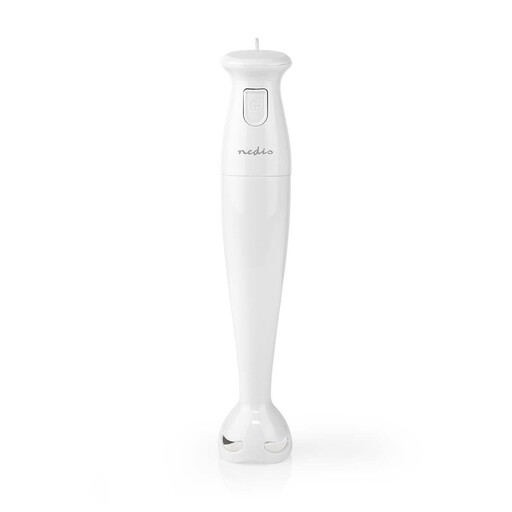
Why it suits this profile: This model is designed for simple everyday preparations such as soup, sauce, milkshakes and soft baby food. One-button operation and its compact size make it straightforward to use.
The product specifications make it clear that there is one speed, no turbo function and no chopper. You therefore do not pay for accessories you may not need.
150 watts of power, a 1-metre cord and a weight of 519 grams. According to the product information, the blending foot can be rinsed under running water.
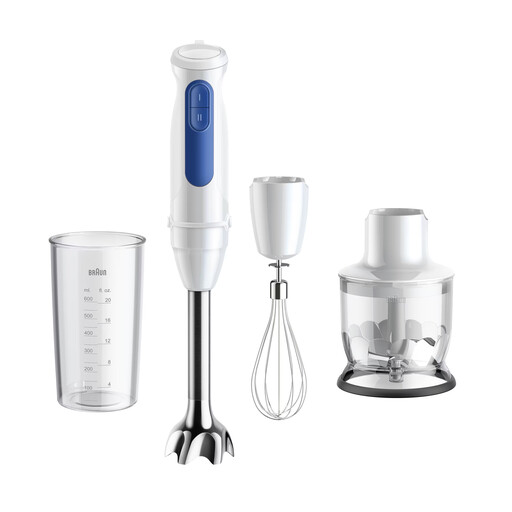
Why it suits this profile: If you cook more often and value control over different preparations, this model gives you two speeds and a 900-watt motor.
The choice of two speeds means you do not have to use the same intensity for every preparation. The product information also mentions an anti-splash design.
900 watts, two speeds, BPA-free food-contact components according to the product information, and removable dishwasher-safe parts.
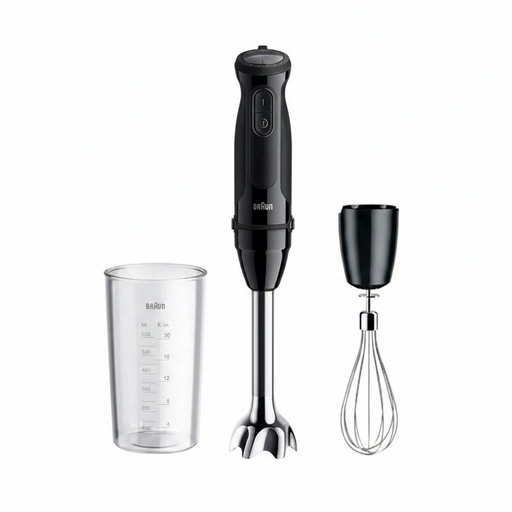
Why it suits this profile: This model is suitable for users who want to whisk as well as purée, and who regularly process firm ingredients. Its controls offer 21 speeds for different preparations.
The product specifications list a choice of up to 21 speeds, so you are not limited to one fixed setting. The accessories can be removed for cleaning and storage.
1,000 watts, 21 speeds, a whisk, BPA-free food-contact components according to the product information, and dishwasher-safe parts.
We have compiled a complete, up-to-date list of products that fully meet these strict selection criteria and the applicable European safety regulations.
For an even result, place the blending foot fully into the ingredients before switching on the appliance. Move the immersion blender slowly up and down, and prevent the blades from touching the bottom of a delicate pan. Take extra care when blending hot soup because of splashes.
After use:
Yes, many models are designed for puréeing soup, sauces, smoothies and soft ingredients. When preparing hot soup, check the maximum temperature and operating time. Frozen fruit, ice and hard ingredients often come with specific restrictions.
For simple preparations, 150 to 450 watts may be sufficient. If you regularly make thick soups, pesto or larger portions, look for around 600 to 1,000 watts. Wattage should always be assessed alongside the blade design, speeds and permitted operating time.
A hand blender usually runs for only a few minutes per preparation, so its electricity consumption is generally limited. The exact cost depends on the wattage, operating time and your electricity tariff. For comparison, look at the stated wattage and how long you actually use the appliance.
