
Vandaag of morgen in huis

Kwaliteit gegarandeerd

Welkomstaanbiedingen ontgrendelen: GRATIS bezorging | Tot 80% korting | Gratis 30 dagen JoyPlus-proefperiode
Download de app
A hand blender might seem simple at first: switch on the motor, add your ingredients to a bowl and blend. But choosing one with too little power, awkward attachments or parts that are difficult to clean can quickly lead to disappointment. If you focus only on wattage or a long list of features, you could end up with an appliance you rarely use.
This buying guide will help you choose a hand blender or jug blender based on the recipes you make, the portion sizes you need and how you like to clean up.
A higher wattage tells you how much power an appliance draws, but it doesn’t automatically mean better results. The shape of the blending foot, blade design, speed settings and maximum running time all play a part. For soup, sauces and soft vegetables, a 250W hand blender may be enough. For tougher ingredients or frequent use, a more powerful model with several speed settings is more practical.
Check the warnings in the product information, too. Some models can only run for short periods at a time and need to cool down afterwards. This matters if you want to prepare large quantities of soup or purée.
A hand blender with attachments might include a whisk, chopper, beaker or extra blade. That makes a 4-in-1 hand blender versatile, but only if you’ll use those functions. For everyday puréeing, a standalone blending wand is enough. If you make whipped cream, pesto, baby food or chopped onion, a set with a whisk and chopper could save space and reduce the need for separate kitchen tools.
Check which parts are actually included and the capacity of the containers. A 500 ml chopper is suitable for smaller portions, while an 800 ml beaker gives you more room for smoothies.
Food can quickly get stuck around the blade guard or in the attachments. So, if possible, choose an easy-to-clean hand blender with removable parts. Check whether the attachments are dishwasher-safe and whether the motor unit should only be wiped with a damp cloth.
The blades are sharp. Always unplug the appliance before removing any parts, and never immerse the motor unit in water.
For light jobs such as smoothies, sauces and soft vegetables, a lower-powered model is often enough. If you also want to process nuts, frozen fruit or firm vegetables, consider models rated at 600W to 1000W. A turbo or pulse setting can help with short, intensive blending tasks, but always use the appliance in accordance with the instructions.
A model with two speed settings is easy to use. Variable speed gives you more control when making things like mayonnaise, soup, whipped cream or a thick purée.
A hand blender works directly in a pan, bowl or supplied beaker. This is handy for soup and small amounts of baby food. A worktop blender usually has a larger jug and sits securely on the worktop. It’s a better choice for families who make several smoothies at once.
Check the difference between the stated capacity and the usable capacity. Never fill a beaker or jug above the indicated MAX mark. For hot preparations, always follow the safety instructions for your specific model.
A stainless steel blending foot is suitable for regular use and easy to rinse clean. Plastic parts may be lighter, but check the instructions for heat resistance. Glass jugs are sturdy, but heavier and more fragile.
Also look for:
The recommendations below are based on the listed product specifications and intended use. Brand claims about performance are not presented here as independently verified results.
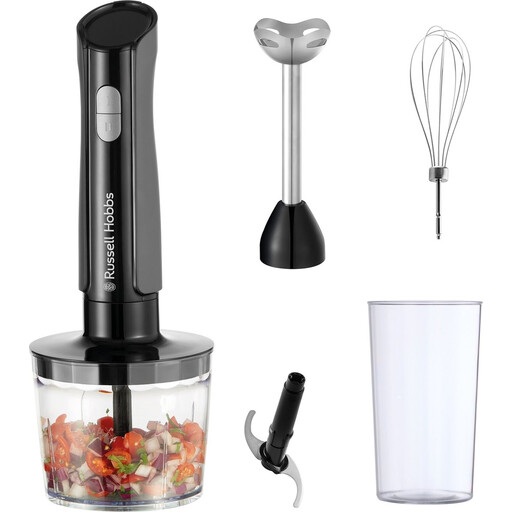
Why it suits this type of user: This model combines 500W of power with two speed settings, a 600 ml beaker and a 500 ml chopper bowl. It’s well suited to everyday sauces, soups and smaller preparations, without taking up the space of a large appliance.
The attachments are clearly listed, and the product information says the parts are removable and dishwasher-safe. Do check the latest instruction manual before use.
3-in-1 functionality, two speed settings, a 600 ml beaker and non-slip feet.

Why it suits this type of user: The product information lists a 1000W motor, 25 speeds, a turbo setting and a 3-in-1 chopper. This gives home cooks plenty of options for making sauces and purées, as well as achieving different chopping textures.
The speed settings mean you’re not limited to a single fixed speed for every preparation. According to the product specifications, the EasyClick parts are dishwasher-safe.
25 speeds, a turbo function, splash guard and a chopper with three texture settings.

Why it suits this type of user: According to the product description, this 4-in-1 hand blender comes with a whisk, chopper, 800 ml beaker and 500 ml chopping bowl. It’s a good fit for families and home cooks who want to prepare different dishes with one appliance.
Each function is matched to a specific attachment. That makes it easier to decide in advance whether the whisk, chopper and two beakers suit the recipes you make.
600W of power, two speed settings, a whisk, chopper and removable parts.

Why it suits this type of user: According to the product details, the jug has a 2.1 litre capacity and the motor is rated at 1200W. This is a worktop blender for making larger quantities of smoothies, sauces and cold preparations.
The generous jug capacity means you won’t need to make several small batches one after another. Check the fill mark, and don’t use the appliance with hot liquids unless the manual says it’s safe to do so.
2.1 litre jug, 1200W of power, 14 manual speed settings and automatic programmes, according to the product information.
We’ve put together a complete, up-to-date list of products that meet these strict selection criteria and the applicable European safety regulations.
Yes, a hand blender is handy for smooth soups, sauces and small smoothies. Use a suitably sized tall beaker to reduce splashing. For several large portions at once, a jug blender is more convenient.
A model with around 250W may be enough for soft ingredients and baby food. For frozen fruit, thicker purées or frequent use, 600W or more is a good choice. As well as wattage, consider the speed settings, blade design and maximum running time.
Its lifespan depends on how you use, clean and store it. Don’t run the motor for longer than the manual recommends, avoid processing unsuitable hard items and clean the parts after use. A removable blending foot and replaceable or readily available attachments can make everyday care easier.
