
Workshop leader with several participants
You prepare berry smoothies one after another, so look for a practical beaker, enough space to work on the counter and parts that are easy to clean between batches.


If you’ll mainly be making berry smoothies during a workshop, start with a simple hand blender that comes with a suitable beaker and a blending foot that’s easy to clean. Extra attachments are only really useful if you’ll also be chopping or whisking ingredients; wattage alone won’t tell you how smooth a smoothie will be.
You prepare berry smoothies one after another, so look for a practical beaker, enough space to work on the counter and parts that are easy to clean between batches.
You want to purée fruit without choosing extra chopping or whisking attachments that you won’t need for the workshop.
You want to use the hand blender for other recipes too, so you compare which attachments come with the model you’re considering.
For a cookery workshop making berry smoothies, the main things to consider are texture, cleaning, your workspace layout and whether you’ll use any extra attachments.
| What to consider | What should you check? | Who is this most relevant for? |
|---|---|---|
| Puréeing berries evenly | Check the speed control and blending foot. If possible, look for an independent test that assesses both the result and the preparation time. | If a smooth berry smoothie is your priority, you’ll want to know how the controls and blending foot affect preparation. Around 36% of consumers in this workshop scenario give even puréeing the highest priority. |
| Cleaning between batches | Check whether the blending foot is detachable and read the cleaning instructions for each part. | If you’re making different recipes one after another, you’ll want to clean the parts thoroughly in between. Around 29% of consumers focus mainly on cleaning. |
| Portions and reach | Compare the stated beaker capacity with your portion sizes and check that the cord is long enough for your workspace. | If you’re working in several locations or making different portion sizes, the beaker and cord need to suit your set-up. Around 21% of consumers put this practical arrangement first. |
| Whether extra attachments are useful | Check which parts come with the exact model you’re considering and whether you’ll use them for your workshop menu. | If you’re only making smoothies, you won’t need a whisk or chopper; they may come in handy for other recipes. Around 14% of consumers focus mainly on the extra functions they’ll actually use. |
The Consumers' Association assesses both the result and preparation time when testing smoothies. The stated motor power alone won’t tell you how fine or smooth a berry smoothie will be.
Where possible, compare independent smoothie test results. Also check that the controls and intended use are right for your workshop.
Puréeing is the function you need for smoothies; a chopper and whisk are designed for other tasks. Attachments you don’t use take up extra storage space and need cleaning.
Check the workshop menu against the list of parts included with the exact model before choosing a set.
Philips warns that, on certain Philips models, processing ice with the standard blending foot or blade can damage the blades. This warning applies to specific models and doesn’t tell you what’s safe for other hand blenders.
Check the manual for your exact model and only use the attachment it specifies for ice.
The ErgoMixx MSM66110 is a straightforward option for small batches and puréeing.
The MultiQuick 3 MQ30001M is a two-speed model for anyone who mainly wants to purée.
The Quickchef+ HB67G8 is a more comprehensive model for anyone who wants to chop or whisk as well as make smoothies.
In one of its own recipes, bamix shows how raspberries can be blended with other ingredients into individual portions of smoothie.
This selection includes hand blenders for puréeing, as well as sets with extra attachments for other recipes.
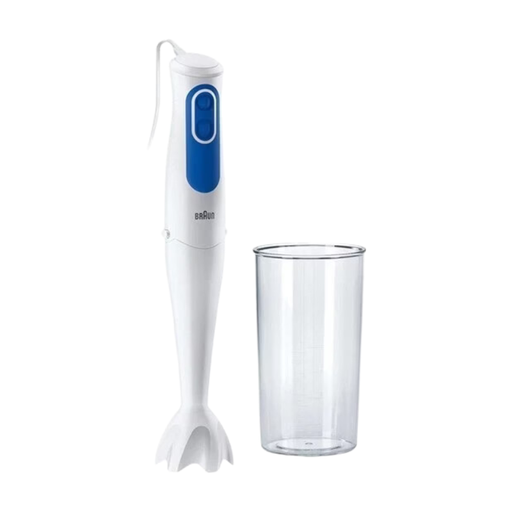 No image available
A straightforward choice if you’re looking for a hand blender for smoothies.
The product information states that it can be used continuously for up to 1 minute, after which it switches off automatically.
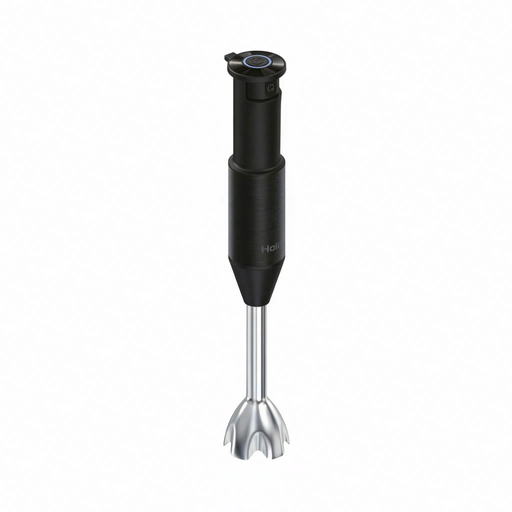 No image available
An option to compare if you want to purée smoothies and are looking for a beaker with a stated capacity.
The product name specifies a three-blade system and a 0.9 l beaker.
 No image available
This set is a good fit for a workshop where you’ll be chopping or whisking as well as making smoothies.
The product name lists a chopper and a whisk. If you’re only making smoothies at your workshop, these are extra parts to store and clean.
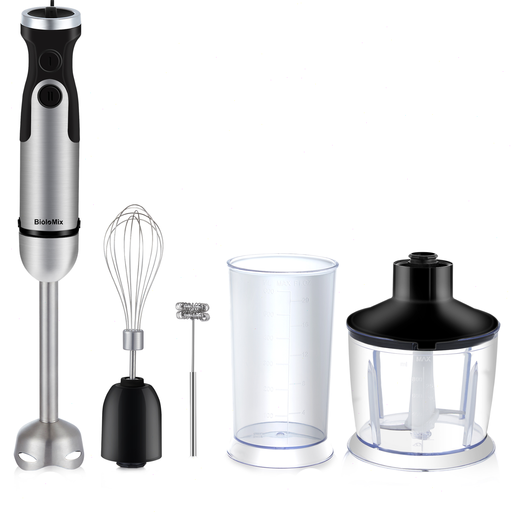 No image available
A set to consider if you want to compare several functions as well as puréeing.
The product name lists 1200 W, a four-blade 304 stainless steel blade, six speeds, a turbo setting and a detachable blending shaft. Extra parts mean more to manage and clean.
 No image available
This set is designed for anyone who wants to make smoothies and prepare other recipes on the workshop menu too.
The product name lists two speeds, a 500 ml chopping bowl and an 800 ml beaker. The included whisk and chopper are extra parts to manage and clean.
No, you don’t need those attachments to purée fruit and make smoothies. A chopper is for chopping and a whisk is for whisking; only compare them if you’ll be doing those jobs during the workshop too.
Don’t assume that you can. Philips warns that, with certain Philips models, using the hand blender or standard blade on ice can damage the blades. The stated exception requires a compatible XL chopper attachment with a serrated blade. Check the manual for other models.
The Netherlands Nutrition Centre advises washing your hands and any fruit that will be eaten raw, and cleaning your kitchen utensils. If you’re preparing or selling food commercially, you may also need to meet the food safety requirements set out by the Netherlands Food and Consumer Product Safety Authority. A cookery workshop by itself doesn’t automatically mean those business rules apply.
According to the Consumer and Market Authority's ConsuWijzer, if a consumer product is faulty, the seller is responsible for providing a suitable solution free of charge, such as repair or replacement. Whether consumer purchase rules apply to something bought for a business workshop depends on the purchase.