
Soup maker with limited cupboard space
If you mainly blend cooked soup straight in the pan, a simple hand blender without unnecessary attachments could be a good fit. The Dutch Consumers’ Association says a detachable foot is easier to clean.


For cooked beetroot soup in a small kitchen, a hand blender with an easy-to-handle blending foot and parts that are simple to clean is often a sensible choice. Extra attachments are only worthwhile if you’ll use them for other tasks too. When blending tougher ingredients, don’t rely on the stated power alone: let the soup cool slightly first, and only switch the blender on once the foot is submerged.
If you mainly blend cooked soup straight in the pan, a simple hand blender without unnecessary attachments could be a good fit. The Dutch Consumers’ Association says a detachable foot is easier to clean.
If you make soup in a shared kitchen, look for easy-to-control operation and use the blender carefully. The Dutch Consumers’ Association recommends placing the blending foot in the pan or bowl first and letting hot ingredients cool slightly.
A hand blender with a chopper or whisk could suit you if you’ll genuinely use those attachments too; bear in mind that they mean extra parts and storage space. Tefal lists chopping and whisking as additional uses for the Quickchef+ set.
For cooked beetroot soup, ease of use and cleaning matter as much as the blending result. The Dutch Consumers’ Association recommends letting hot ingredients cool slightly first, and only switching the blender on once its foot is in the soup.
| What to consider | What to look for | Who should prioritise this? |
|---|---|---|
| Soup texture | Cook the beetroot until tender and check the blending foot and controls; add liquid if needed. | I want cooked beetroot to blend smoothly without judging a blender on wattage alone. Around 36% of consumers prioritise soup texture. |
| Splashes and controls | Check the controls and instructions; let hot soup cool slightly and place the foot in the soup before switching on. | I want to handle hot soup safely and confidently in a shared kitchen. Around 29% of consumers give splash control the highest priority. |
| Space and attachments | Check which parts are included and whether you have room to store them; choose extra attachments for tasks you’ll actually do. | I mainly want to blend soup and have little cupboard space for loose parts. Around 21% of consumers prioritise space and keeping spending down. |
| Cleaning | Check the cleaning instructions for the exact model, and unplug the blender before removing any parts. | I want to clean the blender quickly after cooking. Around 14% of consumers consider cleaning the most important factor. |
The Dutch Consumers’ Association assesses blending results and preparation time separately. Hard vegetables are easier to blend when cooked until tender, so wattage alone doesn’t tell you how smooth your beetroot soup will be.
Consider how easy the blender is to use and how you’ll prepare the ingredients, as well as the stated specifications. Don’t rank performance on wattage alone.
A blending foot is designed for blending soup; a chopper and whisk are for other tasks. Extra attachments take up space and need cleaning after use.
Choose a set with extra parts only if you also want to chop ingredients or whisk mixtures.
If the cord doesn’t reach the socket, you’ll have fewer options for where to place the pan. According to the Dutch Consumers’ Association, a detachable foot is easier to clean; strongly coloured foods can stain plastic feet.
Before you buy, check the cord length, the material and whether the foot is detachable.
The models listed illustrate different designs. Always check the specifications and accessories for the exact model you’re considering.
The ErgoMixx MSM66110 is designed for blending and has a detachable metal foot and two speed settings.
The MultiQuick 5 range includes models with adjustable speeds and a choice of accessories.
The Quickchef+ HB67MB30 combines a hand blender with a chopper, whisk and beaker.
Philips describes the 3000 Series HR2521/40 as suitable for soup and purée, among other things.
HEMA lists a simple hand blender with product number 80080001.
These product picks are aimed at blending soup; some versions also come with attachments for other kitchen tasks.
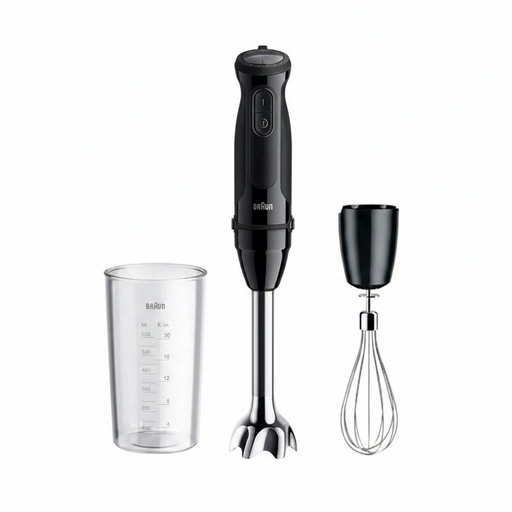 Image unavailable
An option if you want to blend soup and use attachments for other kitchen tasks too; allow for extra storage space.
1000 W; whisk. The set also includes a chopper.
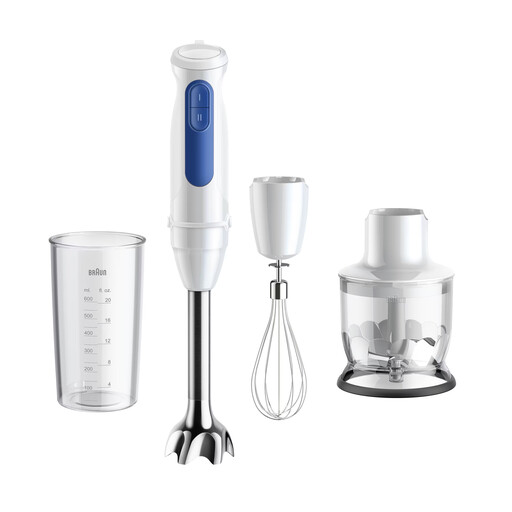 Image unavailable
A MultiQuick 5 model for anyone looking for a hand blender for soup. Check which parts are included with this exact version.
 Image unavailable
Ideal if you want to blend soup as well as chop or whisk; the attachments need extra storage space.
Up to 1200 W and 15,000 rpm; 700 ml beaker, 500 ml chopper and whisk. According to the product information, it can be used continuously for one minute, followed by a one-minute rest.
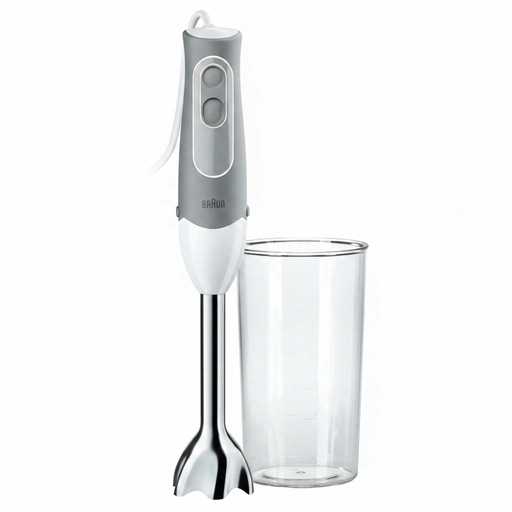 Image unavailable
An option if you want to blend soup and use a whisk too; the set also includes a chopper and needs extra storage space.
600 W; whisk.
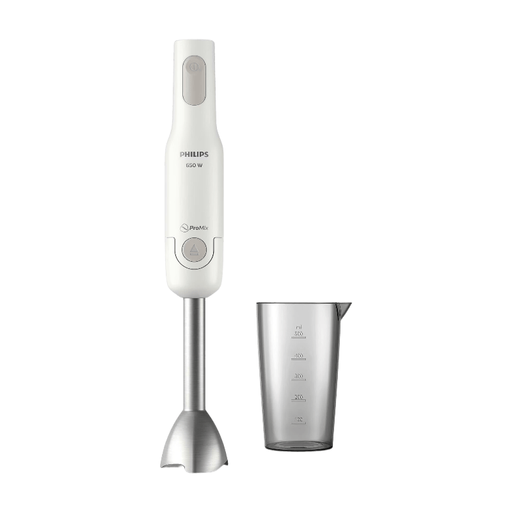 Image unavailable
A compact version for anyone who wants to blend soup and keep the number of loose parts to a minimum.
650 W. Bear in mind that this version has one speed setting.
No. Let hot ingredients cool slightly first. Cook hard beetroot until tender and add liquid if needed; only switch the hand blender on once its foot is in the soup. Check the instructions for your model too. The Dutch Consumers’ Association gives this advice for handling hot ingredients and blending in a pan or bowl.
It depends on the version. Check the instructions and unplug the blender before removing and cleaning any parts; the Dutch Consumers’ Association recommends following the guidance for your model.
No, not if you’re blending cooked soup straight in the pan. A chopper is for other tasks, such as chopping ingredients, and adds parts that you’ll need to store and clean.
The Dutch Food and Consumer Product Safety Authority (NVWA) states that CE marking is compulsory for electrical products; parts intended to come into contact with food must comply with the applicable food-contact materials rules. These general requirements don’t confirm that a specific product complies with them.
Not necessarily. According to the Dutch government, you’re entitled to a product that works properly, and you should contact the seller if it’s faulty. An extended warranty is mainly worth considering if its terms offer something beyond your statutory rights.