What should you look for when choosing?
Start by considering how much cupboard space you have. Then decide whether a measuring jug, variable speed or extra attachments will genuinely be useful for the things you make.
| What to consider |
What to look for |
Who is this most relevant to? |
| Storage space |
Measure the space available in your cupboard and allow for the jug and any separate attachments. |
I want to store as few parts as possible in an already full cupboard after use; storage space is the top priority for around 42% of consumers. |
| Preferred smoothie texture |
Check that the manual allows you to use the blender with your ingredients; don’t assume it can handle ice based on its wattage alone. |
When I blend banana with liquid, I want to know whether the blender suits my ingredients; the preferred smoothie texture is the top priority for around 33% of consumers. |
| Cleaning |
Check whether the blending foot is detachable and which parts the manual says are dishwasher-safe. |
After making a small smoothie, I want to be able to clean the blending foot easily; ease of cleaning is the main concern for around 17% of consumers. |
| Other kitchen tasks |
Decide whether you’ll use the chopper or whisk, and check which attachments come with the version you choose. |
If I also want to chop or whisk ingredients, I weigh that up against the extra parts; versatility is the top priority for around 8% of consumers. |
Hand blenders at Joybuy
This Joybuy selection includes hand blenders whose product information mentions smoothies or puréeing, including versions with a measuring jug. Compare the version listed with the cupboard space you have and the kitchen tasks you want to use the blender for.
 No image available
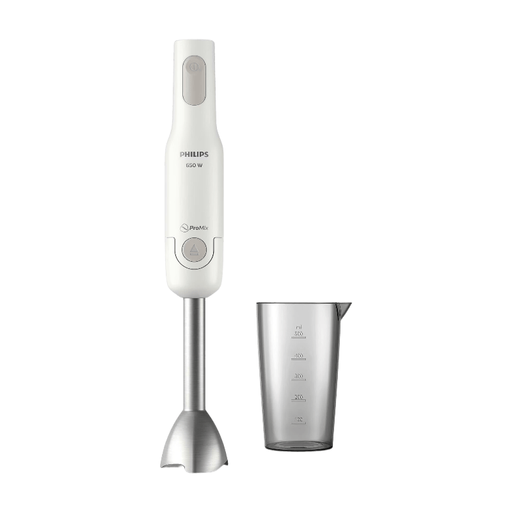
Philips Daily Collection ProMix HR2534/00
An option if you’re looking for a hand blender for smoothies and want to use a measuring jug; check what’s included with this version.
650 W; white.
View at Joybuy
 No image available
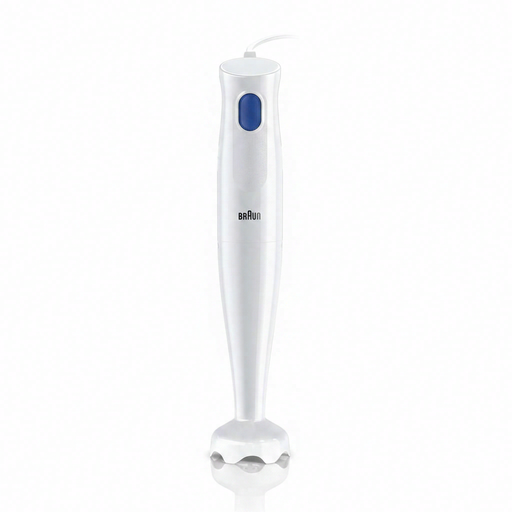
Braun MultiQuick MQ10.000PWH
An option for making a smoothie portion in a measuring jug; the product information lists a 600 ml jug and a detachable blending shaft.
White.
View at Joybuy
 No image available
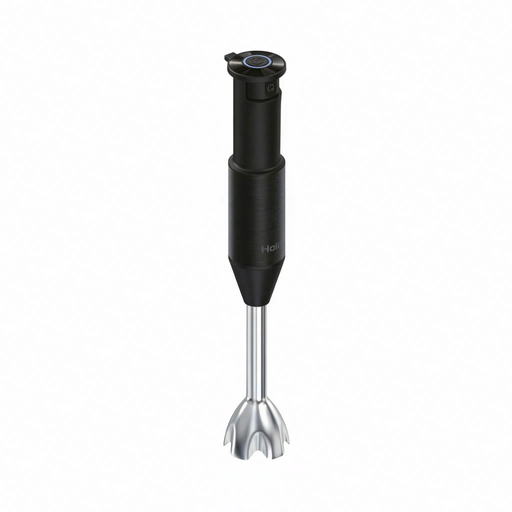
Haier I-Master HHB5B2011
An option if you’re looking for a hand blender whose product information mentions smoothies; check that the jug suits the amount you make.
Three blades; 0.9 l jug.
View at Joybuy
 No image available
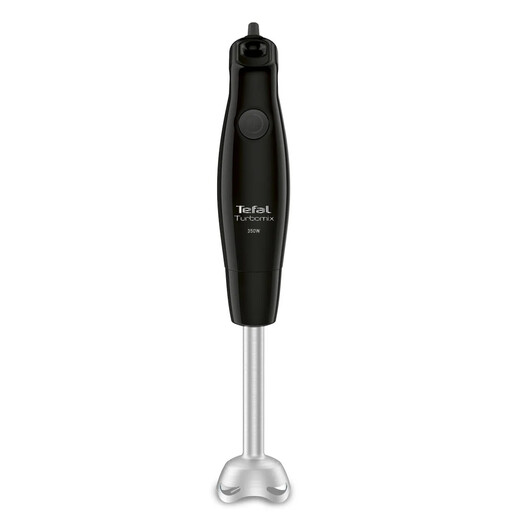
Tefal Turbomix HB1218
A basic hand blender for blending and puréeing; the product information also mentions a measuring jug. Check which parts are supplied with this version.
Black.
View at Joybuy
 No image available
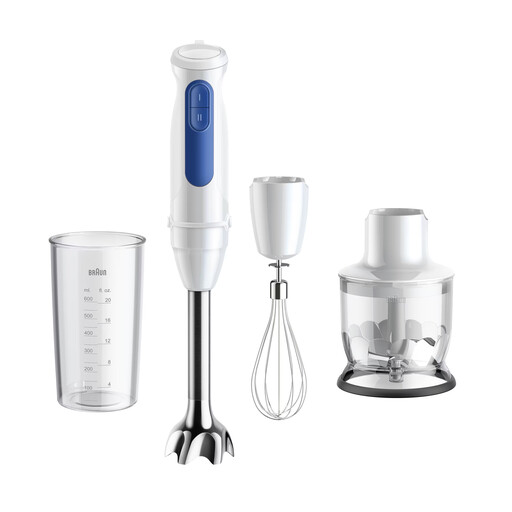
Braun MultiQuick 5 MQ30202
An option if you want to adjust the speed as well as blend and purée; the product information lists two speeds and a detachable blending foot.
White.
View at Joybuy
Frequently asked questions
Do I need a chopper to make a banana smoothie?
No. The Consumers’ Association says you don’t need a chopper to purée soft fruit or make smoothies. A chopper is designed for additional tasks, such as chopping onions, herbs or nuts.
Can I crush ice cubes with the standard blending foot?
Don’t assume you can. Philips warns that, for the models covered by its guidance, you shouldn’t crush ice with the standard blending foot or blade. For other models, check the relevant manual.
How do I clean a hand blender after making a smoothie?
Follow the manual for your model and detach the blending foot before rinsing it. For the models covered by its guidance, Philips recommends briefly running the blending shaft in warm water with washing-up liquid, then detaching and rinsing it. Don’t rinse the motor unit, and check which parts are dishwasher-safe.
Does the manufacturer’s warranty define the limits of my rights in the Netherlands?
No. According to ACM ConsuWijzer, you may have statutory rights as well as a manufacturer’s or seller’s warranty. If a product is faulty despite normal use, the seller is responsible for providing an appropriate solution free of charge; there isn’t one fixed statutory warranty period that applies to all hand blenders.
Which Dutch product safety rules are relevant when buying?
CE marking is only required for product groups covered by the relevant EU rules. The mark is a declaration by the manufacturer, not a central EU certification. According to the Netherlands Food and Consumer Product Safety Authority, materials intended to come into contact with food must meet the applicable EU and Dutch requirements. This does not automatically confirm that an individual product on sale complies with those requirements.


