What should you look for when choosing?
First decide whether you only want to blend or also chop. Then consider the controls, cleaning and layout of your workspace.
Simple hand blender
A good fit if: you’re mainly blending avocado and liquid ingredients, and want to wash as few separate parts as possible.
Bear in mind: you’ll need a separate solution for finely chopping herbs or nuts.
Hand blender with variable speed
A good fit if: you want to adjust the speed as you blend to achieve your preferred texture.
Bear in mind: having more speed settings doesn’t, on its own, guarantee a particular blending result.
Set with chopper
A good fit if: the workshop includes chopping as well as making dressing.
Bear in mind: extra attachments take up storage space and mean more cleaning.
| Consideration |
What to look for when buying |
Who should pay particular attention? |
| Texture and splashing |
Check the speed control and other controls, and whether the model comes with a suitable beaker or splash guard. |
If I want to adjust the texture during a demonstration, I pay attention to the controls and to splashing in a shared workspace. Around 27% of consumers choosing a blender for this workshop put texture control first. |
| Cleaning between batches |
Check whether the blending foot is detachable and which specific parts the manual says are dishwasher-safe. |
When I’m preparing several batches in a row, I want to know which food-contact parts I can clean thoroughly in between. Around 37% of consumers give cleaning between batches top priority. |
| Reach at the workspace |
Measure the distance to the socket and compare it with the cord length of the exact model. |
If the socket isn’t right next to the workshop table, I want to set up the blending area without having to route the cord awkwardly. Around 18% of consumers put reach at the workspace first. |
| Extra chopping functions |
Check whether a chopper, whisk or beaker is actually included with the model you’ve chosen. |
If participants will also be chopping herbs or nuts, I want to know whether the set can handle the task without having to look for separate accessories. Around 18% of consumers give extra chopping functions top priority. |
Hand blenders for workshop recipes
These Joybuy product picks are suited to blending dressing, adjusting the blending speed and, if needed, chopping or whisking ingredients during the same workshop.
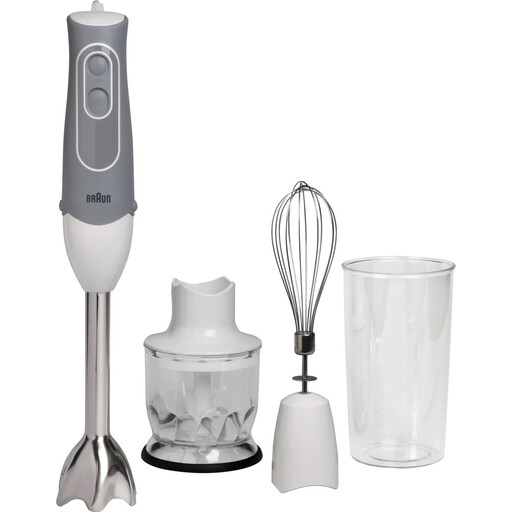 Image unavailable
Braun MultiQuick 5 MQ525, 600 W, 2 speeds
Suited to a workshop where you’ll be chopping ingredients or whipping cream as well as blending.
The description lists a 0.6-litre beaker, a 350 ml chopper, a whisk and a turbo button.
The parts described are detachable and dishwasher-safe.
View at Joybuy
 Image unavailable
Braun MultiQuick 5 MQ50001
Suited to small batches of dressing when you want to adjust the speed as you blend.
The description lists 21 adjustable speeds, SplashControl and a small measuring beaker for small batches.
The parts described are dishwasher-safe.
View at Joybuy
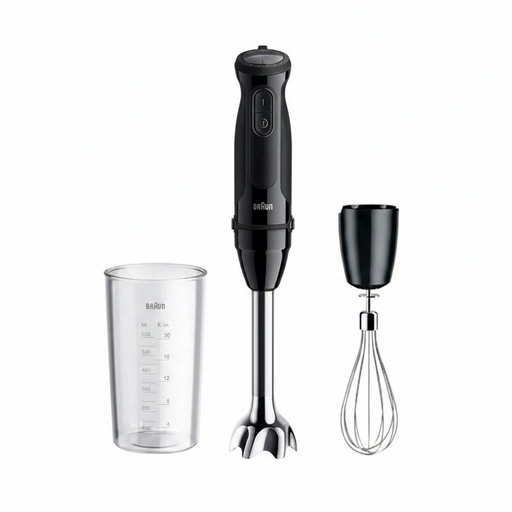 Image unavailable
Braun MQ50051M MultiQuick, 1000 W
Suited to recipes where you want variable speed settings and the option to whisk as well.
The description lists 21 speed settings, SplashControl and a whisk.
The cord is 1.2 m long, so check that it will reach your intended blending area. The parts described are dishwasher-safe.
View at Joybuy
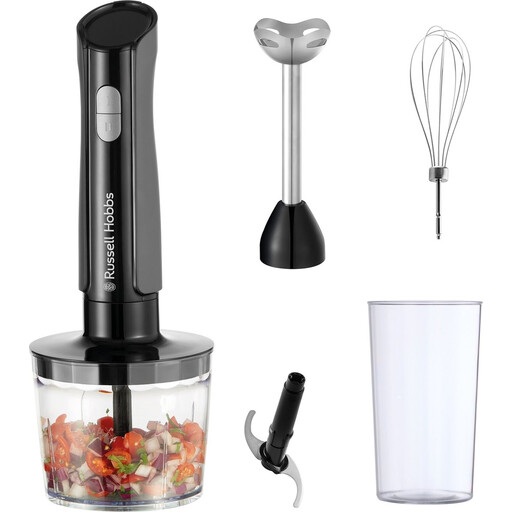 Image unavailable
Russell Hobbs 24702-56 3-in-1 Desire
Suited to blending dressing in a beaker and to workshops where chopping or whisking attachments may also come in handy.
The description lists a 600 ml blending jug, two speeds, and chopping and whisking attachments.
The cord is 1.20 m long. The parts described are detachable and dishwasher-safe.
View at Joybuy
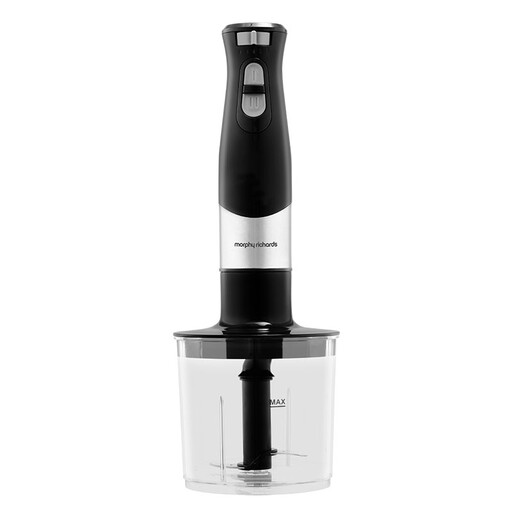 Image unavailable
Morphy Richards Total Control MUC-HB64V, 600 W
Suited to workshops where you want to adjust the blending speed and also chop or whisk ingredients.
The product title lists a 700 ml measuring beaker, chopping bowl and whisk. The description lists five speeds, a turbo function and a detachable stainless steel blending foot.
View at Joybuy
Frequently asked questions
Do you need a chopper for avocado dressing?
No, not if you only want to blend; a hand blender will do the job. Choose a chopper if the workshop also involves finely chopping ingredients such as herbs or nuts, and check that one is included with the model you choose.
How should I prepare to clean the blender between workshop batches?
Before use, check the manual to see which food-contact parts are detachable and dishwasher-safe. The Consumentenbond says a detachable foot is easier to clean; you should also follow good food hygiene practices.
Does a higher wattage matter for this dressing?
A higher wattage alone doesn’t prove that a hand blender will make better avocado dressing. The Consumentenbond’s recommendation of at least 600 W relates to heavier tasks such as blending and chopping; for this workshop, also consider the controls, ingredients and parts included.
What rules apply to electrical appliances and cookery workshops?
Electrical appliances placed on the market in the Netherlands must meet the relevant European requirements. According to Ondernemersplein, the manufacturer must apply a CE marking to the appliance and draw up and sign an EU declaration of conformity. If the workshop falls within the food business activities described by the NVWA, requirements for safe food handling and a HACCP plan or hygiene code also apply; rules on allergen information apply to unpackaged food. The description ‘cookery workshop’ alone doesn’t make it clear whether those business rules apply to a particular organiser.
How should I store any dressing left over after the workshop?
The Voedingscentrum advises cooling leftovers quickly, storing them covered in the fridge and not leaving them out of the fridge for more than two hours. Depending on the ingredients in a particular dressing recipe, it may be worth checking the storage guidance more closely.


