If you have toast on several weekdays, half a loaf of wholemeal toastie bread could suit a small household that also wants to keep an eye on fibre: the Jumbo version we looked at contains 6.4 g of fibre per 100 g, compared with 2.3 g in the white version. Choose white if you prefer that type of bread; choose Melba toast if you’d rather have thin, dry toast now and again, as it isn’t half a loaf of bread. If you won’t get through even half a loaf in time, freeze it in portions straight away, as recommended by the Netherlands Nutrition Centre.
Who are these options suitable for?
Small household with an irregular breakfast routine
If you don’t eat bread every morning, choose an amount you can finish. Half a loaf may be a good fit; for the rest, the Netherlands Nutrition Centre recommends freezing the bread in portions straight away.
Toast lover keeping an eye on fibre
If toast is a regular breakfast, compare the type of bread and the fibre per 100 g. The half loaves of wholemeal and white toastie bread we looked at from Jumbo differ in this respect.
Occasional toast eater with limited storage space
If you sometimes fancy thin, crisp toast rather than a slice of toasted bread, look at Melba toast and its inner packs. Check how to store the product after opening.
What should you look for when choosing?
First decide whether you want toasted bread or dry Melba toast. For bread, compare how much you’re likely to use and the fibre per 100 g; for Melba toast, check the packaging and storage instructions.
| What to consider |
What to check when buying |
Who is this important for? |
| Quantity and waste |
Check that it really is half a loaf and whether you can freeze the rest in portions. |
If I don’t eat bread every morning, I want to avoid leaving an opened loaf uneaten. Reducing waste is the top priority for around 36% of consumers. |
| Type of bread and fibre |
Read the bread description and compare the fibre per 100 g in the nutrition information. |
If I eat bread for breakfast regularly, I want to know whether I’m choosing white or wholemeal. Around 29% of consumers prioritise comparing the type of bread and its fibre content. |
| Type of toast and storage |
Choose between a slice of toasted bread and thin Melba toast; for Melba toast, check the inner packaging and storage instructions. |
If I only eat toast now and again, I’m looking for a crisp product that suits the amount I can store. This type of toast is the main consideration for around 21% of consumers. |
| Ingredients and allergens |
Check the ingredients list and allergen information on the packaging you choose. |
If I need to watch out for certain ingredients, I don’t want to rely on the product name alone. That’s why checking the label is a priority for around 14% of consumers. |
Common mistakes
-
Buying half a loaf and leaving the rest uneaten
Even half a loaf can dry out before you finish it. A smaller pack only really helps if it matches how much bread you actually eat for breakfast.
Freeze any slices you won’t use straight away in portions, and take out only what you need each time, as recommended by the Netherlands Nutrition Centre.
-
Treating white, multigrain and wholemeal as the same
These descriptions don’t tell you the same thing about what’s in the bread. The half loaves of Jumbo bread we looked at contain 2.3 g of fibre per 100 g for white and 6.4 g per 100 g for wholemeal.
If fibre matters to you, check both the bread description and the nutrition information per 100 g before choosing.
-
Treating Melba toast like an ordinary slice of toast
Melba toast is a thin, dry toast product, not half a loaf of bread. The portion size and texture you’re after may therefore be different from those of toasted toastie bread.
First decide which type of toast you want, then compare the packaging, ingredients and nutrition information of the products in question.
Brands to use as a guide
These product examples show the differences you may find on a label; the bread and Melba toast products mentioned are not like-for-like alternatives.
Jumbo
The own-brand products we looked at are half loaves of toastie bread, available in wholemeal and white.
- According to Jumbo’s product information, the wholemeal version we looked at contains 6.4 g of fibre per 100 g, while the white version contains 2.3 g per 100 g.
- Both loaves we looked at contain wheat and gluten. Check the current label on the pack you choose.
Albert Heijn
AH Melba toast plain is a dry toast option for anyone who isn’t looking for half a loaf of bread.
- Albert Heijn lists this product as 12 packs of 6 pieces of toast.
- The small pieces of toast aren’t automatically a like-for-like replacement for a regular slice of toast in terms of portion size or composition.
Van der Meulen
The wholemeal Melba toast we looked at offers a different way to eat toast from half a loaf of wholemeal toastie bread.
- The product listing at Albert Heijn describes 6 packs of 6 pieces of toast.
- The version we looked at lists wheat, sesame, soya, barley and rye, among other ingredients. Check the current label when buying.
Melba toast at Joybuy
This product selection is for anyone who wants Melba toast now and again instead of a slice of toasted bread. It isn’t an option for half a loaf of toastie bread.
 No image available
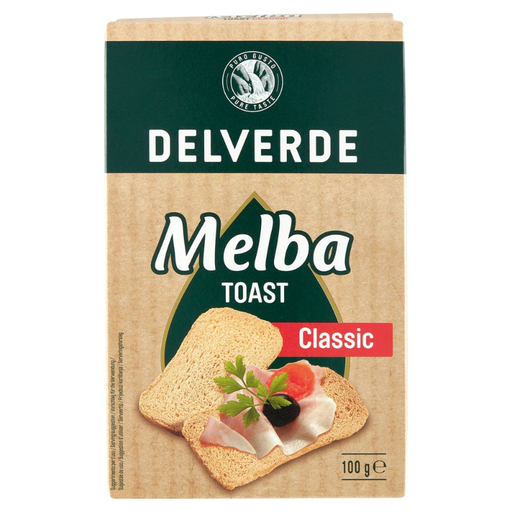
Delverde Classic Melba Toast – 100 g
For anyone looking for Melba toast to enjoy now and again instead of a regular slice of toast.
100 g pack. Check the ingredients, allergens and storage instructions on the current label.
View at Joybuy
Frequently asked questions
Will half a loaf always stop me throwing bread away?
No. A smaller amount only helps if you finish the bread. If you expect to have slices left over, freeze them in portions straight after buying, as recommended by the Netherlands Nutrition Centre, and take out only what you need each time.
How should I store Melba toast after opening?
Once opened, store the pieces of toast in a tightly sealed container in a cool, dry, dark place. The Netherlands Nutrition Centre’s Storage Guide says opened toast can be kept in a kitchen cupboard for around a month; also check the instructions on your product’s packaging.
What should I look for if ingredients or allergens matter to me?
Read the allergen information on the packaging you buy. The half loaves of Jumbo toastie bread we looked at contain wheat and gluten; the wholemeal Melba toast from Van der Meulen we looked at lists wheat, sesame, soya, barley and rye, among other ingredients. Don’t assume another product has the same ingredients based on these examples.


