For a small St Nicholas’ Eve gathering, half a multigrain loaf may be just right if only a few people are eating. Match the quantity to how much you expect to use, and freeze any leftover slices. Don’t rely on the word ‘multigrain’ alone: check the wholemeal content, fibre and salt on the label, and read the ingredients and type of salt if you have an allergy or want to check the iodine content.
Who is half a loaf right for?
A small household with festive leftovers
If bread is just one part of your St Nicholas’ Eve spread, half a loaf may better suit the number of people eating than a whole loaf. If you do have slices left over, you can freeze them in portions. The Netherlands Nutrition Centre recommends taking bread out of the freezer as needed.
Anyone comparing wholemeal bread and fibre
The word ‘multigrain’ doesn’t tell you whether a loaf is wholemeal. Check the product description and ingredients, and compare fibre and salt on the same basis, such as per 100 g. This helps you tell a dark multigrain loaf from one that is specifically described as wholemeal.
Anyone who needs to check ingredients carefully
If you have an allergy, the ingredients and allergen information for the specific loaf matter, not just its name. To find out whether iodised salt has been used, look for ‘baker’s salt’ or ‘iodised salt’ on the label. The Netherlands Nutrition Centre says that not all bakers use baker’s salt.
What should you look for when choosing?
For a small St Nicholas’ Eve gathering, first work out how much bread you need. Then compare the ingredients and check anything that matters to your choice.
| What to consider |
What to check |
Who it matters to |
| Portion size and leftovers |
Check that it really is half a loaf, and look at the weight. Think about how many slices you need and how much you can freeze. |
If only a few people are eating, I don’t want to be left with a large loaf. Avoiding leftovers is the top priority for around 46% of consumers. |
| Wholemeal content and nutritional value |
Look for ‘wholemeal’ and check which flour appears first in the ingredients list. Compare fibre and salt per 100 g. |
I want to know what the bread is made from rather than judge it by its dark colour. For around 36% of consumers, the ingredients are the deciding factor. |
| Allergens and type of salt |
Read the allergen information and, if iodine is relevant to your choice, look for ‘baker’s salt’ or ‘iodised salt’. |
If I have an allergy or a question about iodised salt, I want to know what’s in the loaf before I buy it. Around 18% of consumers prioritise checking these ingredients. |
Common mistakes when choosing
-
Assuming ‘multigrain’ means ‘wholemeal’
Several types of grain, seeds or a dark crust don’t, by themselves, mean a loaf is wholemeal. You could end up choosing something different from what you had in mind.
Check the product description and ingredients list. If it matters to your choice, compare the stated fibre per 100 g.
-
Buying a whole loaf for a small gathering
If only a few people are eating bread, you could have plenty of slices left over afterwards.
Choose a quantity that suits the number of people eating, and freeze any slices you won’t use in portions.
-
Assuming every loaf contains iodised baker’s salt
The Netherlands Nutrition Centre says that bakers aren’t required to use baker’s salt. So you can’t tell what type of salt is used from the bread category alone.
Look for ‘baker’s salt’ or ‘iodised salt’ on the label, or ask which type of salt has been used if the bread is sold loose.
-
Guessing which allergens a loaf contains from its name
Breads with similar names can contain different grains, seeds and other ingredients. Even if a loaf is labelled gluten-free, other allergens may still be relevant.
Read the allergen information for the specific loaf before you buy it. If it’s sold loose, ask what ingredient information is available.
Brands with relevant bread options
These brands offer options to help you compare half or smaller loaves. Always check the information for the specific loaf you’re choosing.
Albert Heijn
Albert Heijn lists options including AH Vloerbrood meergranen half.
- The product information for this loaf includes ingredients, allergens and nutritional values, including fibre and salt.
- Another AH option, Zaans meergranen half, was listed as ‘discontinued’. Check which option is available, and don’t confuse the nutritional values for different loaves.
Lidl
Lidl describes a 400 g dark multigrain half loaf containing ingredients including wheat, barley and buckwheat.
- The stated half-loaf size gives you a useful starting point for a small gathering.
- Lidl says this loaf is sold in store; check the packaging there for ingredients, allergens and nutritional values.
ALDI
ALDI lists a Boeren volkoren meergranen option in a half-loaf size.
- The product description includes both ‘volkoren meergranen’ and ‘Half’.
- Check the packaging for the ingredients, allergens and nutritional values of the loaf you choose.
PLUS
PLUS lists Korenlanders Rond licht meerzaden half, weighing 400 g.
- The product information includes ingredients, allergens, fibre and salt, making it easier to compare labels.
- The listed ingredients include both 30% wholemeal wheat flour and 22% wheat flour. So ‘more seeds’ in the name doesn’t mean the loaf is entirely wholemeal.
Dirk
Dirk lists Bakker van der Akker Bakkers meergranen half.
- The half-loaf size suits anyone looking for bread for a small group.
- Compare the ingredients, allergens and nutritional values using the packaging of the loaf in store.
A portion-friendly alternative at Joybuy
If you’d rather have smaller portions than one half loaf, these multigrain baguettes offer another way to plan the bread for your gathering. The pack contains four 135 g baguettes, so it isn’t half a loaf; think about how much you’ll actually need.
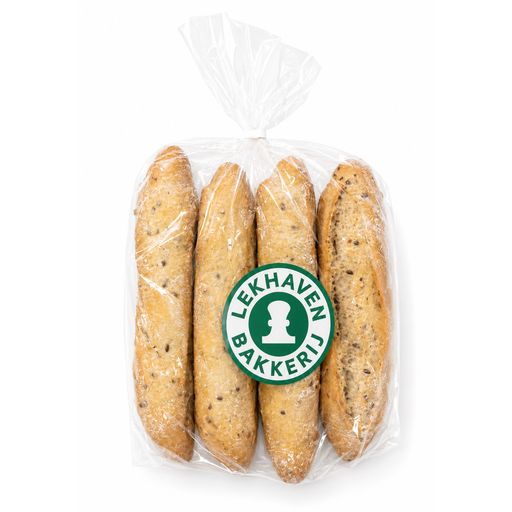 Image unavailable
Lekhaven Bakkerij Multigrain Rustic Baguette, 4 x 135 g
The four individual baguettes could work well if you want to plan bread by the piece for a small gathering. It isn’t half a loaf: the pack contains 540 g in total.
To compare fibre and salt, check the values and the basis they’re measured against on the packaging. Also read the full allergen information and check the type of salt if it matters to your choice.
View on Joybuy
Frequently asked questions
Is multigrain bread always wholemeal?
No. The Netherlands Nutrition Centre says that ‘multigrain’ doesn’t automatically mean a loaf is wholemeal. Look for the word ‘wholemeal’ and check which flour is listed in the ingredients.
What should I do with bread left over after St Nicholas’ Eve?
Freeze any slices you won’t use soon in portions. The Netherlands Nutrition Centre recommends freezing bread and taking out only what you need each time. Also follow the storage instructions on the packaging of your loaf.
Does Dutch multigrain bread always contain iodised baker’s salt?
No. The Netherlands Nutrition Centre says that bakers aren’t required to use baker’s salt. Check the ingredients for ‘baker’s salt’ or ‘iodised salt’, or ask which type of salt has been used if the bread is sold loose.
What should I check if I have a gluten or other allergy?
Check the allergen information for the specific loaf before you buy it. The Netherlands Food and Consumer Product Safety Authority says allergens must be listed on the label of prepacked food. For bread sold loose, check what allergen information is available. A gluten-free option may still contain other relevant allergens.


