
Vandaag of morgen in huis

Kwaliteit gegarandeerd

Welkomstaanbiedingen ontgrendelen: GRATIS bezorging | Tot 80% korting | Gratis 30 dagen JoyPlus-proefperiode
Download de app
A hairdryer might seem like a simple appliance, but there are big differences between models. A high wattage doesn’t automatically mean your hair will dry faster. A lightweight hairdryer can be comfortable for everyday use, but may have fewer settings or accessories. Ionic hairdryers are often promoted as a way to reduce frizz, although the results can vary depending on your hair type and styling routine.
If you focus only on price, motor speed or a marketing claim, you could end up with a hairdryer that’s too heavy, doesn’t give you enough control or isn’t suitable for curls. Use these practical checks to compare models based on features you can actually verify.
The wattage tells you how much electrical energy the appliance uses, but it doesn’t tell you exactly how powerful the airflow is. A 2,300-watt hairdryer can be powerful, while a high-speed hairdryer with 1,600 watts may still provide a focused airflow thanks to a different type of motor.
So, also look at:
Ionic hairdryers use negative ion technology. According to the product descriptions from the brands concerned, this feature is designed to help reduce static and frizz. However, it isn’t guaranteed to work the same way for every hair type or styling method.
Your drying technique matters too: keep the hairdryer moving, use a suitable temperature and point the nozzle from the roots towards the ends. For very fine hair, too much heat or a very powerful airflow may be difficult to manage.
A concentrator nozzle is useful for targeted drying and smoother styling. A diffuser spreads out the airflow and is particularly useful if you’re looking for a hairdryer for curly hair. Check in advance that these accessories are actually included. If you have to buy a diffuser separately, it can increase the final cost.
A fast-drying hairdryer needs to provide a useful airflow. The product details sometimes include the motor speed, for example 20,000 or 110,000 RPM. RPM means revolutions per minute, but it isn’t a direct measure of drying time. The fan design, air channel and nozzle all play a part too.
Use motor speed as a point of comparison, rather than a promise in itself. A model with several settings also gives you more control when drying fine, thick or damp hair.
A hairdryer with temperature control is more practical than one with just a single heat setting. Multiple settings let you use more heat at the roots and a cooler temperature on delicate lengths.
Check whether the appliance has:
A cool-air function can help you finish styling, but it doesn’t replace keeping the hairdryer at a suitable distance and moving it as you dry.
A lightweight hairdryer reduces strain during longer styling sessions. You’ll notice the difference between around 330 grams, 480 grams and almost 1 kilogram in everyday use. Also check the balance of the handle, the cord length and whether it has a hanging loop.
For travel, a compact hairdryer with a foldable handle is handy. If you’re travelling internationally, check that the model is compatible with the local mains voltage. A model with worldwide voltage offers more flexibility, but always check whether you’ll need a plug adaptor.
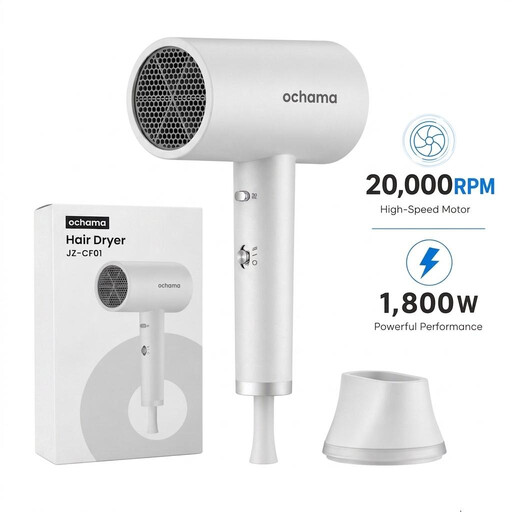
Why it suits this profile: This model combines a stated power output of 1,600–1,800 watts with a weight of around 480 grams. That makes it a practical choice for everyday use at home or in a student room.
You get more than just a wattage claim: the product details also list the weight, a concentrator nozzle and a 20,000 RPM motor.
Around 480 grams, negative ion function according to the product description, and a concentrator nozzle.
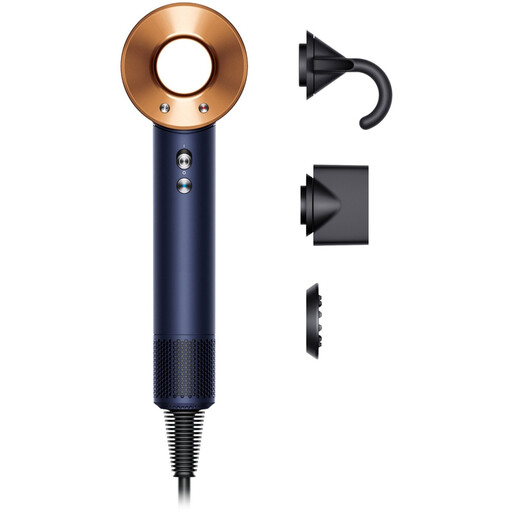
Why it suits this profile: Its stated features are designed for controlled drying and precise styling, with three speeds, four temperature settings and a styling concentrator.
Temperature control means you don’t have to rely on a single high heat setting. The way the heat control works is based on Dyson’s product information.
V9 motor, four heat settings, three speeds and an included concentrator.
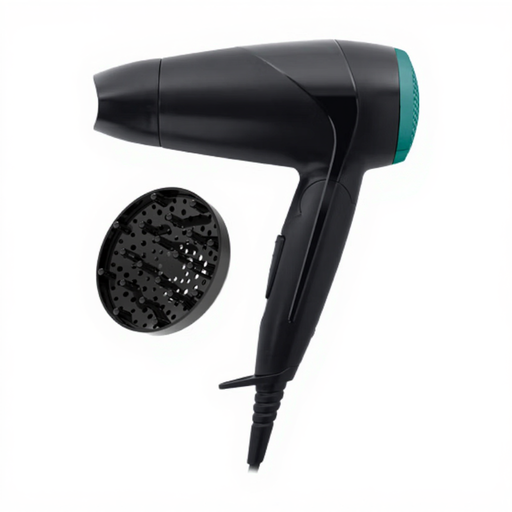
Why it suits this profile: The foldable handle, weight of around 510 grams and universal voltage make this model suitable for holidays, gym bags and limited storage space.
The included accessories are clearly listed in advance: a diffuser and slim concentrator nozzle come with the hairdryer, so you won’t need to buy them separately.
2 heat settings, 2 speeds, foldable handle and 120–240 volts.
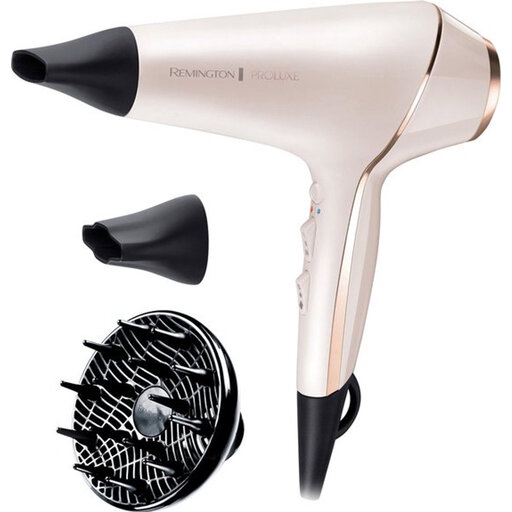
Why it suits this profile: This is a professional hairdryer for people who style their hair frequently and value an AC motor, high power and a range of styling features.
The specifications list 3 heat settings, 2 speeds, a cool-air function and ionic technology. However, consider whether the lack of stated overheat protection is a concern for you.
2,400 watts, AC motor, ionic function and Style Shot according to the product description.
We’ve put together a complete, up-to-date list of products that meet these strict selection criteria and the applicable European safety regulations.
A hairdryer uses electricity and heat, so always follow a few basic safety rules:
Also check that the product is suitable for 220–240 volts in the Netherlands. If your travel hairdryer has multiple voltage settings, set the switch according to the instructions.
Its lifespan depends on how often you use it, the type of motor, how well you maintain it and whether you keep the air intake clean. A warranty period gives you rights if the product is faulty, but it doesn’t predict the total lifespan. Keep your proof of purchase and check the warranty terms for the model you choose.
According to product descriptions, an ionic function can help with static and frizz, but results vary depending on your hair texture and styling routine. For curls, a diffuser, low speed and a moderate temperature are often more important than the ionic function alone.
Energy use depends on the wattage and how long you use the hairdryer. A 2,000-watt model running for one hour would theoretically use 2 kWh at full power. In practice, you’ll usually use it for much less time and may not always use the highest setting. So, compare wattage with drying time, settings and your daily use.
