
If you have a short fringe
You want to grip and guide small sections precisely before work. Plate width and ease of handling matter here; ghd describes its mini as having 15 mm plates for short hairstyles and fringes.


For a short fringe, narrow plates are a precise choice: ghd describes its mini as having 15 mm plates for small sections, but the temperature is fixed at 185 °C and the manufacturer specifies a minimum hair length of 1.27 cm. If you also want to style longer sections or adjust the heat, compare standard models such as the Philips BHS378/00, with six settings from 160–230 °C, and the BaByliss ST298E, with thirteen settings from 170–235 °C. For a morning routine, also allow time to dry your hair first and check the stated heat-up time.
You want to grip and guide small sections precisely before work. Plate width and ease of handling matter here; ghd describes its mini as having 15 mm plates for short hairstyles and fringes.
You regularly touch up your fringe and want to choose the temperature setting yourself. Philips lists six settings for the BHS378/00 and BaByliss lists thirteen for the ST298E; according to Remington, the S2880 has one setting at 200 °C.
You’re looking for one straightener for your fringe and the rest of your hair, so you also want to compare plate length and temperature control. Philips and BaByliss describe standard straighteners with several settings for more versatile use.
Start with the size of the sections you want to grip. Then compare the temperature settings and how much time you have in the morning.
| What to consider | What should you look for? | Who should pay particular attention? |
|---|---|---|
| Precision for short sections | Compare the plate width with the length of your fringe. ghd lists 15 mm plates for its mini and a minimum hair length of 1.27 cm. | If I’m only touching up a short fringe, I want to grip small sections precisely. Around 33% of consumers prioritise precision for short fringe sections. |
| Temperature choice | Check whether the model has one fixed setting or several, and look at the lowest setting available. | If I’m touching up my fringe regularly, I want to choose the heat setting I use. Around 27% of consumers give adjustable heat their top priority. |
| Morning routine | Check the stated heat-up time and allow time to dry your hair first. Remington lists a 60-second heat-up time for the S2880. | If I’m in a hurry before work, waiting time matters, but I still need to dry my hair first. Being ready quickly is a top priority for around 20% of consumers. |
| Styling more than just your fringe | Compare the plate sizes and temperature settings with the sections you want to style in addition to your fringe. | If I want to use one straightener for my fringe and longer sections, versatility matters alongside precision. This is the top buying priority for around 20% of consumers. |
A compact size doesn’t automatically mean you can adjust the temperature. Remington lists one setting of 200 °C for the S2880; ghd specifies a fixed, regulated temperature of 185 °C for its mini.
Compare size and temperature control separately if you regularly touch up your fringe.
A higher maximum setting doesn’t tell you whether a straightener is practical for small fringe sections. Plate size and the choice of temperature settings vary between models.
Start with the size of your sections and the temperature settings you want, not the highest number on the packaging.
The model code, settings and safety information are all worth checking to make sure the offer matches the product you’re looking for.
Check the product details and seller information on the actual product page. For a mains-powered appliance, also check the applicable safety information and CE marking.
ghd positions its mini for short hairstyles and fringes.
Remington presents the S2880 as a compact mini travel straightener.
The BHS378/00 is a standard straightener with long plates, for anyone who wants to style other sections as well as their fringe.
The ST298E is a standard Smooth Control straightener for anyone who also wants to style longer sections.
These product picks are for smoothing your fringe, with both narrow plates for small sections and models for more versatile use.
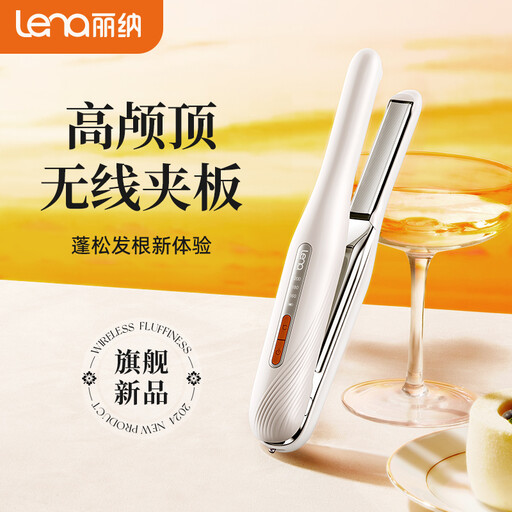 No image available
The narrow, curved plates are suited to small fringe sections that you want to grip precisely.
The product description lists curved 12 mm plates and cordless use.
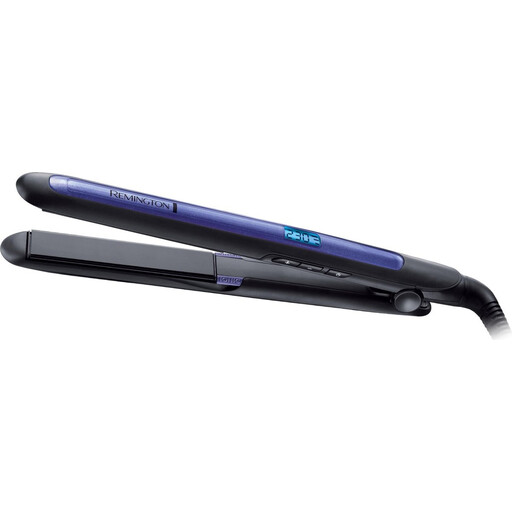 No image available
This standard model may suit you if you want to style other sections as well as your fringe and choose the temperature.
The product description lists nine settings from 150–230 °C and a 15-second heat-up time. The stated plate width is 2.5–3.5 cm, making it less suited to small fringe sections than a narrow precision plate.
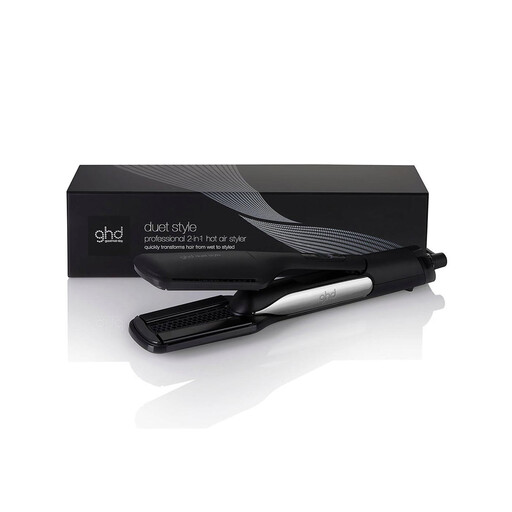 No image available
The product description features a combination of drying and styling functions for anyone looking for more than one way to style their hair.
According to the description, ShineShot mode for use as a regular straightener is designed for dry hair and operates at 185 °C. The description also lists automatic shut-off after 30 minutes.
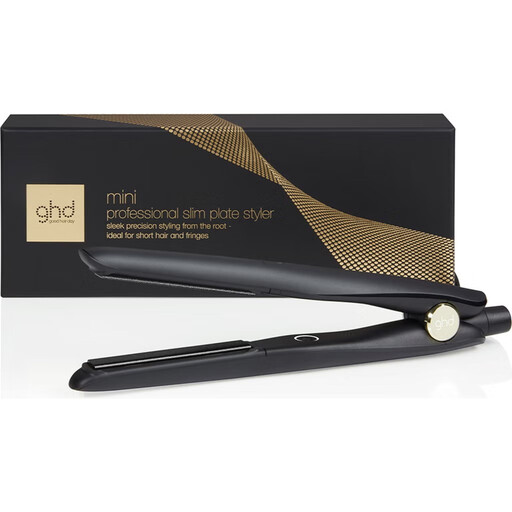 No image available
The narrow plates are designed for short hairstyles, fringes and small sections.
ghd lists a fixed, regulated temperature of 185 °C; it can’t be set lower. The manufacturer specifies a minimum hair length of 1.27 cm for this model.
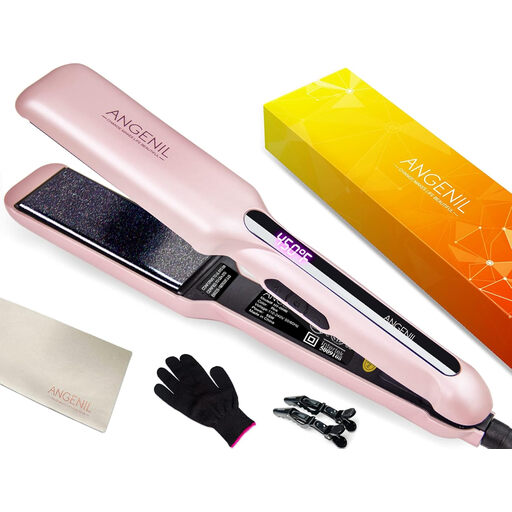 No image available
According to the product description, the wide plates are suited to long, thick hair, rather than specifically to small fringe sections.
The description lists 4.5 cm plates, nine temperature settings from 160–240 °C and a 15-second heat-up time.
Yes, dry your hair first. Philips recommends using its straighteners on dry hair and states that straightening wet or damp hair can damage it and lead to poorer results. Always follow the instructions for your own appliance too.
Philips recommends cleaning the plates on models including the BHS378/00 with a damp cloth once the straightener has cooled completely. For other models, check the accompanying instructions.
In the Netherlands, the seller is responsible for providing a suitable free solution if a product doesn’t meet what you could reasonably expect. ACM ConsuWijzer says this could mean a repair, replacement or refund, and that your rights aren’t automatically limited to two years.
The applicable EU requirements for electrical equipment apply to a mains-powered straightener designed for 50–1,000 V AC, including CE marking (EUR-Lex). The NVWA also recommends checking the seller’s details. A CE claim in an advert doesn’t in itself prove that an individual item for sale complies with the requirements.