
Drying fine hair gently
You want to dry your hair regularly without always using a hot or high-power setting. Being able to adjust the heat and airflow separately can therefore be important.


Choose a hair dryer that lets you adjust heat and airflow separately. This gives you more control than simply looking at the wattage. Annals of Dermatology reported more surface damage at higher drying temperatures in a study using hair tresses that were treated repeatedly, but this doesn’t predict what will happen with every type of fine hair. For bedroom use, a claim that a hair dryer has a noise-reducing feature doesn’t tell you how loud it sounds on the setting you actually use.
You want to dry your hair regularly without always using a hot or high-power setting. Being able to adjust the heat and airflow separately can therefore be important.
You dry your hair while someone nearby is resting and want to know how loud the appliance is on the setting you use at home.
You want to style your hair precisely or keep its natural wave. To do this, compare the airflow settings and attachments included with the exact model variant.
Start with the heat and airflow settings you want to be able to adjust, then consider the noise level and attachments that suit your routine. Annals of Dermatology described greater surface damage at higher drying temperatures in a study using hair tresses that were treated repeatedly. This finding doesn’t predict what will happen with every type of fine hair.
| What to consider | What to look for | Especially useful if |
|---|---|---|
| Heat and airflow | Check whether you can adjust the heat and speed separately. Try a lower setting and keep the hair dryer moving. | If I dry fine hair regularly, I want to be able to adjust the heat and airflow separately. Around 33% of consumers put manageable heat and airflow at the top of their list. |
| Noise in the bedroom | Only compare noise measurements if the settings and testing conditions are the same. Otherwise, judge the sound on the setting you plan to use at home. | When I dry my hair while someone nearby is resting, I want to know how loud the appliance is on my usual setting. Around 27% of consumers prioritise noise when using a hair dryer in the bedroom. |
| Attachments | Check what’s included with the exact model variant. A diffuser and a concentrator nozzle have different functions. | If I want to keep my natural wave or style my hair precisely, I look for a suitable attachment. Around 20% of consumers say styling is their top priority when choosing. |
| Controls and ease of use | Check whether the settings, filter access and included attachments suit your routine. Don’t judge by wattage alone. | I want practical settings and straightforward controls, without choosing features I don’t need. Around 20% of consumers prioritise ease of use and value for money. |
A noise-reducing claim doesn’t tell you how loud the appliance is on your usual drying setting, or how it compares with other models.
Only compare measurements taken using the same setting and testing conditions. Where possible, judge the noise on the setting you plan to use at home.
Wattage alone doesn’t tell you which heat and speed settings you can choose while drying your hair.
First check whether you can adjust the heat and airflow, and whether the controls suit the way you’ll use it.
Attachments can vary between model variants, even when product names are very similar.
Before buying, check the full model code and the list of items included in the box.
The 5000 Series BHD510/20 is worth considering if you want to adjust the heat and speed separately.
The Smooth Pro 2100 6709DE and the PODEROSO BAB7550E offer different features to compare: adjustable settings and a noise-reducing feature mentioned by the manufacturer.
The Supersonic Black/Nickel is worth comparing if you’re looking for an attachment designed to deliver a gentle airflow.
The ONE Dry & Style D6077 is worth comparing if you’re looking for several settings and styling attachments.
These Joybuy models are designed to let you adjust heat and airflow for drying or styling; the attachments listed vary by model variant.
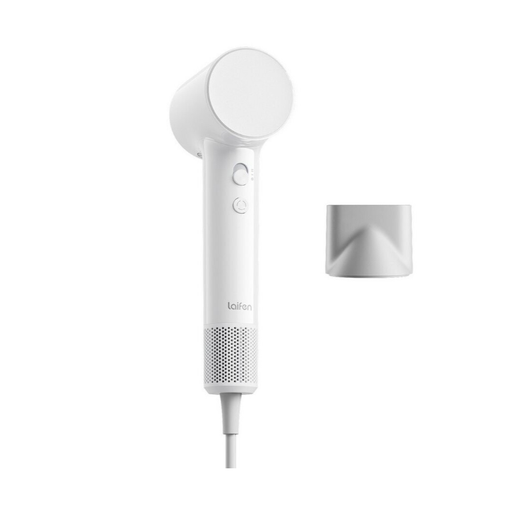 No image available
Suitable if you want to adjust heat and airflow separately.
1400 W, three temperature settings, two airflow speeds and a cool shot button.
Keep the air inlet and outlet clear, and don’t use the appliance in wet conditions.
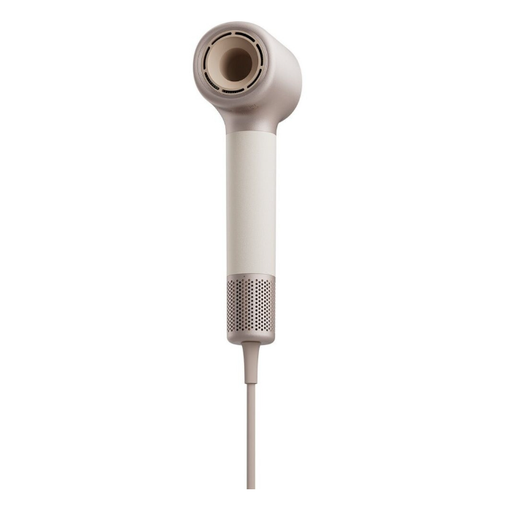 No image available
An option to compare if you want separate heat and speed settings.
1500 W, with temperature and airflow speed settings as stated in the product title.
Keep the air inlet and outlet clear, and don’t use the appliance in wet conditions.
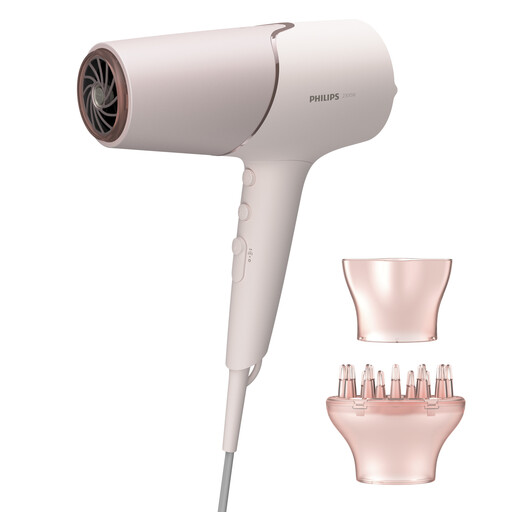 No image available
Suitable if you want to compare different heat and speed combinations and attachments.
2300 W, six heat and speed combinations, ThermoShield temperature control, two concentrator nozzles and a diffuser.
Avoid using in wet areas or near water.
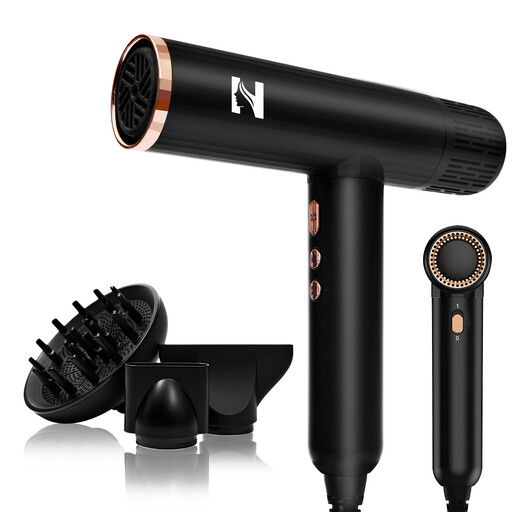 No image available
Worth comparing if you’re looking for several temperature and speed settings, as well as a diffuser.
1900 W, four temperature settings, three speeds, two concentrators and a diffuser.
 No image available
An option if you want to compare different styling attachments.
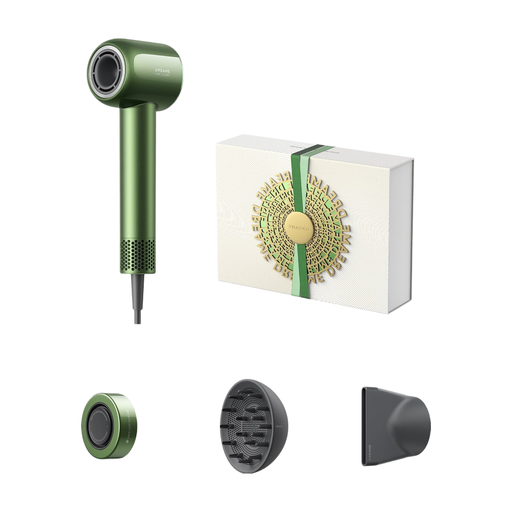
The product title lists 120,000 RPM and three heat and speed settings; the product description mentions a diffuser, an essence attachment and a styling nozzle.
Keep the air inlet and outlet clear, and don’t use the appliance near water or flammable materials.
Not necessarily. Choose a heat and airflow setting that lets you dry your hair in a controlled way, and keep the hair dryer moving. In a study using hair tresses that were treated repeatedly, surface damage increased at higher temperatures. This study doesn’t offer personalised advice for every type of fine hair.
Don’t leave a switched-on hair dryer on soft furnishings, and keep the air inlet and outlet clear. The Remington D6077 manual includes these instructions; if you have a different model, follow its own manual.
Contact the seller to discuss a solution if the product isn’t as it should be. According to the Dutch government, your statutory right to a product that is fit for purpose has no fixed legal time limit; any manufacturer’s guarantee is in addition to this right.
According to the Netherlands Food and Consumer Product Safety Authority, electrical equipment with a rated AC voltage between 50 V and 1,000 V falls under the Low Voltage Directive. The European Union requires CE marking only for products covered by applicable harmonised EU rules that require this marking; the marking alone isn’t an independent test certificate for an individual item.
No. The NVWA warning dated 16 April 2026 names the VistaSonic Super Föhn with barcode 8721001392353 and advises you not to use it because of the risk of electric shock and burns.