
Vandaag of morgen in huis

Kwaliteit gegarandeerd

Welkomstaanbiedingen ontgrendelen: GRATIS bezorging | Tot 80% korting | Gratis 30 dagen JoyPlus-proefperiode
Download de app
Choosing a new hair dryer seems simple until you start comparing the specifications. A high wattage doesn’t automatically mean a hair dryer will dry your hair faster. Terms such as “ionic care”, “professional power” and “extra quiet” can also give a misleading impression if key details are missing.
The right choice depends on your hair length and type, how quickly you want to dry it and how you like to style it. Below, we explain what to look for and which models suit different needs.
The power rating, for example 1600, 2000 or 2300 watts, tells you how much electrical energy the appliance uses. It doesn’t directly tell you how strong the airflow is. The digital motor, shape of the air outlet and internal airflow design also affect drying performance.
So if you’re looking for a powerful hair dryer, it’s worth checking:
According to the product description, an ionic hair dryer can help reduce static electricity. The actual results vary depending on your hair type, styling technique and the hair products you use. Claims of smoother, shinier or less frizzy hair aren’t guaranteed for everyone.
Check whether ionic technology is actually listed in the product specifications. Also look for temperature control and a cool-shot function. These features are often more useful for everyday styling than a marketing term on the packaging.
A diffuser is useful if you’re looking for a hair dryer for curly hair. A narrow concentrator nozzle is better for directing the airflow when using a brush. Check whether the filter is removable, too. A filter that’s easy to clean helps you remove dust and hair from the air intake.
In practice, a long cable, low weight and folding handle often make more difference than eye-catching design.
A fast hair dryer needs to do more than heat up: it also needs to deliver useful airflow. Multiple speeds and a powerful setting are practical for thick or long hair. For fine hair, a lower setting is preferable so you can control the airflow more easily.
Don’t focus solely on revolutions per minute, such as 110,000 rpm. This describes the motor and doesn’t directly measure how much air reaches your hair. If a brand gives an air speed, compare the units of measurement and testing conditions, too. Drying times based on a brand’s own tests may also differ from what you experience in a typical bathroom.
A hair dryer with temperature control gives you more control while drying. Two to four heat settings are common. A cool-shot function is useful as a final step when styling. Don’t direct warm air at one spot for too long, and keep the dryer at a safe distance from your hair and scalp.
A hair dryer with a cool-shot function is particularly useful if you want to finish your style after drying. For everyday use, a combination of multiple speeds, heat settings and cool air is often more useful than high wattage alone.
A lightweight hair dryer is more comfortable if you spend a long time drying your hair or do a lot of styling with a round brush. Check the stated weight of the appliance itself, not just its shipping weight. For travel, a compact design, folding handle and suitable mains voltage are important.
A quiet hair dryer won’t necessarily be quiet in every setting. A stated noise level, such as 58 dB, is easier to assess than a general claim such as “whisper quiet”. Also check which accessories are included: a diffuser, concentrator or magnetic nozzle can make a big difference to how useful the dryer is.
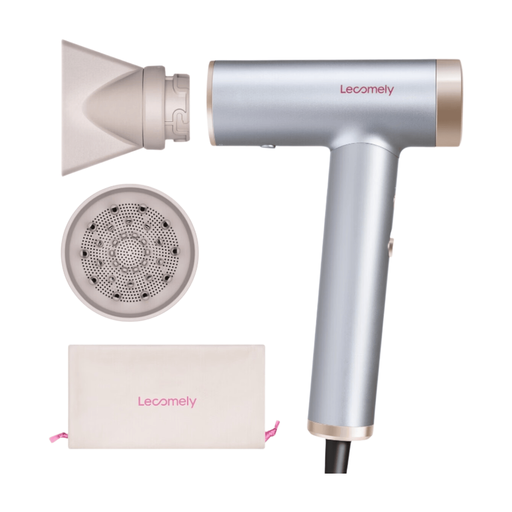
Why it suits this profile: This model combines straightforward controls with 2 speeds, 4 heat settings, a diffuser and a concentrator. That makes it suitable for everyday use at home, without unnecessarily complicated settings.
You don’t have to rely on wattage alone: the available speeds, heat settings and accessories are clearly listed.
Includes a diffuser and concentrator; cool-shot button for finishing your style.
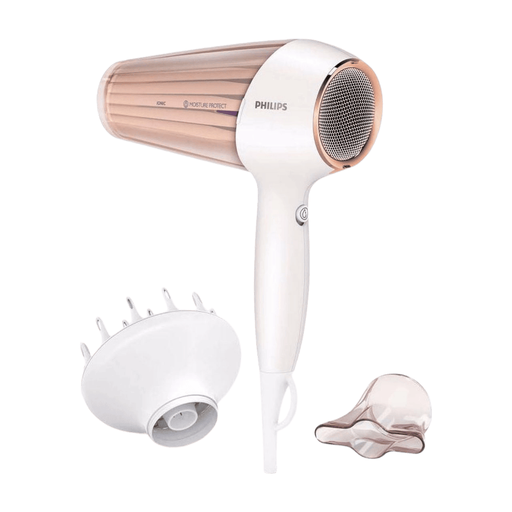
Why it suits this profile: This model offers several adjustment options for users who want precise control over temperature, speed and styling. The product description also lists a diffuser and ionic technology.
The choice isn’t based on power alone: this model has 2 speeds, 6 heat settings, a cool-shot button and a stated power rating of 2300 watts.
MoistureProtect sensor according to Philips; diffuser included; ThermoProtect and ionic technology according to the product specifications.
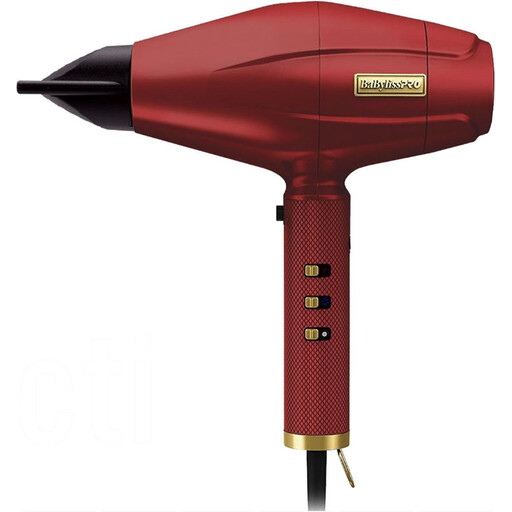
Why it suits this profile: The combination of a digitally driven motor, 2200 watts, a weight of 420 grams and several accessories makes it a good fit for frequent styling at home or use in a salon.
The stated weight, motor information and settings are clearly specified. The noise level isn’t listed, so bear that in mind if quiet operation is important to you.
420 grams; 2200 watts; turbo and cool-shot functions; three narrow concentrator nozzles, a diffuser and a beard comb according to the product information.
We’ve put together a complete, up-to-date list of products that meet these strict selection criteria and the applicable European safety requirements.
Never use a hair dryer in or directly next to water. Keep the air intake and outlet clear, and let the appliance cool down before putting it away. Clean the filter regularly according to the instructions. Stop using the appliance if you notice smoke, a burning smell, a damaged cable or unusual noises.
Electrical appliances are covered by statutory consumer rights in the European Union. The exact terms may vary by product and seller. Check the warranty information on the product page and keep your proof of purchase.
Choose a model with a diffuser, multiple heat settings and a low speed. A diffuser helps distribute the airflow while you dry your hair. The effect depends on your hair texture and styling method; a manufacturer’s claim about ions or shine isn’t a guaranteed result for every user.
Lifespan depends on how often you use it, how well you maintain it and the quality of the motor and cable. Clean the filter regularly, don’t block the ventilation openings and only put the appliance away once it has cooled completely. Manufacturers may state an expected motor lifespan, but this isn’t a guarantee for every use case.
A higher wattage can mean more electricity use during prolonged use. The actual cost depends on the power rating, drying time and your energy tariff. An efficient model with good airflow may therefore be more practical than an appliance with a higher wattage alone.
