
Vandaag of morgen in huis

Kwaliteit gegarandeerd

Welkomstaanbiedingen ontgrendelen: GRATIS bezorging | Tot 80% korting | Gratis 30 dagen JoyPlus-proefperiode
Download de app
Choosing a new hair dryer might seem straightforward, but product pages often focus on wattage, ions and motor speed without explaining what they actually mean for you in the bathroom. A higher wattage, for example, doesn’t automatically mean faster, more comfortable drying. And a compact hair dryer may not be the best choice for long or thick hair if its airflow isn’t sufficiently focused.
Look out for these three common pitfalls:
For everyday use, at least two speed settings and several heat settings are practical. A low setting is useful for fine hair or controlled styling, while stronger airflow can help with thick or long hair. A cool-air button is handy for finishing a style, but it’s no substitute for using a brush properly.
Models with high-speed motors are often marketed as fast hair dryers. As well as the motor speed, look for specific information about airflow speed, temperature control and overheating protection. A specification such as 110,000 rpm sounds impressive, but on its own it won’t tell you how loud the appliance is or how evenly it distributes heat.
A lightweight hair dryer weighing around 330 to 570 grams can be more comfortable when you’re drying long hair section by section. Pay attention to the motor’s balance, too. A slightly heavier appliance can still feel comfortable if its weight is well distributed.
A cord of around 1.8 to 2 metres gives you enough room to move around in many UK bathrooms. Also check whether the filter is removable. Lint and dust can block the air intake, making the hair dryer hotter and less efficient.
A hair dryer with a concentrator directs airflow onto a brush, making it suitable for blow-drying hair smooth or styling a fringe. A hair dryer with a diffuser spreads the airflow more gently over a wider area. This can be useful for curls and volume, as long as you don’t hold the diffuser against your scalp at the highest heat setting for too long.
For curly hair, several low heat and speed settings are often more important than high wattage alone. For fine hair, control is key to avoiding unnecessary heat. If you travel often, consider a folding hair dryer, dual voltage and the size of the attachments.
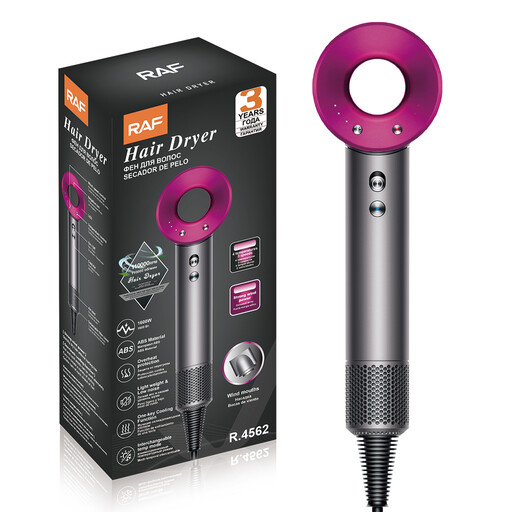
Why it suits this profile: This model offers three speeds and four heat settings, making it easy to get started without a large number of attachments. The product description says it has a compact design and weighs less than 2 pounds.
You’re not choosing on wattage alone: adjustable airflow and temperature make the appliance easier to adapt to different hair types.
1600 W, 3 speeds, 4 heat settings and, according to the product information, overheating protection.
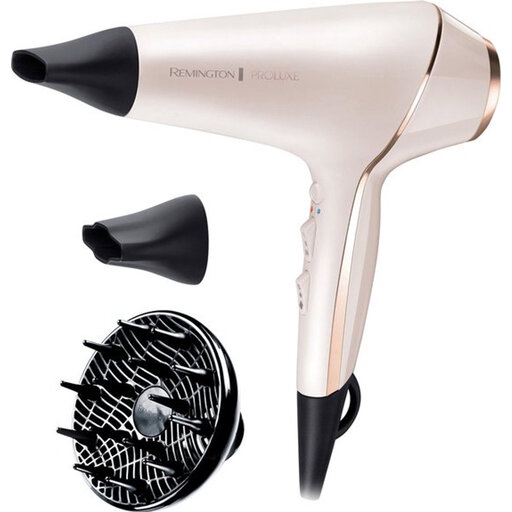
Why it suits this profile: The AC9140 is designed for regular use at home and styling with a concentrator. According to the product description, it has an AC motor, 2400 W of power and an ionic function.
The specifications cover more than just power: they also include settings, a cool shot and a Style Shot function. Bear in mind, though, that the stated weight is 945 grams.
3 heat settings, 2 speeds, cool shot and ionic technology, according to the product information.
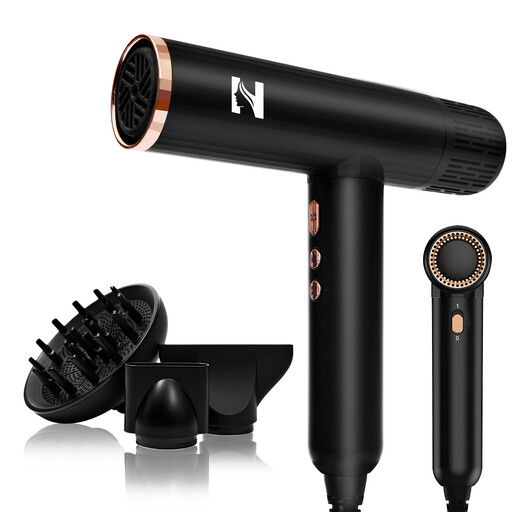
Why it suits this profile: According to the product description, this model is designed for use at home, when travelling and for salon-style styling. Its diffuser, two concentrators and multiple settings make it a good fit for long, thick or curly hair.
The choice is based on attachments, weight and noise information rather than motor speed alone. The manufacturer states that the noise level is below 65 dB; check how it sounds in your own situation.
1900 W, 3 speeds, 4 temperature settings, a diffuser and two concentrators; stated weight is 0.57 kg.
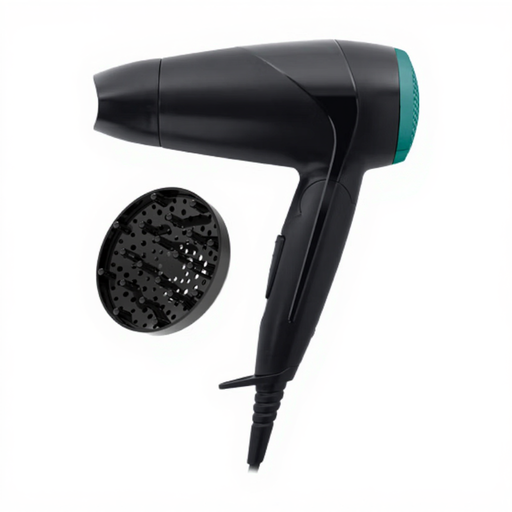
Why it suits this profile: Its folding handle, weight of 510 grams and stated dual-voltage function make this model suitable for hand luggage, a gym bag or holidays.
The compact design doesn’t mean you have to miss out on essential attachments: the product information lists both a narrow nozzle and a diffuser.
2000 W, folding handle, two speeds, two heat settings, diffuser and dual voltage, according to the product details.
We’ve put together a complete, up-to-date list of products that meet these strict selection criteria and current European safety regulations.
For home use, the stated power is often between 1,500 and 2,400 W. A higher wattage may mean more heat or airflow, but always check the speed settings, temperature control and airflow too. For fine hair, having more control is often more important than maximum power.
Its lifespan depends on how often you use it, the type of motor, how well you clean it and ventilation. Regularly clear dust and hair from the filter, and avoid covering the air inlet. In the European Union, the legal guarantee for many consumer products is at least two years; check the terms for the specific model and retailer.
Energy use depends on the appliance’s power and how long you use it. A 2,000 W appliance uses a theoretical 2 kWh if it runs at full power for one hour. In practice, consumption is often lower because you use the hair dryer for less time or don’t keep it on the highest setting throughout. A fast hair dryer may therefore run for less time per use, but overall consumption varies by model and drying routine.
