
Vandaag of morgen in huis

Kwaliteit gegarandeerd

Welkomstaanbiedingen ontgrendelen: GRATIS bezorging | Tot 80% korting | Gratis 30 dagen JoyPlus-proefperiode
Download de app
Choosing a new hair dryer may seem straightforward. However, models vary considerably in airflow, heat control, noise level, attachments and weight. A high wattage, for example, does not automatically mean your hair will dry faster. Terms such as “ionic”, “professional” and “salon results” only tell you something when you check the technical specifications.
This buying guide will help you assess marketing claims and choose a hair dryer that suits your hair type, routine and budget.
The power rating is often displayed prominently: 1,600, 2,000 or even 2,400 watts. This mainly indicates how much electrical power the appliance uses. Actual drying time also depends on the motor, airflow, temperature control and the design of the air outlet.
A fast hair dryer therefore needs more than just a high wattage. Also look for a stated air speed, airflow volume or motor speed. These values are not always directly comparable, as brands use different measurement methods.
According to product descriptions, an ionic hair dryer may help reduce static electricity and frizz. However, this does not guarantee the same result for every hair type. The outcome also depends on your brushing technique, the distance from your hair, humidity and the hair products you use.
So check whether ionic technology is actually listed as a product specification. Claims about shine, moisture retention or reduced frizz should be treated as information from the brand, rather than a guaranteed result.
A concentrator is useful for directing the airflow and creating a smooth style. For curly or wavy hair, a hair dryer with diffuser is often more practical, as it distributes the airflow over a larger area. Pay attention to the included attachments, but also to how they are fitted. Magnetic or securely locking attachments are easier to use while styling than loose components that shift easily.
For everyday home use, a power rating of around 1,600 to 2,100 watts is often a sensible choice. Thick, long or very wet hair may benefit from a more powerful model, but the strong airflow should still be adjustable.
A professional hair dryer is not identified solely by its high power rating. Also check:
For example, the Valera MatrixCare AI lists a digital motor running at 100,000 rpm, a power rating of 2,000 watts, six speed settings, three heat settings and a weight of 295 grams. These are verifiable details that are particularly relevant for long or frequent use.
A hair dryer with temperature control gives you more control than a model with only hot and cold settings. Fine hair may require a lower setting, while thick hair needs more airflow. A cool-air setting is useful for finishing a style, but it does not replace careful use of heat.
According to Philips, ThermoShield Advanced technology in the Philips 7000 Series BHD723/10 adjusts the temperature during use. This statement comes from Philips’ product information. Treat it as a described feature, not a guarantee that heat damage will be completely prevented.
Keep the hair dryer moving, do not direct it at one spot for too long and maintain a sufficient distance. Also check that the air intake remains clear. A blocked filter can reduce airflow and cause overheating.
If you use a hair dryer every day, you will quickly notice its weight in your arm and wrist. A lightweight hair dryer weighing around 300 to 600 grams may be more comfortable for long hair or intensive styling. In a salon, a long cord, a sturdy filter and a durable motor are also practical features.
A quiet hair dryer is relative: noise levels below 65 dB are sometimes stated, but your experience also depends on the tone of the motor and the room. Check whether the decibel level is actually included in the product specifications.
Clean the removable filter regularly. Do not use the hair dryer near a bath, shower or filled washbasin. European product information generally states a minimum of two years’ statutory guarantee, but check the terms for each product and seller.
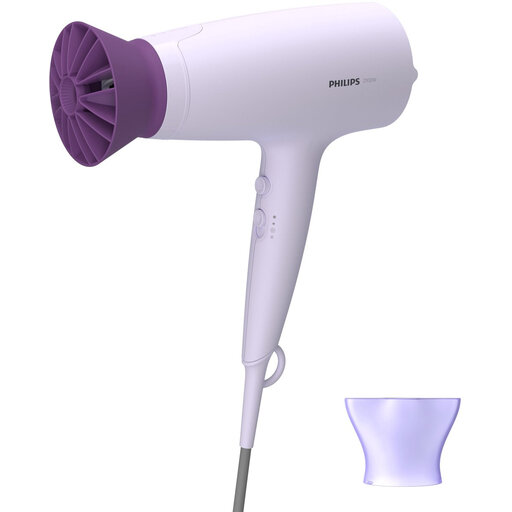
Why it suits this profile: A straightforward choice for everyday drying, with several combinations of heat and speed.
The choice is not based solely on 2,100 watts: the model lists six speed settings and six temperature settings, plus a cool-air function.
2,100 watts, six speeds, six heat settings, a 1.8-metre cord and a concentrator attachment, according to the product details.
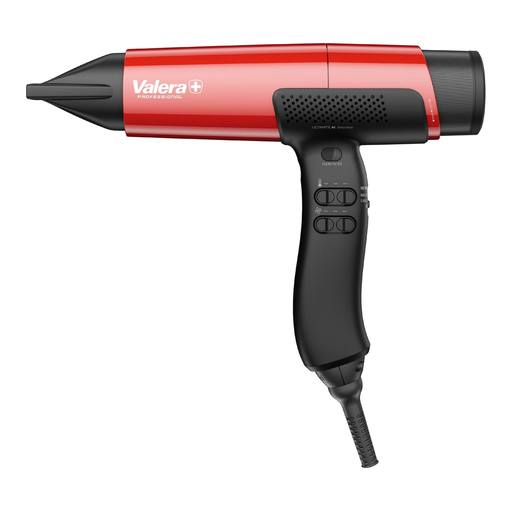
Why it suits this profile: Designed for users who style their hair regularly and value low weight and plenty of adjustment options.
The product specifications list more than just 2,000 watts: they also include the motor, six speeds, three heat settings and overheat protection.
A weight of 295 grams, ionic technology, a three-metre cord, two nozzles and a digital motor, according to Valera’s product information.
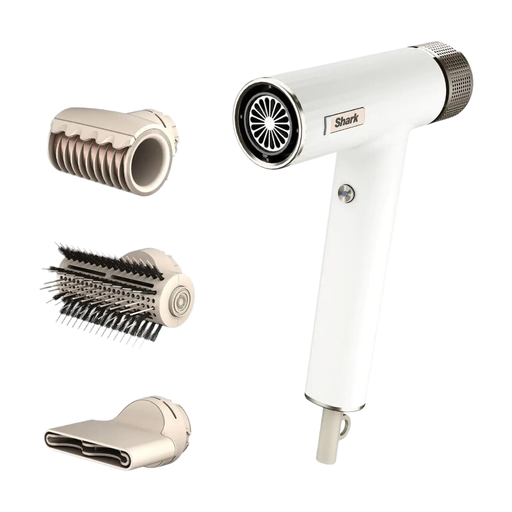
Why it suits this profile: Ideal for anyone who creates different looks and wants to combine a diffuser, styling nozzle and smoothing brush.
The attachments are clearly specified: three in total, including a diffuser. This makes it clearer which styling options you get.
Diffuser, styling nozzle and smoothing brush; according to Shark, suitable for straight, wavy, curly and coily hair.
We have put together a complete, up-to-date list of products that fully meet these strict selection criteria and the applicable European safety regulations.
This depends on the motor, frequency of use, maintenance and strain on the cord. Clean the filter regularly, do not block the air intake and allow the appliance to cool down before storing it. A statutory guarantee of at least two years applies to many products, but the exact terms vary by seller and manufacturer.
Start with towel-dried hair, choose a low or medium temperature and keep the dryer moving. Do not hold the hair dryer over one spot for too long and use the cool-air function at the end. When using a diffuser, it is advisable to follow the safety instructions for the specific model.
A 2,000-watt model theoretically uses more power than a 1,600-watt model when both are switched on for the same length of time. A shorter drying time may partly offset the difference. So do not compare wattage alone: also consider how long you use the dryer, the airflow and the settings you actually use.
