
Vandaag of morgen in huis

Kwaliteit gegarandeerd

Welkomstaanbiedingen ontgrendelen: GRATIS bezorging | Tot 80% korting | Gratis 30 dagen JoyPlus-proefperiode
Download de app
Replacing a faulty headlight seems straightforward, until you discover that an H7 bulb does not fit every socket and that an LED retrofit is not automatically legal or trouble-free. If you focus only on terms such as “extra bright” or “plug-and-play”, you could end up dazzling oncoming drivers, triggering dashboard error messages or fitting a bulb that does not sit correctly in the housing.
As a Joybuy Product Recommendation Officer, I therefore start with verifiable specifications. For H7 LED and halogen car headlights, the key factors are the fitting, light technology and vehicle compatibility.
H7, H4, H11, HB3/9005 and HB4/9006 are different connections. A bulb may look almost identical in shape, yet still fail to lock into place properly. Always check the handbook, the old bulb or the vehicle details provided by the manufacturer.
Also consider the function. An H4 bulb generally combines dipped beam and main beam in a single bulb. H7 is often used for dipped or main beam, while H11, HB3 and HB4 are also regularly used for fog lights or spotlights.
Claims such as “300% brighter” or “500% more light” are product claims made by the brand and do not provide a universal comparison across all vehicles. According to the product description, for example, ENdureLite claims up to 300% more brightness for certain LED bulbs. Roadsun states up to 500% more brightness than standard halogen for some models.
The actual light distribution also depends on the reflector, projector, lens, adjustment and condition of the headlight housing. So do not look only at lumens; also consider the beam pattern and the correct positioning of the light source.
An LED bulb may fit directly from a mechanical point of view, yet still cause a CANbus warning, flickering or radio interference. Some vehicles require an additional resistor, adapter or CANbus decoder. Halogen bulbs are generally easier to install, but they must still be aligned correctly.
For every installation: switch off the lights, allow the bulb to cool and do not touch the glass of a halogen bulb with your bare fingers. Grease can cause localised overheating.
Before buying, check at least the following:
An H4 LED headlight has a dual light function. H7 LED bulbs generally provide one light function per bulb. For fog lights, H11 halogen bulbs, LED fog lights or HB3/HB4 bulbs may be used, depending on the original fitting.
A standard halogen bulb usually produces warmer light of around 3,200–3,500K. White car lighting at 6000K looks cooler and bluer, but a higher colour temperature does not automatically provide a better beam pattern in rain or fog.
According to the product description, OSRAM COOL BLUE INTENSE H7 and H11 are halogen bulbs with an LED look and a colour temperature of up to approximately 5,000K. OSRAM NIGHT BREAKER models use a lower colour temperature, such as approximately 4,200K for the NIGHT BREAKER LASER H7. This creates a whiter appearance without switching to LED technology.
LED bulbs often use a fan or aluminium heat sink. The product descriptions for various ENdureLite and Roadsun models state a lifespan of up to 50,000 hours. This is a product specification provided by the brand, not a guarantee for every usage situation. Temperature, moisture, vibration and the quality of the vehicle wiring all play a role.
Halogen bulbs generally have a shorter lifespan, but are easier to replace and usually do not require additional electronics. According to the manufacturer, OSRAM ULTRA LIFE H7 is designed to provide longer replacement intervals. Always check the latest warranty and compatibility information with the retailer or manufacturer.
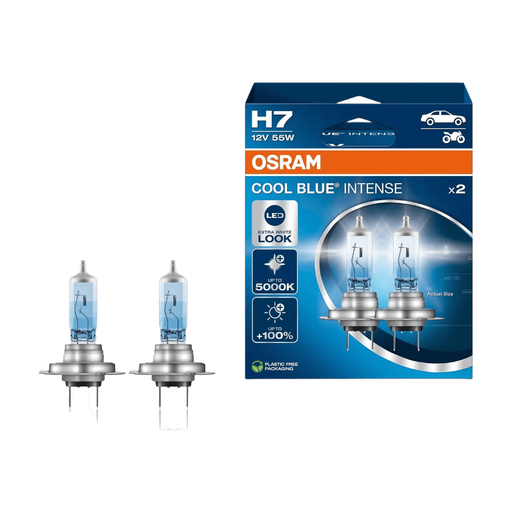
Why this suits the profile: A direct H7 halogen replacement for anyone wanting a whiter appearance without fitting an LED retrofit.
The fitting, 55W power rating and H7 socket are clearly specified. However, check that your vehicle uses H7.
Halogen, 55W, up to 5,000K according to the product description, supplied as a set of 2.
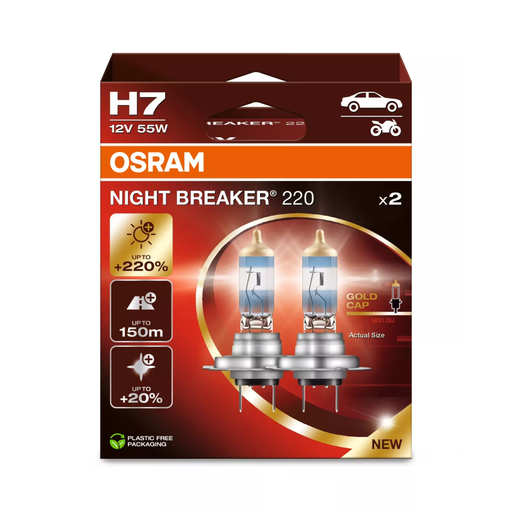
Why this suits the profile: For drivers who want to stick with halogen and are looking for a product with clear light specifications, after checking vehicle compatibility in advance.
The manufacturer provides a compatibility list. Check it before buying; “H7” alone is not sufficient for every car.
According to OSRAM, up to 220% more brightness than the legal minimum and a beam reaching up to 150 metres.
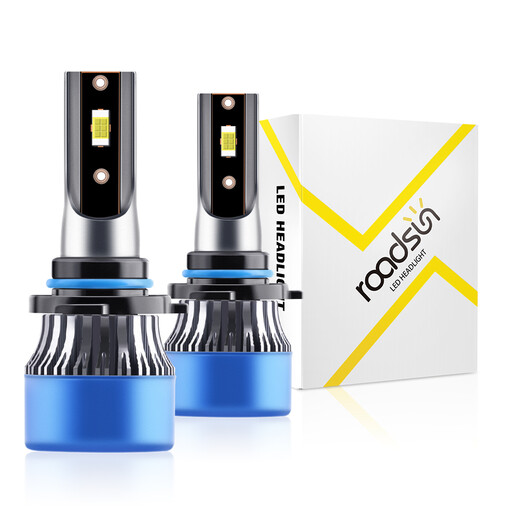
Why this suits the profile: Designed for vehicles with an HB4/9006 fitting, including cars, SUVs, trucks, motorbikes and off-road vehicles.
The fitting and direct connection are clearly specified. Still, check the vehicle function and whether additional electronics are required.
6000K according to the product description, built-in fan, IP68 rating according to the brand and plug-and-play connection.
H7 LED bulbs offer a cool light colour and use an active cooling system or aluminium housing. Before installation, check that the light source is positioned correctly in the reflector. Some European vehicles may require a CANbus adapter.
Halogen bulbs are a practical choice when you want to replace your bulbs without making modifications. OSRAM COOL BLUE INTENSE, OSRAM NIGHT BREAKER and OSRAM ULTRA LIFE each focus on a different benefit: a whiter appearance, more light according to the manufacturer or a longer stated lifespan.
For an H4 system, you can choose between H4 LED headlights and H4 halogen technology. Depending on the vehicle, H11 halogen bulbs and HB3 9005 LED bulbs are often used for fog lights or main beam. HB4 9006 LED bulbs are also vehicle-dependent.
For LED retrofits, also check the Dutch approval requirements and official vehicle compatibility. A bulb that fits mechanically is not automatically approved for use on public roads. Have the beam pattern checked after installation and readjust the headlights if necessary.
We have compiled a complete, up-to-date list of products that fully meet these strict selection criteria and the applicable European safety regulations.
No. The fitting may be the same, but LED and halogen use different light technologies. Check the vehicle documentation, bulb housing and legal approval requirements. LED bulbs may also require a CANbus adapter or additional decoder.
This varies by product and operating conditions. Some brands state a lifespan of up to 50,000 hours, for example for models with a fan and aluminium housing. This is a manufacturer specification. Heat, moisture, vibration and everyday use can affect the actual lifespan.
For headlights, a set of 2 car bulbs is usually practical. This ensures that both sides retain a similar light colour and brightness. If one bulb fails, the other may already be ageing, particularly with halogen. After replacement, always check that the left and right sides produce the same beam pattern.
