
Vandaag of morgen in huis

Kwaliteit gegarandeerd

Welkomstaanbiedingen ontgrendelen: GRATIS bezorging | Tot 80% korting | Gratis 30 dagen JoyPlus-proefperiode
Download de app
Driving in the dark or in bad weather with dim, yellowish halogen bulbs can be both tiring and unsafe. It's a familiar feeling: squinting to see road markings while other cars seem to constantly blind you with their bright, white lights. Upgrading to H7 LED headlights is a logical step for better visibility and a more modern look for your car.
However, the market for H7 LED car bulbs is vast, and the specifications can be confusing. This article serves as a practical guide. As a Joybuy Product Recommendation Officer, I'll help you filter through the information so you can make a choice that suits your car and your needs.
Before you make a choice, there are a few key specifications to understand. This will help you see through the marketing jargon and focus on what really matters.
Light output, expressed in lumens (lm), indicates how bright a bulb is. More lumens generally means more light on the road. Colour temperature, measured in Kelvin (K), determines the colour of the light. Standard halogen bulbs have a yellowish hue of around 3200K. In contrast, an H7 LED 6000K bulb produces a bright, cool white light that is comparable to daylight. This not only provides a modern look but can also improve contrast, allowing you to see objects and road lines more clearly. If you're looking for truly bright H7 bulbs, a combination of a high lumen value and a colour temperature around 6000K is a good guideline.
Modern cars are equipped with a CAN bus (Controller Area Network) system that monitors the vehicle's electronics. Because LED bulbs consume far less power than halogen bulbs, the system may think a bulb is burnt out and display an error message on your dashboard. A CAN bus compatible H7 LED bulb has a built-in resistor or driver that prevents this.
Additionally, a plug and play H7 LED design makes installation significantly easier. These bulbs have the same dimensions and fitting as the original halogen bulb, allowing you to swap them directly without any modifications to the wiring or housing. This makes replacing H7 halogen bulbs a job you can often do yourself.
LED chips produce heat. A good cooling system is crucial for the bulb's performance and lifespan. There are two main types:
The choice depends on the available space in your headlight housing and your personal preference. Both systems are designed to ensure a long lifespan, often lasting for tens of thousands of hours.
Based on product specifications and features, we've highlighted some popular choices for you.
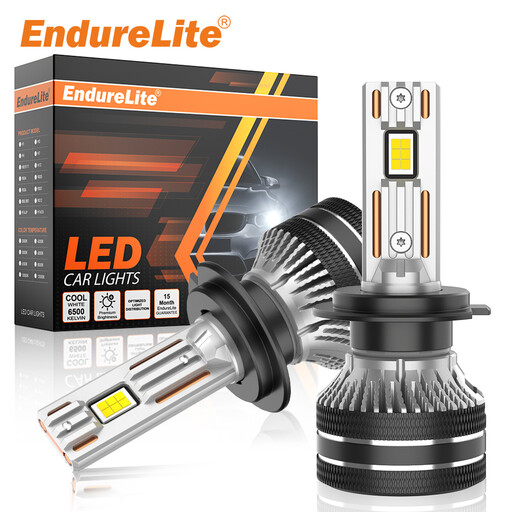
Why It Stands Out: This set from EndureLite combines high light output with an efficient cooling system. According to the manufacturer, these bulbs offer up to 300% more brightness than standard halogen bulbs, providing significantly better visibility.
Advantages:
Who Is It For? For drivers looking for a powerful upgrade for their H7 LED low beams and who want a reliable, actively cooled solution.
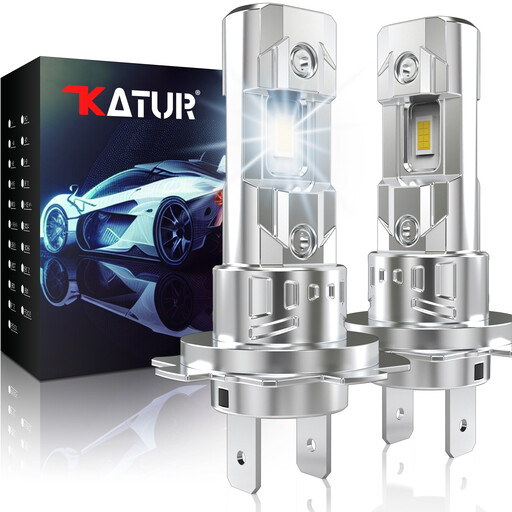
Why It Stands Out: The KATUR H7 LED bulbs are notable for their fanless design. This not only makes them completely silent but also eliminates the risk of a faulty fan. Their compact size simplifies installation in headlight housings with limited space.
Advantages:
Who Is It For? Ideal for DIY enthusiasts seeking a silent, maintenance-free bulb and for cars where space behind the headlight is limited.
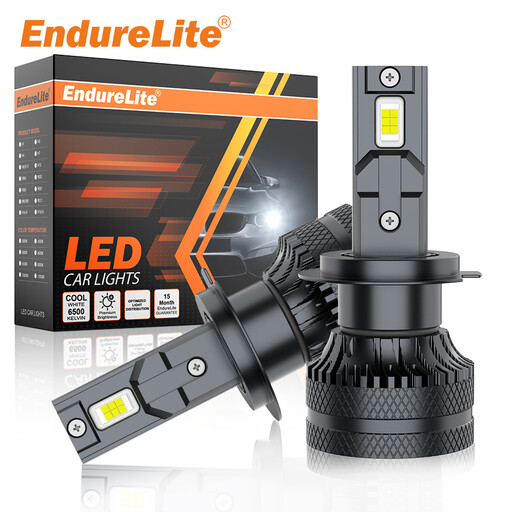
Why It Stands Out: This set is specifically designed as an H7 LED fog light. The specifications are similar to EndureLite's headlight version, with a focus on brightness and durability under harsh conditions, as indicated by its IP68 waterproof rating.
Advantages:
Who Is It For? For drivers who want to upgrade their fog lights for better performance and safety in poor visibility.
The right lighting depends on your car and your specific needs. If the options above aren't a perfect match, or if you're looking for other types of lighting, there's more to explore.
Check out our full range of Waterproof LED lighting for more options that suit your car.
Regulations for retrofitting LED lighting can be strict. For on-road use, a LED bulb may need to have specific certification (like an E-mark) that is valid for your exact car model and headlight housing. Without this specific approval, the lighting may officially be cleared for off-road or track use only. Always check the current regulations with your local transport authority before driving on public roads.
For most plug and play H7 LED models, the process is straightforward: open the hood, locate the back of the headlight assembly, twist and remove the old H7 bulb. Then, insert the new LED bulb and connect it. It is advisable to wear gloves and consult your car's owner's manual for specific instructions.
If you have a car made after roughly 2005, it likely has a CAN bus system. This system monitors the power consumption of the bulbs. A standard LED bulb uses so little power that the system might trigger a 'bulb out' warning. A CAN bus H7 LED bulb includes technology that mimics the signal of a halogen bulb, preventing error messages on the dashboard.
