
Vandaag of morgen in huis

Kwaliteit gegarandeerd

Welkomstaanbiedingen ontgrendelen: GRATIS bezorging | Tot 80% korting | Gratis 30 dagen JoyPlus-proefperiode
Download de app
Driving in the dark or in bad weather with dim halogen bulbs feels unsafe. You only see road markings and traffic signs at the last second. An upgrade to H7 LED headlights seems like a logical step for brighter visibility and a modern look, but the market is full of pitfalls. Many car owners are disappointed by products that don't fit, cause error messages, or blind oncoming drivers.
As a Joybuy Product Recommendation Officer, I'll help you cut through the marketing claims. We'll look at what really matters, so you can avoid making a bad purchase. Let's examine the three most common pitfalls when choosing LED car lighting.
To avoid these problems, you need to pay attention to a few technical details. These aren't complicated, but they make the difference between a good and a bad purchase.
The fitment determines whether the bulb will even fit in your car. The most common types are H7 LED (often for low beams), H4 LED (low and high beam in one bulb), and H11 LED (often for fog lights). Always check which type your car requires.
Even more important is the beam pattern. A good LED bulb has a 1:1 design, meaning the LED chips are positioned in the exact same spot as the filament in a halogen bulb. This ensures a sharp beam that illuminates the road without blinding oncoming drivers. This is crucial for safety and for passing inspections. Therefore, choose a plug-and-play LED model that mimics the original design.
The color of the light is expressed in Kelvin (K). Standard halogen bulbs have a yellowish color of around 3000K. Most LED headlights are 6500K headlights, providing a bright, cool white light that resembles daylight. This increases contrast, allowing you to see obstacles and road details more quickly. This provides bright car headlights and reduces eye fatigue during long night drives.
The switch from replacing halogen with LED is only worthwhile if the bulbs last a long time. The lifespan depends directly on the cooling system. There are two types:
For compatibility, your car's CANbus system is important. This system checks if all bulbs are working. Because LED bulbs consume less power, the system might think the bulb is broken. A "CANbus ready" or "CANbus proof" bulb has a built-in resistor to prevent this. For some cars, an external resistor (decoder) may still be necessary.
Not every bulb is right for every driver. Below are a few options, matched to different user profiles.
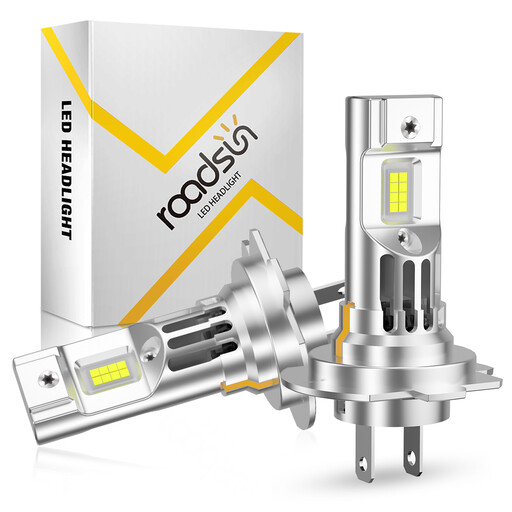
Why This Fits Their Persona: This user wants a quick and hassle-free upgrade. The Roadsun H7 is designed as a direct replacement that requires no extra adapters or modifications, allowing installation to be completed in minutes.
The 'plug-and-play' design without a separate adapter tackles the pitfall of an unnecessarily complex installation. The built-in fan is focused on preventing overheating.
Active cooling with a built-in fan ensures a stable temperature, which, according to Roadsun, contributes to a lifespan of over 50,000 hours.
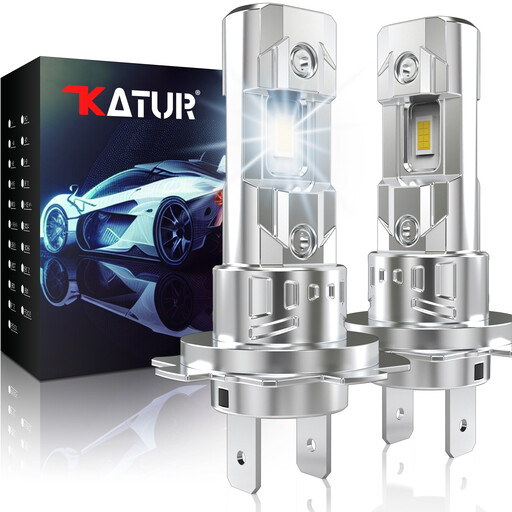
Why This Fits Their Persona: For those seeking a noticeable improvement over halogen without paying a premium price. This model offers bright light output in a compact and easy-to-install format.
The fanless design eliminates the risk of a faulty fan, a common issue with budget bulbs. Its compact size prevents installation problems in tight headlight housings.
Silent operation thanks to passive cooling. The 1:1 mini design ensures the bulb fits in most factory sockets, even when space is limited.
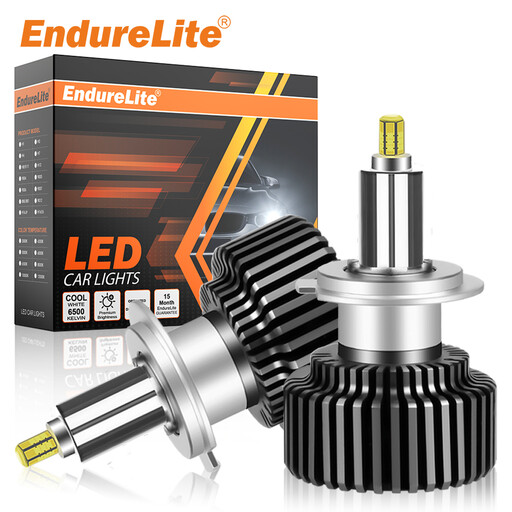
Why This Fits Their Persona: Ideal for the driver looking for a reliable and broadly compatible solution. This series is available in almost all common fitments and is designed to work with 99% of vehicle systems.
The built-in 'CANbus ready' feature is specifically designed to minimize the pitfall of dashboard errors. According to ENdureLite, this is effective for 99% of vehicles.
The base is adjustable, allowing you to rotate the LED chips to the 3 and 9 o'clock positions after installation. This is essential for creating a correct and focused beam pattern.
We have compiled a complete, up-to-date list of products that meet these selection criteria and focus on proper installation.
Regulations regarding retrofitting LED bulbs into headlights designed for halogens are complex and vary by region. Officially, a bulb must have specific certification (like an ECE approval in Europe) for your exact car model to be street legal. In practice, vehicle inspections often focus on the beam pattern. A bulb that doesn't blind oncoming drivers and has a correct beam is often approved. Always check current local transport authority guidelines and choose a bulb with a good 1:1 design.
This depends on your car. Modern cars use a CANbus system that monitors the power consumption of bulbs. Because LED bulbs are more energy-efficient, the system might think the bulb is broken and display an error. Many CANbus proof LED bulbs have a built-in resistor to prevent this. However, with some sensitive cars, particularly German makes, a separate CANbus decoder may still be required.
Manufacturers often advertise a lifespan of 30,000 to 50,000 hours. For comparison, a halogen bulb lasts about 1,000 hours. The actual lifespan of an LED bulb heavily depends on the quality of its cooling system. A model with an efficient heat sink or a durable fan will come much closer to its promised lifespan than a cheap model that can't dissipate heat effectively. In general, replacing halogen with LED is a durable choice that saves you replacements in the long run.
