
Vandaag of morgen in huis

Kwaliteit gegarandeerd

Welkomstaanbiedingen ontgrendelen: GRATIS bezorging | Tot 80% korting | Gratis 30 dagen JoyPlus-proefperiode
Download de app
Driving in the dark or in poor weather with dim, yellowish halogen bulbs can be tiring and unsafe. It's a familiar scenario: you find yourself squinting to see road markings, and traffic signs only appear at the last second. For many drivers, upgrading to H7 LED headlights is a logical step towards clearer vision and a more modern look.
However, the market for automotive LED headlights is vast, and the technical specifications can be overwhelming. What do terms like lumen, Kelvin, and CAN bus mean? And which bulb is the right fit for your car without causing errors?
As a Joybuy Product Recommendation Officer, I'm here to help you filter through the information. In this article, we'll provide practical buying tips and highlight several popular choices for 2026, enabling you to make an informed decision.
Before making a choice, it's helpful to understand a few key specifications. This will help you find the H7 LED kit that matches your needs and your vehicle.
A bulb's brightness is expressed in lumens (lm). The higher the lumen count, the more light the bulb produces. Many H7 LED bulbs offer significantly higher light output than the standard 1500 lumens of a halogen bulb. This results in brighter headlights that illuminate the road farther and wider.
The color of the light is indicated in Kelvin (K). Halogen bulbs have a yellowish hue of around 3200K. A popular choice for LED is H7 LED 6000K, which produces a crisp, cool white light. This not only improves contrast and visibility in the dark but also gives your car a sleek, modern look.
Not every LED bulb works in every car out of the box. Modern cars use a CAN bus (Controller Area Network) system to monitor the status of components like the lighting. Because LED bulbs consume less power than halogen bulbs, the system might think the bulb is faulty, resulting in an error message on your dashboard.
Therefore, opt for a CAN bus H7 LED kit. These bulbs have a built-in resistor or driver that correctly informs the car's system and prevents error messages. Additionally, many kits are designed as plug-and-play H7 LEDs. This means they have the same size and connector as the original halogen bulb, making replacing H7 bulbs a job you can often do yourself without any modifications.
A major advantage of LED lighting is its long lifespan. While a halogen bulb lasts for an average of 500 to 1000 operating hours, a quality LED bulb can function for tens of thousands of hours. However, its lifespan is highly dependent on heat dissipation. LED chips get hot and must be cooled effectively to maintain their performance and durability.
Therefore, pay attention to the cooling system. This can be a fan, an aluminum heat sink, or a combination of both. A well-designed cooling system ensures the bulbs perform stably, even during long drives.
Based on product specifications and features, we have highlighted some compelling options for you.
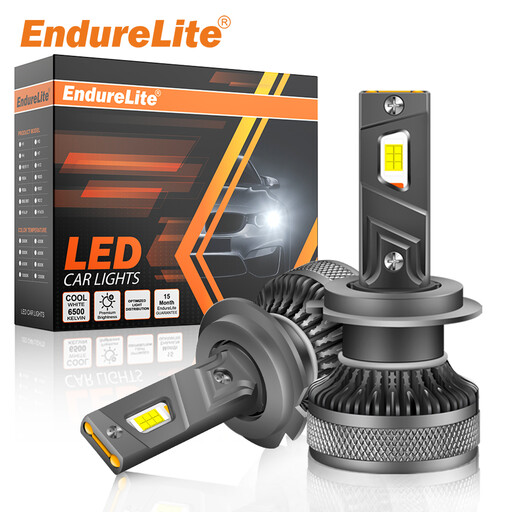
EndureLite H7 LED Headlight Bulbs - 20000 Lumen
Why it stands out: This kit from EndureLite is notable for its high stated light output of 20,000 lumens per pair and an efficient cooling system. According to the manufacturer, the bulbs are 300% brighter than halogen.
Pros:
Who is this for? For drivers looking for a significant upgrade in brightness and a durable, long-term solution.
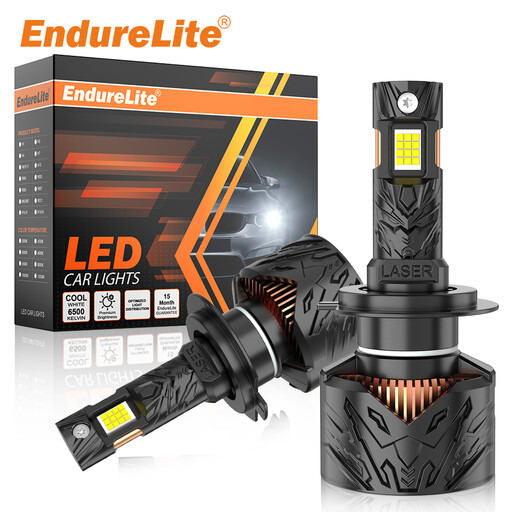
ENdureLite H7 LED Replacement Bulbs - 25000LM
Why it stands out: This kit from ENdureLite emphasizes a precise beam pattern. The manufacturer states that its 1:1 beam pattern technology mimics the pattern of original halogen bulbs, which should reduce glare for oncoming drivers.
Pros:
Who is this for? For drivers who not only want bright light but also value a correct beam pattern that ensures safety for other road users.
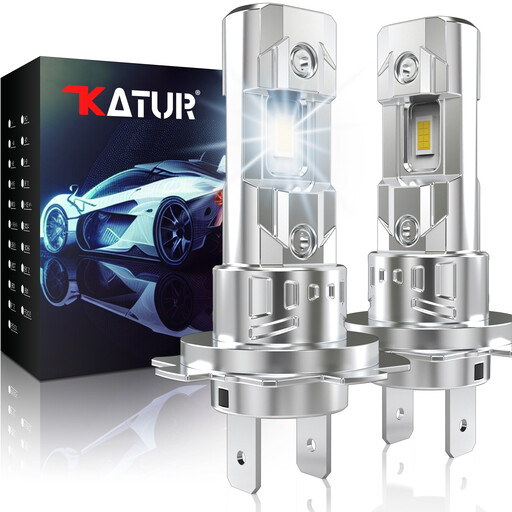
KATUR H7 LED Headlight Bulbs - 26000LM Fanless
Why it stands out: The KATUR H7 LED bulbs are distinguished by their fanless design. This eliminates fan noise and the risk of failure from a faulty fan. The mini size makes installation in tight headlight housings easier.
Pros:
Who is this for? Ideal for DIYers who want a simple installation, especially in cars with limited space behind the headlight. Also a great choice for those who prefer a completely silent bulb.
The right choice depends on your car, your budget, and your personal preferences. If the recommendations above aren't exactly what you're looking for, many other options are available.
Check out our wider range of Waterproof LED Bulbs for more choices that suit different vehicles and needs.
Vehicle lighting regulations are strict. For a vehicle to be road-legal, its headlight beam pattern must be correct and not cause glare for oncoming drivers. In many regions, aftermarket LED bulbs must have specific certifications (like an E-mark in Europe) valid for your particular car model to be legal for public road use. Many manufacturers design their H7 LED bulbs to mimic the halogen beam pattern as closely as possible. Always check your current local and regional regulations and consult your car's manual before making any modifications.
An error message is usually caused by the car's CAN bus system not recognizing the lower power consumption of the LED bulb. The solution is to choose a CAN bus H7 LED kit. These bulbs are equipped with a built-in resistor that 'tells' the system that everything is functioning correctly. For some highly sensitive car models, an external decoder may still be necessary.
For many car models, replacing H7 bulbs is a relatively simple job. This is especially true with plug-and-play H7 LED bulbs, which are designed to fit directly into the existing socket. The difficulty depends on the accessibility of the headlight housing in your car. Sometimes you may need to temporarily remove an air filter or battery. Consult your car's manual or search for an online tutorial video for your specific model for a step-by-step guide.
