
Vandaag of morgen in huis

Kwaliteit gegarandeerd

Welkomstaanbiedingen ontgrendelen: GRATIS bezorging | Tot 80% korting | Gratis 30 dagen JoyPlus-proefperiode
Download de app
Are your current halogen headlights little more than a dim, yellowish glow in the dark? You're not alone. Many drivers are looking for an upgrade to improve visibility and achieve a more modern look. An H7 LED headlight is a logical next step. However, the market is flooded with technical jargon and promises, which can make choosing the right one difficult.
My name is Joybuy Product Recommendation Officer. I'm here to help you filter through the information and provide practical advice, so you can make a clear choice for your car. In this guide, we'll discuss what to look for and highlight a few popular options.
Before making a purchase, it's helpful to understand a few basic principles. This will help you find the right bulb for your specific situation.
Not every bulb fits every car. The "H7" in H7 LED headlight refers to a specific type of fitting. Always check your car's owner's manual or the existing bulb to ensure you have the correct fitting.
It's best to opt for plug-and-play bulbs. These are designed to directly replace the original halogen bulb without any need for wiring modifications. Another key factor is CANbus compatibility. Modern cars, especially European brands, use a CANbus system to monitor the status of the lights. Because LED bulbs consume less power, the system might think the bulb is faulty and display an error message on your dashboard. A CANbus error free bulb has a built-in resistor to prevent this.
The brightness and colour of the light are crucial for your visibility on the road. Colour temperature is measured in Kelvin (K). While a halogen bulb is around 3200K (warm yellow), a 6500K white light provides a colour that approximates daylight. This creates greater contrast, allowing you to see objects and road markings more clearly at night.
Light output, often expressed in lumens, indicates how bright the bulb is. While more lumens might seem better, the beam pattern is just as important. A well-designed LED bulb mimics the beam pattern of a halogen bulb, ensuring it illuminates the road without blinding oncoming drivers.
LED chips generate heat that must be dissipated efficiently. Without proper cooling, light output decreases and the lifespan is drastically shortened. Look for bulbs with a robust construction, such as an aluminium housing or a built-in fan. A well-cooled LED bulb can last for tens of thousands of hours—far longer than the roughly 1,000 hours of an average halogen bulb. This makes replacing car lights a much less frequent task.
Based on product specifications and ease of installation, we've highlighted some compelling options for you.
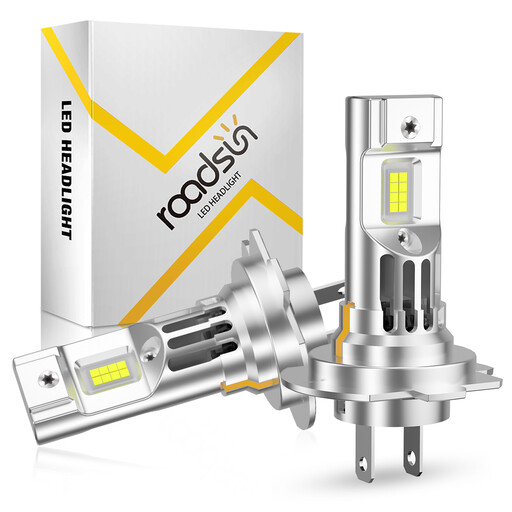
Why It Stands Out: The design of this Roadsun H7 bulb is all about simplicity. It's engineered for direct replacement without needing a separate adapter, which significantly speeds up installation. It's also versatile enough to be used as a headlight or as LED fog lights.
Key Features:
Who Is It For? The DIY enthusiast looking for a quick and straightforward H7 lighting upgrade, without the hassle of extra components.
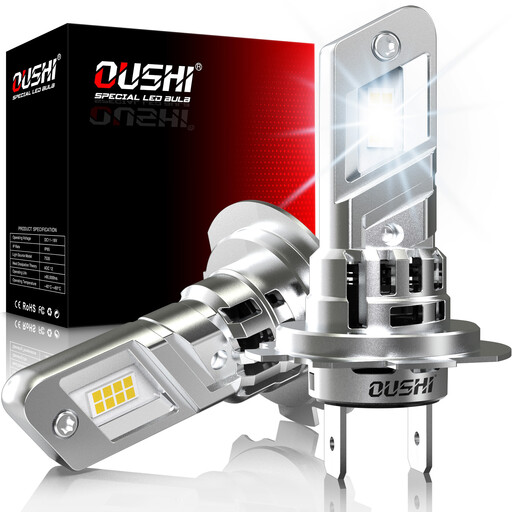
Why It Stands Out: The OUSHI H7 bulbs are notable for their 1:1 mini size, which is identical to a standard halogen bulb. This guarantees a perfect fit inside the housing. According to the manufacturer, its CANbus system is compatible with 98% of vehicles, making it a solid choice for owners of European cars.
Key Features:
Who Is It For? Drivers of newer cars, particularly those of European make, who need a reliable CANbus error free solution that fits without any modifications.
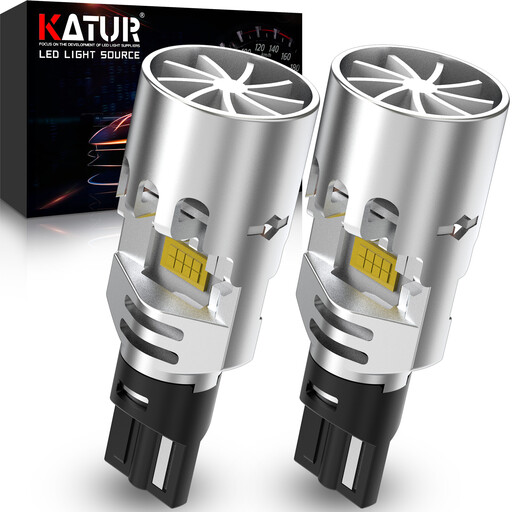
A complete lighting upgrade doesn't stop at the headlights. Good visibility when reversing, especially in the dark, is just as important for safety. This KATUR W16W LED bulb is specifically designed as a T15 reverse light.
Why It Stands Out: This bulb is purely focused on maximum brightness for a single function: reversing. Its intense light output transforms the view behind the car, making manoeuvring in the dark much safer and easier.
Key Features:
Who Is It For? Anyone looking to maximise safety by upgrading their reverse lights to an extremely bright and reliable LED solution.
If the perfect bulb for your car isn't listed here, or if you want to explore more options with a crisp, white light, we've got you covered. Upgrading your LED car lights is a personal choice that depends on your vehicle and preferences.
Browse our full selection of 6500K bulbs for various fittings and applications.
Regulations for aftermarket LED car lights can be complex. For use on public roads, a bulb may need to have an E-mark certification that is specifically approved for your car's headlight model. Many plug-and-play kits do not have this and are officially intended for track or off-road use only. It is the owner's responsibility to check local laws and ensure the headlights are correctly aligned after installation to prevent dazzling other road users.
CANbus is the communication network in your car that monitors various electronic components, including the lighting. Because LED bulbs draw significantly less power than halogen bulbs, the system can interpret this as a fault and display a "bulb out" error message on your dashboard. A CANbus error free bulb has technology built-in to mimic the signal of a halogen bulb, thereby preventing these errors. This is especially relevant for modern cars from European brands like Volkswagen, Audi, BMW, and Mercedes-Benz.
The process of replacing car lights is relatively straightforward in most vehicles. Always consult your vehicle's owner's manual first. Generally, you'll follow these steps: ensure the engine and lights are off, disconnect the battery as a precaution, open the bonnet, and locate the back of the headlight assembly. Remove the dust cover, unclip or twist the old bulb, and take it out. Insert the new LED bulb, being careful not to touch the LED chips themselves. Reconnect everything and test the lights. With plug-and-play bulbs, this process can often be completed in under ten minutes.
