
Vandaag of morgen in huis

Kwaliteit gegarandeerd

Welkomstaanbiedingen ontgrendelen: GRATIS bezorging | Tot 80% korting | Gratis 30 dagen JoyPlus-proefperiode
Download de app
Upgrading your standard halogen bulbs to an H7 LED headlight kit is a popular choice. The promise is clear: improved visibility, a modern look, and a longer lifespan. However, the market is flooded with options and marketing claims that aren't always transparent. Many car owners fall into the same traps, leading to disappointment, wasted money, and sometimes even unsafe driving conditions.
As a Joybuy Product Recommendation Officer, I'm here to help you cut through the noise. We'll discuss the most common missteps and what you truly need to look for, ensuring you make a purchase you'll be happy with for years to come.
Before you pull out your wallet, it's crucial to avoid these common mistakes:
To avoid a bad purchase, focus on the specifications that truly matter. These are the factors that determine if an H7 LED headlight is a worthwhile upgrade for your car.
A quality LED bulb must mimic the design of a traditional H7 halogen bulb as closely as possible. This is often referred to as a 1:1 mini design. The LED chips must be positioned in the exact same spot as the filament in a halogen bulb. Only then can your headlight's reflector focus the light correctly to create a sharp, glare-free beam pattern. A plug-and-play headlight with a 1:1 design is often the simplest and safest choice.
Colour temperature, measured in Kelvin (K), determines the hue of the light. Halogen bulbs have a yellowish glow of around 3000K. Most H7 LED headlights have a colour temperature of 6000K or 6500K. This produces a bright white light that approximates daylight. This not only provides a modern look but also improves contrast and the visibility of objects and road signs after dark.
LED chips get hot and require effective cooling to maintain their performance and lifespan. Without proper cooling, light output diminishes quickly, and the bulb will fail prematurely. There are two main systems:
Good cooling is essential to achieving the claimed lifespan of 50,000 hours or more.
Not all H7 LED bulbs are created equal. Below are some popular choices, matched to different user types.
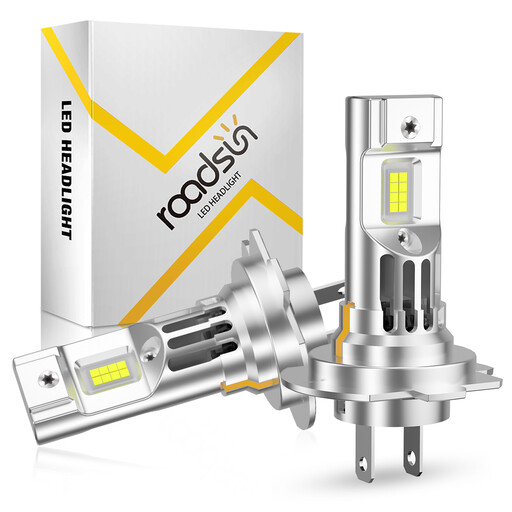
Why This Fits Their Persona: This user wants to replace halogen with LED without any hassle. The installation needs to be quick and easy, with no extra adapters or modifications. This bulb is designed for a direct, trouble-free fit.
The "no adapter needed" design directly addresses the frustration of complex installations. It's a true plug-and-play headlight that fits the original H7 socket.
The 6500K colour temperature provides bright white light. The built-in fan ensures efficient cooling, contributing to a long lifespan.
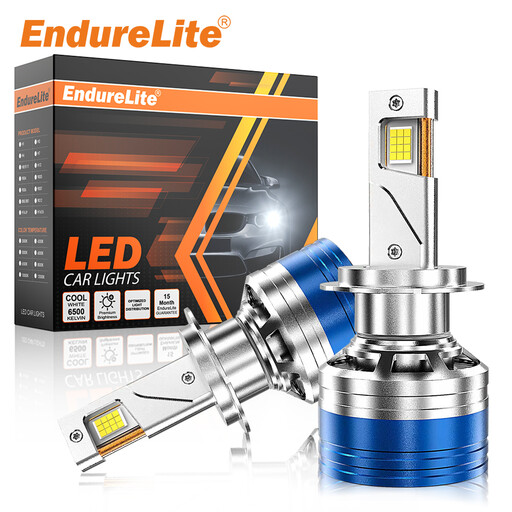
Why This Fits Their Persona: This driver is looking for a noticeable improvement over halogen without paying a premium. The focus is on a strong price-to-performance ratio and reliable core features, like a correct beam pattern and simple installation.
This bulb focuses on a 1:1 design that mimics the halogen beam pattern. This avoids the pitfall of a powerful but glaring bulb, which is essential for safety.
Offers a significant upgrade in brightness and a modern 6000K white colour. The built-in CANbus-ready driver is designed to prevent error codes on 99% of vehicles.
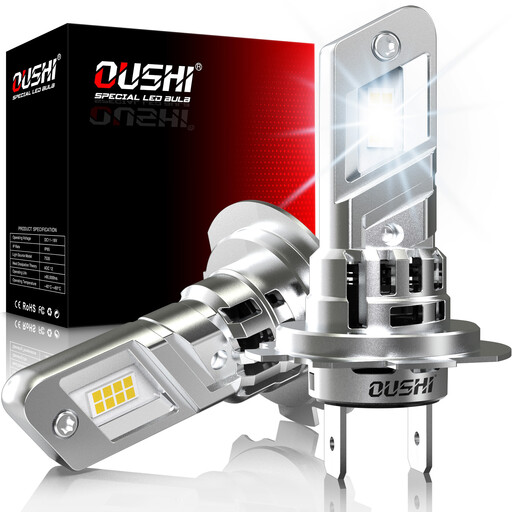
Why This Fits Their Persona: For those who frequently drive at night or on unlit roads, maximum light output is a priority. This user is looking for a high-power kit that illuminates the road far ahead and is willing to install an extra CANbus decoder if needed for peak performance.
Instead of just focusing on lumens, this bulb combines high output with a 1:1 mini design. This helps bypass the "lumen myth" by translating high brightness into a usable and far-reaching beam pattern.
According to the manufacturer, OUSHI, these bulbs offer a very high light output. The high-speed turbo fan provides active cooling to maintain performance under all conditions.
We've compiled a complete, up-to-date list of products that fully meet these strict selection criteria and local regulations.
Yes, this is highly recommended. Even with a 1:1 design, the light source's position can have minor deviations. To guarantee a correct beam pattern and avoid glaring at oncoming drivers, it's wise to have a professional garage check and, if necessary, realign the headlights after installation.
"CANbus ready" means the bulb has a built-in resistor or driver that simulates the power consumption of a halogen bulb. For most cars (up to 99%, according to manufacturers), this is sufficient to prevent error codes. However, some vehicles, particularly recent models from brands like Volkswagen, BMW, Audi, and Mercedes-Benz, have more sensitive systems and may still trigger an error. In that case, you will need a separate, external CANbus decoder.
Not necessarily; it's a trade-off. A bulb with a fan (active cooling) can generally dissipate more heat, allowing it to deliver higher, more stable light output. The downside is that the fan is a mechanical component that can produce noise and potentially fail. A fanless bulb (passive cooling) is completely silent and has no moving parts that can break, but it may be larger and fit less easily into some headlight housings. The choice depends on your priorities: maximum performance or maximum reliability and silence.
