
Vandaag of morgen in huis

Kwaliteit gegarandeerd

Welkomstaanbiedingen ontgrendelen: GRATIS bezorging | Tot 80% korting | Gratis 30 dagen JoyPlus-proefperiode
Download de app
Looking to replace your standard halogen car bulbs for brighter, whiter light? An upgrade to an H7 LED headlight is a popular choice for better night-time visibility and a more modern look. But the market is flooded with options that don't always deliver on their promises. Before you make a purchase, it's wise to know what to look for to avoid disappointment and unnecessary costs.
As a Joybuy Product Recommendation Officer, I'll help you see through the marketing jargon and find the right specifications for your car.
Many drivers run into the same problems after buying new LED lighting. Here are the most common pitfalls:
To avoid the problems above, you can focus on a few concrete specifications. These determine whether an H7 LED headlight is suitable for your car and your needs.
A headlight's effectiveness is determined not just by its light output (measured in lumens), but primarily by its beam pattern. A good LED bulb precisely mimics the position of the filament in a halogen bulb. This creates a sharp, focused beam that illuminates the road where it's needed, without the stray light that hinders other road users. So, don't just look at the lumen count, but also for product features like "1:1 beam pattern" or "perfect beam pattern". This is crucial for a proper H7 LED low beam.
The colour of the light is expressed in Kelvin (K). Standard halogen bulbs have a yellowish hue of around 3000K. Most LED headlights for cars have a colour temperature of 6000K. This provides a bright, cool white light that creates a modern look and improves contrast perception in the dark. Bulbs with a value above 6500K can have a blue tint, which is not always desirable.
Before you replace an H7 bulb, check two things:
Based on these key points, we have selected a number of H7 LED car bulbs that suit different user profiles.
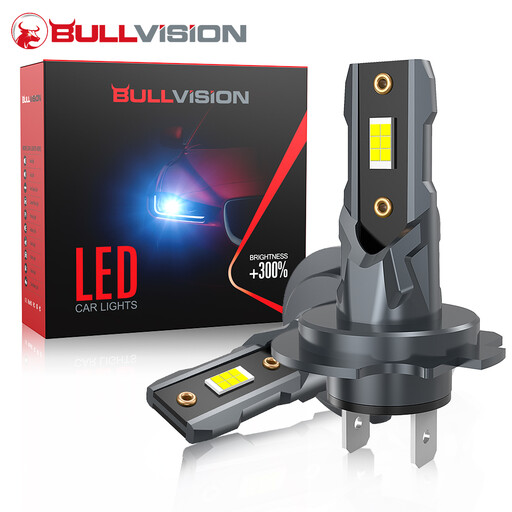
Why This Fits Their Persona: Ideal for those seeking a noticeable improvement over halogen without immediately opting for the highest specifications. Offers a great balance between performance and price for daily use.
According to the manufacturer, this set is 'CANbus ready', which reduces the risk of dashboard errors in many cars. The 1:1 design helps prevent fitment issues.
Provides a bright 6000K white colour and significantly better light output than halogen. The built-in cooling fan helps keep performance stable.
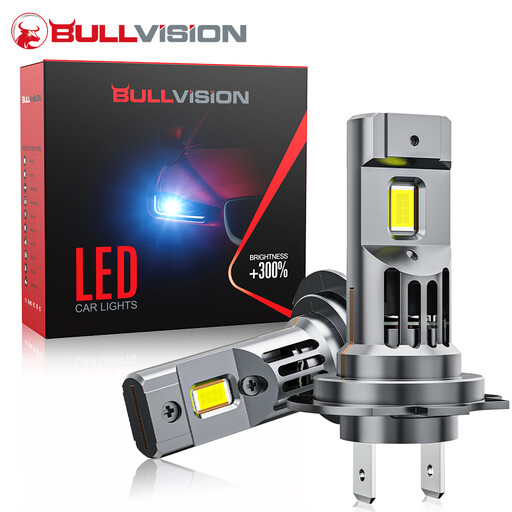
Why This Fits Their Persona: For the driver who wants maximum visibility on dark roads. The high light output is focused on increasing viewing distance and safety during night-time drives.
The manufacturer claims a "perfect beam pattern" that mimics the original halogen pattern, which helps prevent blinding oncoming traffic despite the high lumen value.
High light output (20,000 lumens per set, according to Bullvision) for maximum visibility. The 1:1 size and 'plug-and-play' design simplify installation.
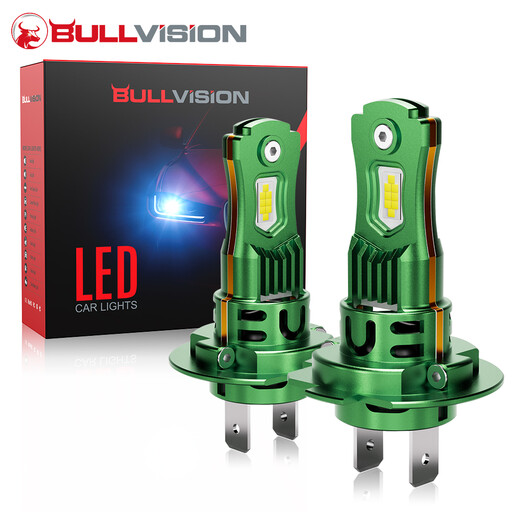
Why This Fits Their Persona: Specifically designed for those who want to replace the bulbs themselves without any modifications. The compact size is the key feature for a quick and hassle-free installation.
The 1:1 mini size is specifically designed to bypass the 'plug-and-play' pitfall. It fits more easily into tight headlight housings where larger LED bulbs fail.
Maximum focus on ease of installation. The compact design with no external driver makes the process of replacing an H7 bulb as simple as possible.
We've compiled a complete, up-to-date overview of products that align with these important considerations.
Regulations for retrofitting LED lighting in halogen units can be complex and vary by region. Officially, car bulbs must have an E-mark that corresponds to the approval of the headlight unit itself. For on-road use, it's important to check if a specific LED bulb has a valid ECE approval for your car model. In all cases, a correctly aligned beam pattern is crucial for passing safety inspections and ensuring safety.
If your car was built after circa 2005, it likely has a CANbus system. This system checks if all bulbs are functioning correctly. Because LED bulbs use less power, the system might interpret this as a defect and trigger an error message. A CANbus H7 bulb has built-in technology that corrects this signal and prevents dashboard errors.
Manufacturers often state a lifespan of 30,000 to 60,000 operating hours. For comparison, a standard halogen bulb lasts an average of 500 to 1,000 hours. The actual lifespan of an LED bulb depends heavily on the quality of its cooling system (such as a built-in fan or passive cooling fins) and the operating conditions. Good heat dissipation is essential for long and stable performance.
