
Vandaag of morgen in huis

Kwaliteit gegarandeerd

Welkomstaanbiedingen ontgrendelen: GRATIS bezorging | Tot 80% korting | Gratis 30 dagen JoyPlus-proefperiode
Download de app
Driving in the dark with dim halogen bulbs feels unsafe. You want better visibility, a more modern look for your car, and bulbs that last longer. Switching to an H7 LED headlight seems like the logical solution. But the market is flooded with options promising the world. Many car owners fall into the same traps: they buy bulbs that don't fit, trigger error codes, or fail after just a few months.
Before you invest in an upgrade, it's crucial to know what to look for. We'll cover the three most common pitfalls and how you can avoid them.
To avoid a bad purchase, it's better to focus on a few key specifications. These determine whether an H7 LED headlight is a worthwhile and safe upgrade.
A good LED bulb should mimic the beam pattern of the original halogen bulb. This ensures a sharp cut-off line, illuminating the road properly without dazzling oncoming drivers. Look for bulbs with a 1:1 design compared to halogen.
The colour temperature, expressed in Kelvin (K), determines the colour of the light. A 6000K headlight produces a crisp, white light similar to daylight. This improves contrast and makes road signs and markings more visible.
A CANbus H7 LED is designed to work with your car's onboard computer system. These bulbs have a built-in resistor that simulates the power consumption of a halogen bulb, preventing error messages. Although many bulbs are sold as "CANbus ready," some highly sensitive car models may still require an external decoder.
The lifespan of an LED bulb depends directly on its cooling system. There are two main types:
Furthermore, an IP68 certification indicates that the bulbs are fully dustproof and are waterproof headlights, which contributes to their durability in all weather conditions.
Not everyone has the same needs. Below is a selection of H7 LED bulbs, tailored to different user profiles.
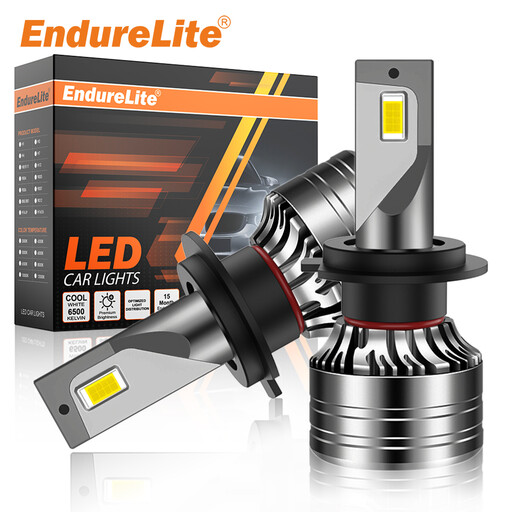
Why it fits this profile: You want a noticeable upgrade without the hassle. This kit is focused on a simple plug-and-play automotive lighting installation. It's a direct replacement for your old H7 bulbs, so the job is done quickly.
According to the manufacturer, the "CANbus Ready" design is compatible with 99% of vehicles, reducing the risk of dashboard errors. The design mimics the original bulb's beam pattern, which prevents dazzling oncoming drivers.
The simple, adapter-free installation makes this an accessible upgrade. The bright car bulbs with 6000K white light provide an immediate improvement in visibility.
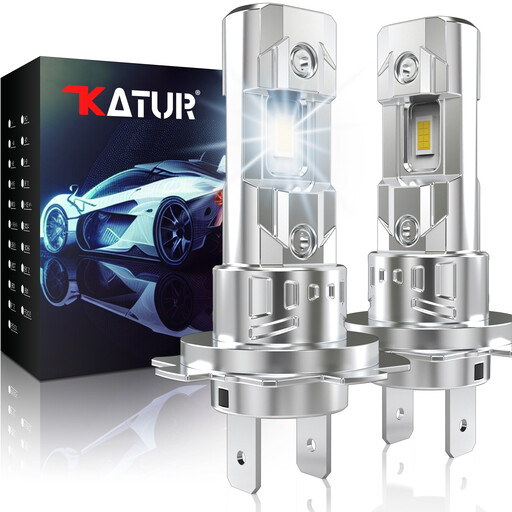
Why it fits this profile: You dislike the hum of a fan or have limited space in your headlight housing. The fanless and compact design of these bulbs is a perfect solution.
This bulb addresses the overheating pitfall without any moving parts. The fanless design eliminates the risk of a faulty fan, a common cause of LED bulb failure.
Silent operation and a mini size that, according to the manufacturer, has a 1:1 design with halogen bulbs, which simplifies installation in tight spaces.
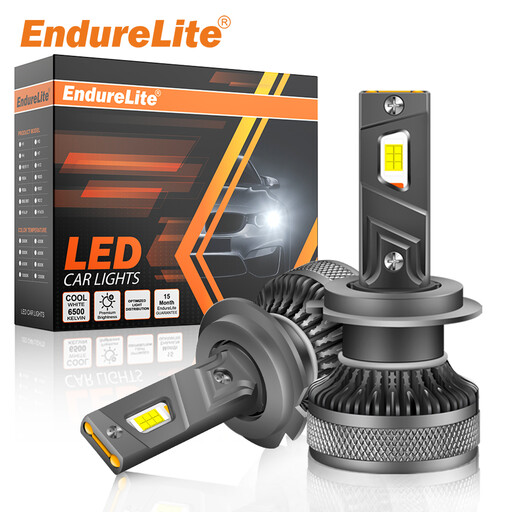
Why it fits this profile: For you, long-term reliability is paramount. You drive a lot and don't want to be constantly replacing bulbs. These bulbs are equipped with an active cooling system for maximum durability.
It tackles the overheating pitfall head-on. According to the manufacturer, the 12,000 RPM cooling fan ensures efficient heat dissipation, which keeps performance stable and extends the lifespan to over 50,000 hours.
The active cooling system is designed for a long lifespan and consistent light output. The IP68 rating ensures reliability in all weather conditions.
We have compiled a complete, up-to-date list of products that meet these strict selection criteria and local regulations.
For use on public roads, car bulbs must have ECE approval. Many aftermarket LED kits do not (yet) have this approval and are officially intended for track or off-road use. In practice, they are widely used, but it's important to know that a vehicle can fail its annual inspection due to an improper beam pattern. Always check local regulations and vehicle inspection requirements.
The process for replacing an H7 bulb is often straightforward. Turn off the engine and lights. Open the bonnet and locate the back of the headlight housing. Remove the dust cover, disconnect the plug, and release the clip holding the bulb in place. Install the new H7 LED low beam in the same way, reconnect everything, and test the lights. This is usually a plug and play operation.
Not always. Although "CANbus ready" bulbs are designed to work error-free in most cars, exceptionally sensitive onboard computers (often found in specific German brands) may still detect a fault. In that rare case, an additional CANbus decoder or resistor may be needed to resolve the issue.
