Vandaag of morgen in huis

Kwaliteit gegarandeerd

Welkomstaanbiedingen ontgrendelen: GRATIS bezorging | Tot 80% korting | Gratis 30 dagen JoyPlus-proefperiode
Download de app
Driving in the dark or in poor weather with dim halogen headlights can be tiring and unsafe. Visibility is limited, and their yellowish glow feels outdated. Many car owners are therefore looking for an upgrade. An H7 LED headlight offers a modern, bright white light that better illuminates the road and gives your car a fresh, updated look.
This guide is designed to help you choose the right H7 LED lighting. We'll cover the key factors to consider and highlight several popular choices, so you can make an informed decision for your vehicle.
Switching from halogen to LED is easier than you might think, but a few specifications will determine your choice.
The brightness of a bulb is expressed in lumens (lm). More lumens mean more light. The colour of the light is measured in Kelvin (K). Standard halogen bulbs have a colour temperature of around 3200K, which produces a yellowish light. Most H7 LED bulbs have a colour temperature of 6000K or 6500K. This results in a crisp, white light similar to daylight, which provides better contrast and reduces eye strain during night drives.
Nobody wants to spend hours replacing a bulb. Many modern H7 LED kits are designed as H7 LED plug and play. This means they have the same fitment and connector as the original halogen bulb. You can install them directly into the existing housing without any modifications, extra adapters, or complicated wiring. This makes replacing car headlights yourself a job you can often complete in under 15 minutes.
Modern cars, particularly European brands, use a CANbus system to monitor the vehicle's electronics. Because LED bulbs consume significantly less power than halogen bulbs, the system can interpret this as a faulty bulb and display an error message on your dashboard. To prevent this, many H7 LED bulbs are "CANbus-ready" or "CANbus-proof." This means they have a built-in resistor that prevents error messages. For some sensitive car models, an external CANbus decoder may still be necessary.
Below is a selection of H7 LED bulbs valued for their specifications and ease of installation.
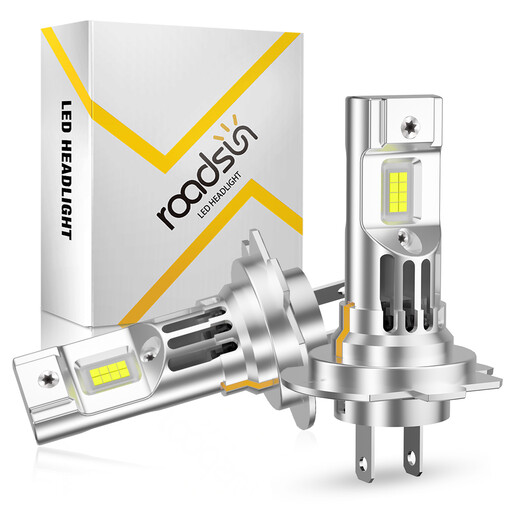
Why It Stands Out: This Roadsun H7 bulb is designed for maximum simplicity. The plug-and-play design without separate adapters makes installation extremely straightforward. The built-in fan provides active cooling, which improves its lifespan.
Pros:
Who is this for? For the DIY enthusiast looking for a reliable and easy-to-install H7 LED bulb for both headlights and fog lights.
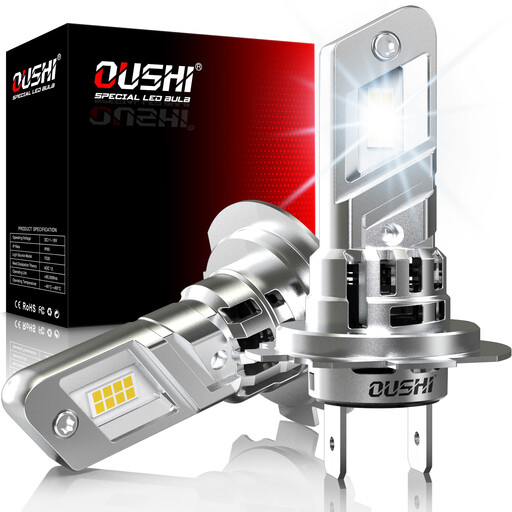
Why It Stands Out: OUSHI focuses on high light output and compatibility. According to the manufacturer, these bulbs are up to 600% brighter than halogen. The 1:1 mini size, identical to a halogen bulb, ensures a seamless fit.
Pros:
Who is this for? For drivers of modern cars, including European models, who are looking for an extremely powerful light beam and don't want to worry about compatibility issues.
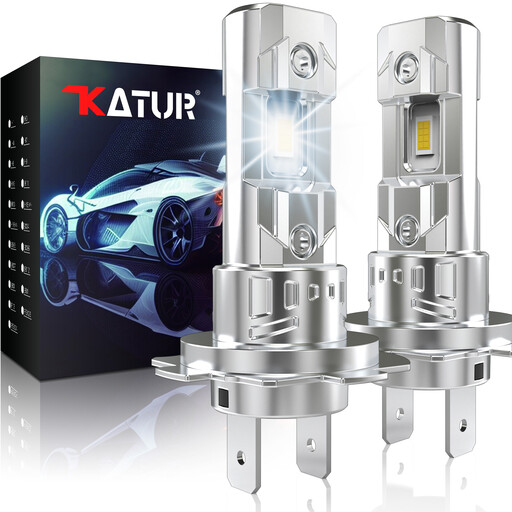
Why It Stands Out: The key feature of the KATUR H7 bulbs is their fanless design. This means completely silent operation and no risk of defects from a failing fan. Heat is passively dissipated through the aluminium housing.
Pros:
Who is this for? For car owners who prefer a maintenance-free and silent solution without moving parts, and who need a compact bulb for a tight installation space.
The right choice depends on your car, your preferences, and your budget. If the options above don't quite match what you need, there's much more to discover.
Explore our full range of H7 LED bulbs for more choices that fit your vehicle.
The regulations for retrofitting LED lighting into headlight units originally designed for halogen are complex. In many EU countries, this is not permitted for use on public roads because the combination of the bulb and housing lacks E-mark certification. This can lead to failure during the annual vehicle inspection. Always check local regulations and vehicle inspection requirements before installing an H7 LED headlight.
The process for replacing an H7 bulb is generally straightforward:
CANbus is the communication network in your car. LED bulbs use less power than halogen bulbs. The CANbus system can detect this low consumption and incorrectly trigger a "bulb out" warning on your dashboard. A CANbus-compatible LED bulb or a separate decoder (resistor) solves this by simulating the power consumption of a halogen bulb, thereby preventing error messages. This is especially relevant for newer cars of European make.