
Vandaag of morgen in huis

Kwaliteit gegarandeerd

Welkomstaanbiedingen ontgrendelen: GRATIS bezorging | Tot 80% korting | Gratis 30 dagen JoyPlus-proefperiode
Download de app
Do you often drive after dark and feel the yellow glow of your halogen headlights is outdated? You're not alone. Many car owners are looking for an upgrade for better visibility, increased safety, and a sleeker look. Replacing your standard bulbs with an H7 LED headlight is a popular choice.
The market for H7 LED bulbs can be overwhelming, with a wide range of specifications and promises. This guide is here to help. We'll provide practical tips and highlight some popular choices, so you can make an informed decision for your car.
Before you proceed with replacing your car's headlights, it's helpful to understand a few technical aspects. This will help you choose the right set for your situation.
A headlight's performance is often expressed in lumens (light output) and kelvin (colour temperature).
Not every H7 LED bulb fits every car. Two terms are crucial here: CANbus and Plug and Play.
Based on product specifications and popular features, we've listed a few options for you.
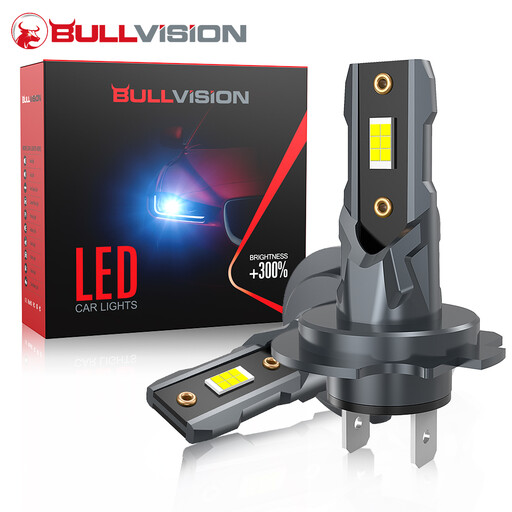
Why it stands out: This set from Bullvision is notable for its 1:1 design, meaning the bulbs have the same dimensions as the original halogen bulbs. This typically makes installation much simpler. The manufacturer claims a light output that is 300% brighter than standard bulbs.
Key Features:
Who is it for? For the DIY enthusiast looking for a direct and simple upgrade from halogen to LED, without the hassle of adapters or modifications.
Please note: The manufacturer states that for some vehicles (specifically mentioning Volkswagen, Mercedes-Benz, BMW), an additional CANbus decoder may be required.
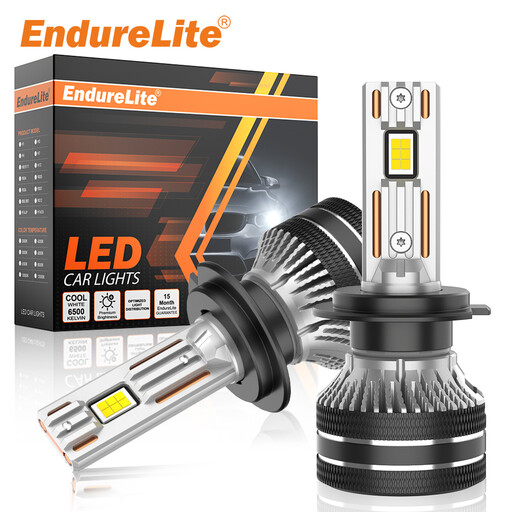
Why it stands out: The EndureLite H7 bulbs emphasise high light output, with a claimed 20,000 lumens per pair. Like the Bullvision set, these bulbs feature a 1:1 design for easy installation and a beam that mimics the pattern of the original bulbs.
Key Features:
Who is it for? Drivers who prioritise maximum brightness and a wide, focused beam for driving on dark, rural roads.
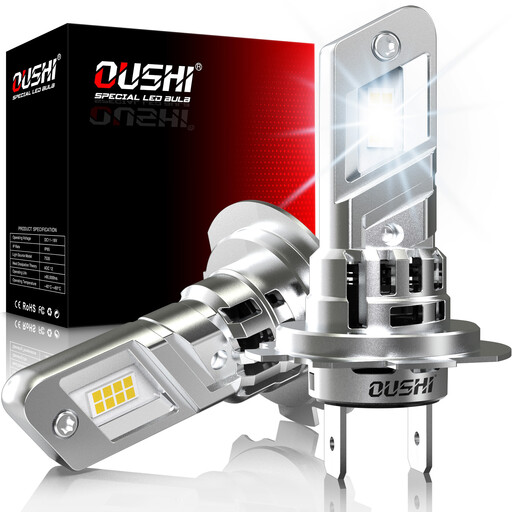
Why it stands out: With these H7 LED bulbs, OUSHI claims a light output up to 600% brighter than halogen. At 6500K, the colour temperature is slightly cooler white. An interesting point is the focus on an advanced CANbus system, which, according to the manufacturer, makes this set particularly suitable for European cars.
Key Features:
Who is it for? Owners of European cars in particular, who are looking for a powerful bulb with a robust CANbus solution to minimise error messages.
The world of automotive lighting is vast. If the options above don't quite match what you're looking for, or if you're curious about other types and specifications, there's more to explore.
Browse our wider range for more choices.
? Discover more options in our Car LED Lighting category
This is an important question. For use on public roads in the Netherlands, automotive lighting must have an E-mark certification that is specifically issued for your type of headlight housing. Many aftermarket H7 LED bulb sets do not (yet) have this and are officially intended only for use on private property or the race track. Always check the current regulations with the RDW (the Dutch vehicle authority) and the product specifications before making a purchase.
This depends on your car and the bulbs you choose. Cars with a CANbus system may show an error message because LED bulbs consume less power. To prevent this, choose a CANbus-compatible H7 LED set. These bulbs have built-in technology that 'satisfies' the car's system. For some highly sensitive models, an external decoder may still be necessary.
For most H7 LED plug and play models, the process is simple. Turn off the car's lights and ignition, open the bonnet, and locate the back of the headlight unit. Unscrew the old H7 bulb, remove it, and insert the new LED bulb in the same way. Always consult your car's owner's manual for specific steps and safety precautions. Wearing gloves is often recommended.
