
Vandaag of morgen in huis

Kwaliteit gegarandeerd

Welkomstaanbiedingen ontgrendelen: GRATIS bezorging | Tot 80% korting | Gratis 30 dagen JoyPlus-proefperiode
Download de app
Driving in the dark or in poor weather with dim halogen bulbs can be tiring and unsafe. You know the feeling: visibility is limited, and you have to strain your eyes just to see the road clearly. Upgrading to H7 LED bulbs can make a huge difference. They not only provide better visibility but also give your car a sleek, modern aesthetic.
However, the automotive lighting market is vast and filled with technical specifications. As a Joybuy Product Recommendation Officer, my job is to help you make an informed choice, free from marketing jargon. In this article, we'll discuss what to look for and highlight some popular options.
Before making a choice, it's helpful to understand a few key specifications. This will help you find the H7 LED headlight that suits your car and your needs.
The color of the light is expressed in Kelvin (K). Halogen bulbs often have a yellowish glow of around 3000K. Most 6500K H7 LED bulbs produce a crisp, white light that is comparable to daylight. Many drivers find this more comfortable, and it can help in distinguishing objects and road signs more clearly. The brightness, expressed in lumens, indicates how much light a bulb produces. More lumens generally means brighter H7 bulbs and better visibility.
Nobody wants a complicated installation process. Many modern H7 LEDs are designed as plug-and-play H7 LEDs. This means you can install them directly without any modifications, extra wiring, or drivers. Some models are even adapter-free H7 LEDs, which makes the process of replacing H7 bulbs even simpler. Always check if the design matches your car's original socket.
Modern cars use a CAN bus system to monitor the status of various components, including the lighting. If you install a non-compatible LED bulb, the system might think the bulb is faulty, resulting in an error message on your dashboard or flickering lights. A CAN bus-compatible H7 LED has a built-in resistor or driver to prevent this. This is especially important for many European car brands.
Based on product specifications and features, we have compiled a list of interesting options for you.
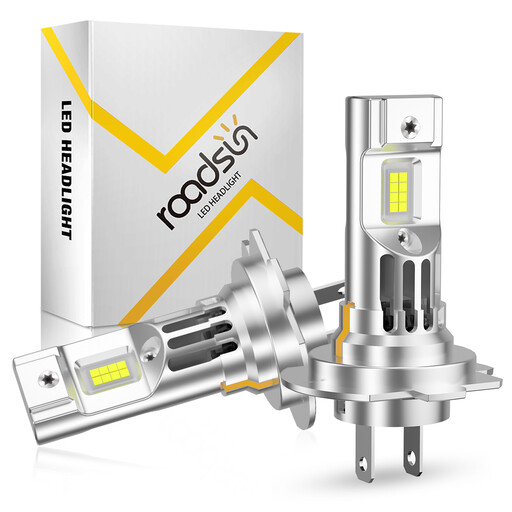
Why it stands out: This model is designed for maximum ease of installation. Its 'plug-and-play' structure, with no need for a separate adapter, makes it an accessible choice for DIY enthusiasts.
Pros:
Who is this for? For car owners looking for a simple, quick upgrade without the hassle of extra parts and adapters.
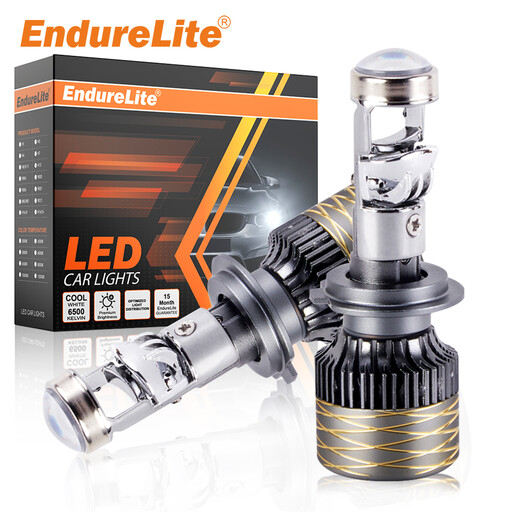
Why it stands out: ENdureLite focuses on a perfect beam pattern that mimics the original halogen bulb's pattern, which helps prevent dazzling oncoming drivers.
Pros:
Who is this for? Drivers who value a correct beam pattern and broad compatibility with different vehicle systems.
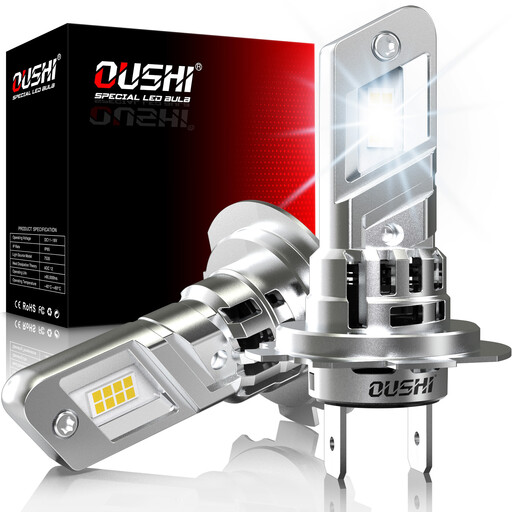
Why it stands out: OUSHI focuses on extremely high light output and an advanced CAN bus system, specifically targeting the demands of modern, often European, cars.
Pros:
Who is this for? Car owners with a modern (European) car who are looking for maximum light output and a reliable CAN bus solution.
The right choice depends on your car, your budget, and your personal preference. While the options above are popular, you might be looking for something different. For more lighting options and related products, you can browse our broader assortment.
See more options in our car accessory connector category.
The legality of LED replacement bulbs is a common topic. In many regions, automotive lighting must comply with specific regulations (e.g., ECE in Europe, recognizable by an E-mark on the product). Many aftermarket LED bulbs do not have this certification for use on public roads. Furthermore, it is crucial that the beam pattern is correct and does not dazzle oncoming drivers. It is advisable to have the headlights realigned after installation and to check the current local regulations.
The process for replacing H7 bulbs is similar for most cars. Ensure the engine and lights are off. Open the hood and locate the back of the headlight assembly. Remove the protective cover, disconnect the connector, and unclip the old bulb. Insert the new H7 LED low beam bulb, connect the connector, and replace the cover. Always consult your vehicle's owner's manual for specific instructions.
CAN bus-ready, or CAN bus H7 LED, means the bulb is designed to work with your car's onboard computer system. This system monitors whether all lights are functioning correctly. Because LED bulbs consume much less power than halogen bulbs, the computer might think the bulb is burnt out. A CAN bus-ready bulb has a built-in resistor that 'mimics' the signal of a halogen bulb, thereby preventing error messages on the dashboard.
