
Vandaag of morgen in huis

Kwaliteit gegarandeerd

Welkomstaanbiedingen ontgrendelen: GRATIS bezorging | Tot 80% korting | Gratis 30 dagen JoyPlus-proefperiode
Download de app
Driving in the dark or in bad weather with dim, yellowish halogen bulbs can feel unsafe. Visibility is limited, and it's hard to distinguish details on the road. That's why many car owners are looking for an upgrade. Replacing your standard H4 halogen bulbs with LED is a popular solution for brighter light and a more modern look.
However, the market for H4 LED headlights is vast, and the technical specifications can be confusing. This guide is designed to help you. As a Joybuy Product Recommendation Officer, I'll filter the options and provide practical advice so you can make an informed decision that suits your car and your needs.
Before you make a choice, there are a few key specifications to consider. This will help you find the right bulbs for your situation.
The brightness of a bulb is expressed in lumens (lm). Generally, more lumens mean more light. The colour of the light is measured in Kelvin (K). Standard halogen bulbs have a yellowish tint of around 3200K. Many H4 LED bulbs have a colour temperature of 6000K or 6500K, resulting in a bright, white light similar to daylight. This can improve contrast on the road, making traffic signs and road markings more visible. If you're looking for bright car bulbs, a model around 6500K is a good benchmark.
Nobody wants to spend hours on a complicated installation. Many modern H4 LED bulbs are designed as plug-and-play headlights. This means they have a 1:1 design that matches the original halogen bulb. You can install them directly into the existing socket without any modifications to the wiring or housing. Look for terms like "1:1 mini size" or "direct replacement" in the product description. This will save you time and potentially the extra cost of a mechanic.
Modern cars use a CANbus system to monitor the status of various components, including the headlights. Because LED bulbs consume less power than halogen bulbs, the system can sometimes think a bulb is burnt out. This results in a dashboard error message or flickering lights. A CANbus-ready LED headlight has a built-in resistor or circuit to prevent this problem. Most manufacturers state that their bulbs are compatible with "98% or 99% of vehicles," but some sensitive (often European) car models may still require an external decoder.
Based on product specifications and features, we have compiled a list of popular choices for you.
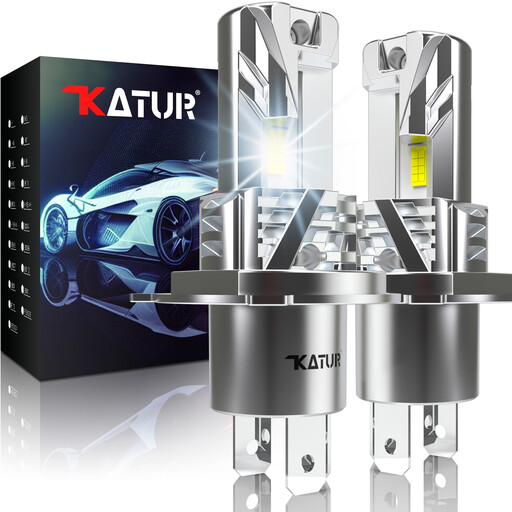
Why It Stands Out: The fanless and compact design makes installation easy, even in tight headlight housings. The absence of a fan also means there are no moving parts that can wear out or make noise.
Advantages:
Who Is This For? For the DIY enthusiast looking for a simple, silent, and direct replacement for their H4 halogen bulbs, especially in cars where space behind the headlight is limited.
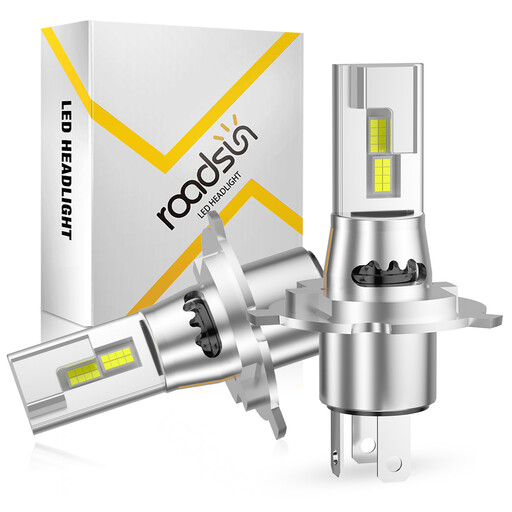
Why It Stands Out: This bulb focuses on high light output and durability, with active cooling via a fan. Its IP68 rating makes it suitable for all weather conditions.
Advantages:
Who Is This For? Drivers looking for a very bright light beam and a durable solution that can withstand harsh weather conditions. Ideal for those who often drive long distances.
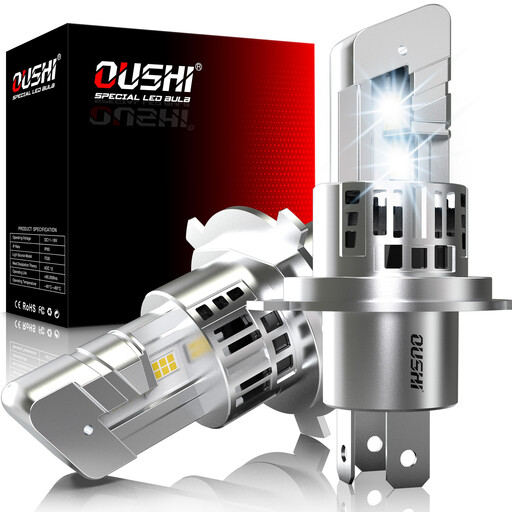
Why It Stands Out: This bulb combines a very high claimed light output with an advanced CANbus system, making it particularly suitable for newer or European cars that are prone to error messages.
Advantages:
Who Is This For? Owners of modern cars, especially European brands, who want a powerful lighting upgrade without worrying about CANbus compatibility issues.
The recommendations above are a great starting point, but every car and driver has different needs. You might be looking for a different brand, a different price range, or a specific technical feature.
For a broader overview of models and specifications, check out our full range of H4 LED car bulbs.
1. Is it legal to replace H4 halogen bulbs with LEDs? Regulations for vehicle lighting are strict. A headlight unit is approved for a specific type of bulb (halogen, xenon, or LED). Retrofitting LED bulbs into a unit approved for halogen is often not officially permitted for use on public roads, unless the specific LED bulb has an ECE approval for your car model. Always check your local laws and the product's specifications.
2. What is the difference between H4, 9003, and HB2? In practice, there is no difference. H4, 9003, and HB2 are different names for the same type of bulb. It is a dual-filament bulb that combines both low beam and high beam in a single unit. The name you encounter often depends on the region (H4 is European, 9003/HB2 is American), but the fitting and functionality are identical.
3. Do I need a separate CANbus adapter for my H4 LED bulbs? That depends on your car. Many H4 LED bulbs have a built-in CANbus system that is sufficient for most cars. However, some vehicles with a very sensitive onboard computer system may still trigger an error message. In that case, an external CANbus decoder (also called a resistor) may be needed to solve the problem.
