
Vandaag of morgen in huis

Kwaliteit gegarandeerd

Welkomstaanbiedingen ontgrendelen: GRATIS bezorging | Tot 80% korting | Gratis 30 dagen JoyPlus-proefperiode
Download de app
Driving at night with standard yellow halogen bulbs can be tiring. Visibility is limited, and your car's appearance looks outdated. Many car owners are therefore looking for an upgrade. An H4 LED headlight is a popular choice for those who want better visibility, a longer lifespan, and a more modern look, without complex modifications.
As a Joybuy Product Recommendation Officer, I'm here to help you navigate the specs and marketing claims. In this article, we'll discuss what to look for when making a purchase and highlight some compelling options for 2026, so you can make an informed decision.
Before you make a choice, it's helpful to understand a few technical aspects. This will help you find the bulb that truly fits your car and your needs.
A bulb's brightness is expressed in lumens (lm). More lumens generally means more light. The color of the light is measured in Kelvin (K). Standard halogen bulbs have a yellowish color of around 3200K. A 6500K car bulb produces a bright, cool white light comparable to daylight. This improves contrast on the road, making road signs and obstacles stand out more quickly. With an H4 bulb, also pay attention to the combination of low beam and high beam, as both functions are integrated into a single bulb.
No one wants a complicated installation. That's why you should opt for a plug-and-play headlight. Many modern LED bulbs have a 1:1 design, meaning they are the exact same size as the original halogen bulb. This allows them to fit into the housing without any modifications.
Modern cars use a CANbus system to monitor the status of the lights. Because LED bulbs consume less power, the system might think the bulb is faulty, resulting in an error message on the dashboard. A CANbus LED H4 bulb has a built-in resistor or driver that prevents this issue for most vehicles (often 98-99%). The designations H4, 9003, and HB2 typically refer to the same type of fitting, which increases compatibility.
LED chips get hot during use. Proper cooling is essential for stable performance and a long lifespan. Most quality H4 LED bulbs use a combination of an aviation-grade aluminum body and an active cooling fan. An efficient cooling system prevents the bulbs from overheating and losing their brightness, ensuring they last for tens of thousands of hours. This makes constantly replacing H4 bulbs a thing of the past.
Based on the criteria above, we have selected a few products that stand out for their specifications and functionality.
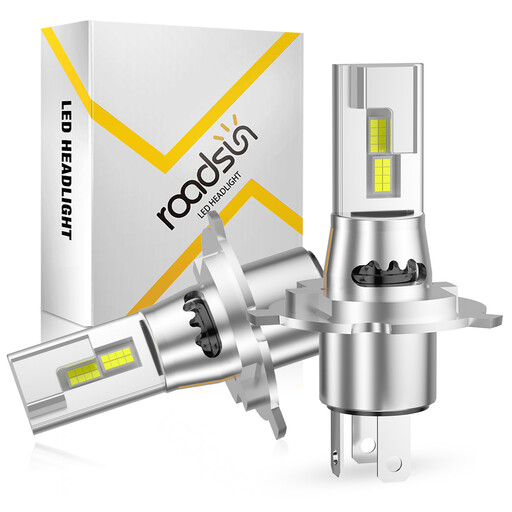
Why It Stands Out: These bulbs from Roadsun are designed for those seeking maximum brightness. According to the manufacturer, they offer a light output up to 500% higher than standard halogen bulbs.
Key Features:
Who Is This For? For drivers who want the highest possible visibility for night-time drives on dark roads and are looking for a durable, weatherproof solution.
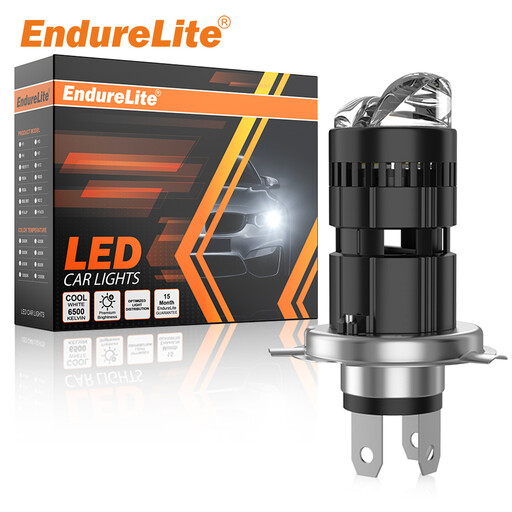
Why It Stands Out: The ENdureLite H4 bulb focuses on balanced performance with a clear beam pattern and a reliable build.
Key Features:
Who Is This For? Ideal for the DIY enthusiast looking for a reliable and noticeable upgrade from halogen, with a focus on a proper beam pattern and simple installation.
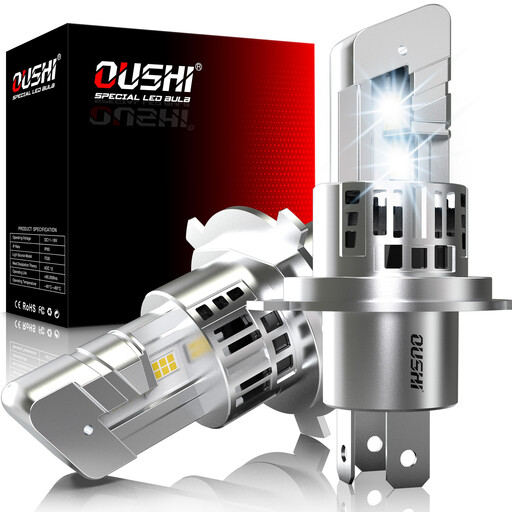
Why It Stands Out: OUSHI emphasizes a very high lumen output and advanced CANbus compatibility, making it a compelling option for European cars.
Key Features:
Who Is This For? Drivers of more modern, potentially CANbus-sensitive cars who are looking for one of the most powerful lighting upgrades on the market.
The right LED car lighting depends on your vehicle and personal preference. If the recommendations above aren't exactly what you're looking for, or if you need other types of bulbs, check out our full range of car headlights for more options.
An H4 bulb is a so-called dual-filament bulb. This means it contains two sets of filaments (in halogen) or two sets of LED chips (in LED) within a single bulb. One set is for the low beam, which illuminates the road directly in front of the car without dazzling oncoming traffic. The other set is for the high beam, which shines farther and wider for maximum visibility on empty roads. When you switch between low and high beams, you are switching between these two light sources within the same bulb.
For most cars, installing a plug-and-play headlight is simple. The procedure is similar to replacing a standard halogen bulb: you remove the old bulb from the socket and insert the new LED bulb. Thanks to the 1:1 design, no modifications to the headlight housing are usually necessary. The entire process often takes no more than a few minutes per bulb.
Most modern CANbus LED H4 bulbs are designed to be compatible with 98-99% of vehicles without an external adapter. They have a built-in driver that prevents error messages on the dashboard. However, for a small percentage of highly sensitive cars, particularly certain European models, an error message may still appear. In that case, a separate CANbus decoder may be required.
