
Vandaag of morgen in huis

Kwaliteit gegarandeerd

Welkomstaanbiedingen ontgrendelen: GRATIS bezorging | Tot 80% korting | Gratis 30 dagen JoyPlus-proefperiode
Download de app
Driving in the dark with dim, yellowish halogen bulbs feels unsafe. You can't see road markings and traffic signs as clearly, and your car lacks the modern, bright white look of newer vehicles. Switching to an H4 LED headlight seems like a logical step for better visibility and a fresh look. But the market is flooded with marketing claims that don't always deliver on their promises.
As a Joybuy Product Recommendation Officer, I'm here to help you separate fact from fiction. Before you replace your halogens with LEDs, it's crucial to understand three common pitfalls that can cost you time and money.
To avoid these problems, there are a few technical specifications you need to check. These determine whether an H4 LED bulb is a true upgrade for your car.
An H4 bulb is unique because it combines both H4 low beam and high beam in a single unit. For it to work correctly, it is crucial that the LED chips are positioned in the exact same location as the filaments in a traditional halogen bulb.
The look and effectiveness of bright car bulbs are determined by the colour temperature, expressed in Kelvin (K).
Not all H4 LED bulbs are created equal. Below is a selection tailored to different types of users, based on their product specifications.
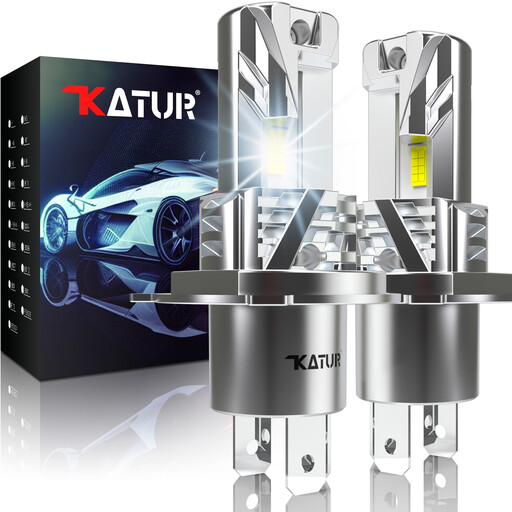
Why This Fits Their Persona: This user wants a quick, hassle-free upgrade. The compact, fanless design and 1:1 fitment make installation as easy as changing a standard halogen bulb, with no issues from limited space.
The "1:1 all-in-one mini halogen design" tackles the false plug-and-play promise. It fits directly into the factory socket, even in tight headlight housings.
Fanless design: Silent operation and no moving parts that can fail. Instant on: No warm-up delay, providing full brightness immediately.
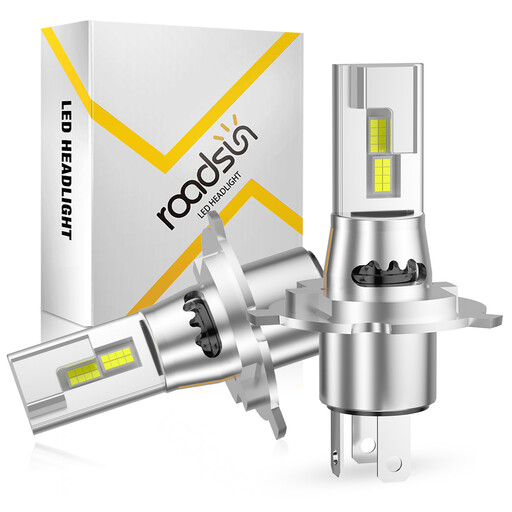
Why This Fits Their Persona: For those seeking maximum light output for night drives on unlit roads. The active cooling is designed to keep high performance stable, even during prolonged use of the high beams.
Tackles the overheating pitfall with an active cooling fan (16,000 RPM) and an aluminum body. This helps maintain brightness and extend the bulb's lifespan.
High brightness: According to Roadsun, these bulbs offer significantly higher light output than halogen. IP68 rating: Water and dustproof for reliable performance in all weather conditions.
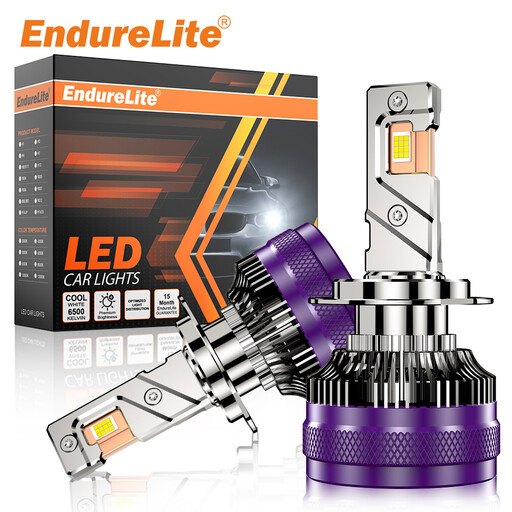
Why This Fits Their Persona: This driver is looking for a reliable, balanced upgrade. The combination of a bright 6000K beam, active cooling, and broad compatibility makes this a solid choice for most common car models.
The integrated design and CANbus-ready driver are intended to minimize compatibility issues and dashboard errors, supporting the "plug-and-play" claim for most vehicles.
Broad compatibility: Designed to work with 99% of vehicle systems without errors. Active cooling: A 12,000 RPM fan helps keep the temperature low for a stable, long lifespan.
We have compiled a complete, real-time list of products that fully satisfy these strict selection criteria and UK safety regulations.
Modern cars use a CANbus system that monitors the power consumption of bulbs. Because LED car headlights use significantly less power than halogen, the system might think the bulb is broken, resulting in a dashboard error or flickering lights. Many H4 LED kits have a built-in "CANbus-ready" driver that solves this problem for most cars. However, for some sensitive models, particularly European cars, an external CANbus decoder may still be necessary. Check the product description for claims like "99% compatible" and read any notes about specific car brands.
Regulations around retrofitting LED lighting can be complex. For vehicle safety inspections, it is essential that your headlight's beam pattern is correct. This means a clear, horizontal cut-off in the low-beam setting, so you don't blind oncoming drivers. The light colour must be white or yellow. While there may not be a specific ban on using LED replacement bulbs, as the vehicle owner, you are responsible for ensuring your headlights are correctly aligned and meet legal requirements. Choosing an H4 LED bulb with a 1:1 halogen design significantly increases the chance of a correct beam pattern.
Manufacturers often advertise a lifespan of 30,000 to 50,000 operating hours. In practice, the actual lifespan depends heavily on the quality of the cooling system. A bulb that cannot dissipate its heat properly will quickly lose brightness and eventually fail. Models with a robust cooling fan or a large, well-designed passive aluminum heat sink will come much closer to their promised lifespan than cheaper alternatives. An effective cooling system is the most important factor for durable performance.
