
Vandaag of morgen in huis

Kwaliteit gegarandeerd

Welkomstaanbiedingen ontgrendelen: GRATIS bezorging | Tot 80% korting | Gratis 30 dagen JoyPlus-proefperiode
Download de app
Driving in the dark with dim, yellowish halogen bulbs can quickly feel unsafe. Obstacles and road signs appear late, and visibility is minimal in bad weather. Upgrading to an H4 LED headlight seems like a logical solution for better visibility and a modern look. But the online market is full of pitfalls that can lead to a bad purchase, frustration, and even failing your annual vehicle inspection.
As a Joybuy Product Recommendation Officer, I'm here to help you separate fact from fiction. We'll look past the flashy ads and focus on what really matters. These are the most common pitfalls and how to avoid them.
To avoid a bad purchase, there are a few technical specifications you need to check. These determine the safety, performance, and lifespan of your new H4 LED car bulbs.
An H4 bulb combines low beam and high beam LEDs in a single unit. The original halogen bulb has two filaments at precise positions to create a correct beam pattern: a sharp cut-off line for the low beam and a wide spread for the high beam.
A good H4 LED headlight mimics this design exactly. Look for terms like "1:1 halogen design" or "ultra-thin chip spacing." This means the LED chips are placed in the same position as the original filaments. This is the most important factor for a correct beam pattern that illuminates the road without blinding oncoming drivers. The fittings H4, 9003, and HB2 are interchangeable and refer to the same bulb.
LED chips produce a lot of heat. Without effective cooling, light output quickly diminishes, and the lifespan is drastically shortened. There are two main types of cooling systems:
The choice depends on the available space in your headlight housing and your preference for performance versus simplicity.
If you have a European car made after circa 2005, a Canbus LED H4 set is a requirement. These bulbs have a built-in resistor or a smart driver that tricks the onboard computer into thinking a standard halogen bulb is connected.
Note: even "99% compatible" bulbs can still trigger an error on some sensitive car brands (like VAG, BMW, Mercedes-Benz). Check the product information for exceptions. Sometimes, an additional external Canbus decoder is the only solution. Opt for plug and play headlights with a built-in driver for the easiest installation.
Below are a few H4 LED sets that score well on the above criteria, matched to different user profiles.
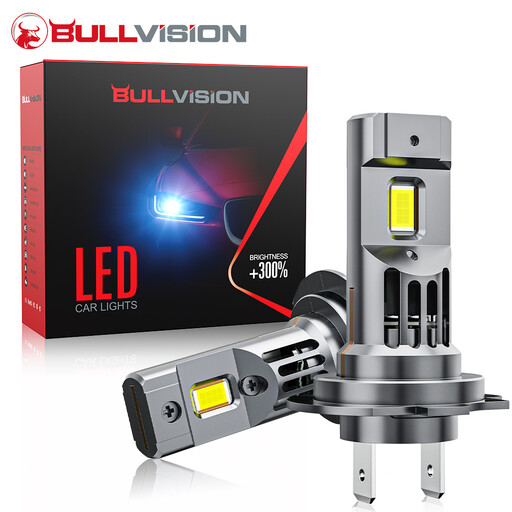
Why This Fits Their Persona: Ideal for those seeking a clear upgrade from halogen without paying a premium. This set provides a significantly brighter and whiter beam, immediately enhancing safety and driving comfort.
The 1:1 size and focus on a "perfect beam pattern" in the product description help avoid the pitfall of a scattered beam. The built-in Canbus driver is designed to prevent error messages on most vehicles.
Plug-and-play installation: Direct replacement without modifications. Active cooling: The built-in fan ensures stable performance and a long lifespan.
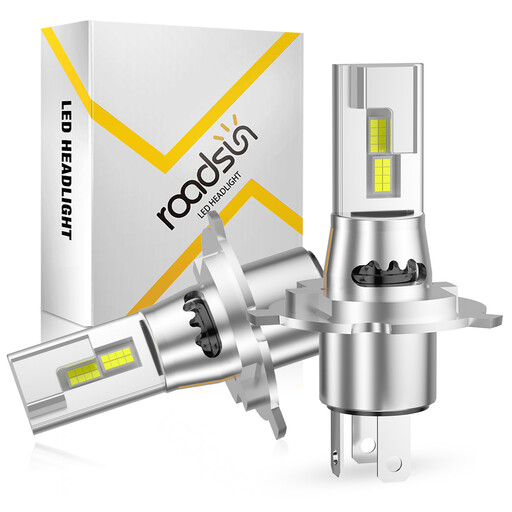
Why This Fits Their Persona: For the driver who demands maximum performance and durability. This set is focused on very high light output and is built to function reliably in all weather conditions, ideal for those who drive frequently at night or on unlit roads.
The manufacturer, Roadsun, claims 500% more brightness than halogen and specifies a 6500K color temperature, indicating a focus on performance rather than just an empty lumen claim. The IP68 rating addresses durability concerns.
Powerful cooling: A 16,000 RPM fan and aluminium housing provide superior heat dissipation. IP68 waterproof: Reliable operation in heavy rain, fog, and snow.
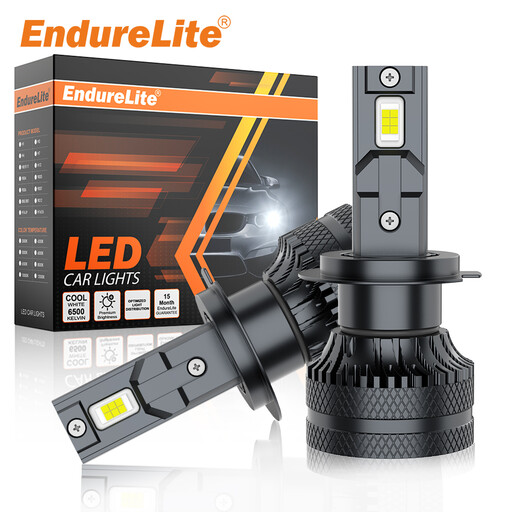
Why This Fits Their Persona: This user wants a hassle-free upgrade. The focus is on flawless operation in a modern car and a truly 'plug and play' installation. Canbus system reliability is the top priority here.
It directly addresses the Canbus pitfall by highlighting "Canbus Built-In Error Free." The combination of a 1:1 design and the claim of 99%+ compatibility inspires confidence that this set is designed for modern, sensitive onboard computers.
Integrated Canbus technology: Designed to eliminate flickering and error messages. Compact 1:1 design: Fits easily into the original housing without extra drivers or cables.
We have compiled a complete, up-to-date list of products that fully meet these strict selection criteria and local regulations.
Legislation regarding retrofitting LED lighting is specific. The most important factor for the inspection is the beam pattern. The H4 LED headlight must produce a correct beam with a clear cut-off line, just like the original halogen bulb. This prevents blinding oncoming drivers. A bulb with a 1:1 halogen design has the best chance of producing a correct beam pattern. It is always advisable to have the headlights professionally aligned by a garage after installation.
For most plug and play headlights, the installation is straightforward and takes only a few minutes per bulb. The process is typically:
The 'K' stands for Kelvin and indicates the color temperature of the light. Standard halogen bulbs have a color of around 3200K (warm yellow). 6000K car bulbs produce a bright, cool white light that approximates daylight. This improves contrast and the visibility of road markings and signs. Color temperatures above 6500K often become bluish and can be less effective in rain or fog. Therefore, 6000K to 6500K is a popular and practical choice for automotive lighting.
