
Vandaag of morgen in huis

Kwaliteit gegarandeerd

Welkomstaanbiedingen ontgrendelen: GRATIS bezorging | Tot 80% korting | Gratis 30 dagen JoyPlus-proefperiode
Download de app
Thinking of swapping your halogen bulbs for H4 LED headlight bulbs? A bulb with a high lumen count and 6000K cool white light can look very appealing at first glance. But one marketing figure doesn’t tell you everything about suitability, beam pattern, or installation in your car, motorbike or off-road vehicle.
Most mistakes happen because of three common pitfalls:
So a good choice doesn’t start with the brightest claim – it starts with the right combination of fitting, light distribution, heat management and vehicle compatibility.
An H4 bulb normally combines dipped beam and main beam in one fitting. An H4 9003 HB2 LED headlight bulb is designed for vehicles that use this corresponding connection. Before you buy, check:
On motorbikes and older cars, space can be tight. A bulb with an external cable or a larger cooling unit may not fit without modification.
Product pages sometimes quote values like 10,000, 13,000, 20,000 or even 150,000 lumens. These figures aren’t always directly comparable – they could refer to a pair, a theoretical maximum output, or a marketing number.
So pay attention to:
According to the product descriptions of the brands mentioned, several models are designed with a 1:1 light source position. That’s a product claim from the brand, not a guarantee that the beam pattern will be identical in every headlight. Always check after installation that oncoming traffic isn’t dazzled.
A colour temperature of 6000K cool white looks whiter than standard halogen. That can be pleasant in clear weather, but colour temperature doesn’t replace a correct light distribution. For H4 fog lights, it’s also wise to check whether the chosen beam pattern and local regulations are suitable for your use.
LEDs convert less energy into heat than some traditional light sources, but the heat around the LED chip still needs to be dissipated. You’ll mainly see two solutions:
An IP67 or IP68 rating refers to protection against dust and water according to the relevant product classification. According to the product information, several models are water-resistant. Do check that the seal is correctly fitted after installation and that the original rubber cap can still be put back on.
CANbus LED headlight bulbs contain electronics designed to reduce error messages, flickering or radio interference. “CANbus-ready” doesn’t automatically mean every vehicle will work without issues. Particularly sensitive systems may need a separate decoder. So check experiences for your make, model and year in your vehicle documentation, without relying solely on a general compatibility claim.
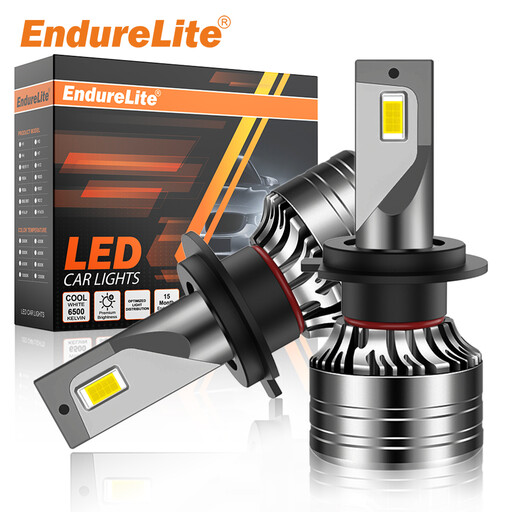
Why this fits the profile: A set of two is practical when replacing both headlights at the same time. The product information mentions 6000K, plug-and-play connection, fan cooling and IP68 water resistance.
The description mentions a 1:1 beam pattern and built-in intelligent driver. Still check the fitting and the space for the fan.
Set of two, dipped and main beam in one H4 bulb, 6000K and a stated lifespan of 50,000 hours according to the product description.
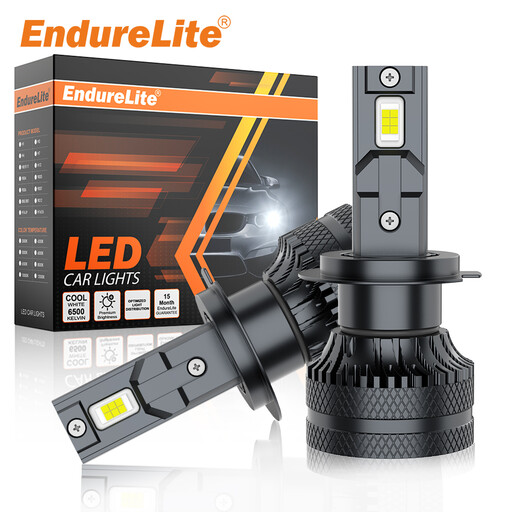
Why this fits the profile: This model focuses on a compact 1:1 shape, built-in CANbus electronics and active cooling for drivers who want a straightforward installation.
The product page mentions an integrated driver and CANbus support. That can reduce error messages, but vehicle checks are still necessary.
1:1 design, IP68 rating, cooling fan and a stated lifespan of 50,000 hours according to ENdureLite.
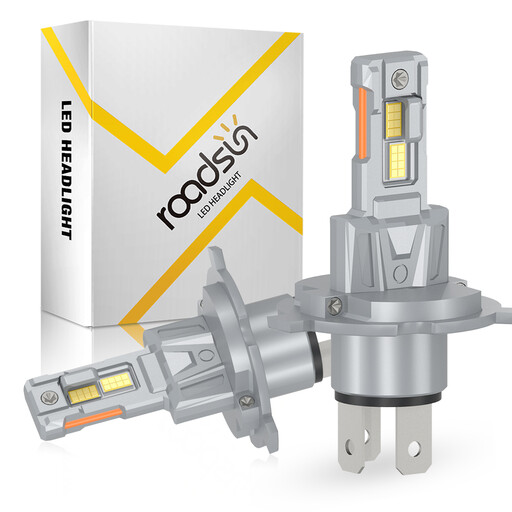
Why this fits the profile: A fanless H4 LED bulb can suit vehicles with limited space behind the reflector, or drivers who prefer not to have a spinning fan.
The fanless design removes the fan as a potential point of failure. The product information mentions IP67 and off-road use; check whether that’s suitable for your road use.
Fanless aluminium design, H4/9003/HB2 designation, 6000K and a stated lifespan of over 70,000 hours according to Roadsun.
With plug-and-play LED bulbs, the connection is often straightforward, but the headlight housing varies from vehicle to vehicle. Switch off the lights, let the old bulb cool down, and ideally wear gloves. Insert the new bulb straight into the fitting and check that the retaining clip or twist lock is securely fastened.
Then check:
A headlight that technically fits isn’t automatically approved for every vehicle or headlight housing. If in doubt, consult your vehicle documentation, the manufacturer and relevant MOT information.
We’ve put together a full, up-to-date list of products that fully meet these strict selection criteria and current European safety regulations.
Yes, an H4 fitting typically combines both functions. But do check whether the specific product is intended as a combined dipped and main beam for your vehicle. The light distribution must remain correct after installation.
Brands often quote 50,000 hours or more. According to their own product information, ENdureLite and Bullvision state that value under their specified conditions. Actual lifespan depends on factors such as heat, vibration, usage time and the quality of your vehicle’s electronics.
LEDs can have a lower stated power consumption for comparable lighting, but look at the total system power of the bulb and driver. The saving varies by model. Also check whether your vehicle recognises the lower load; otherwise, a CANbus module or decoder may be needed.
