
Vandaag of morgen in huis

Kwaliteit gegarandeerd

Welkomstaanbiedingen ontgrendelen: GRATIS bezorging | Tot 80% korting | Gratis 30 dagen JoyPlus-proefperiode
Download de app
Want to replace H1 halogen bulbs with LED? A bulb with a high lumen rating and a cool colour temperature may seem appealing. However, fit, beam pattern and vehicle compatibility are more important than a big number on the packaging. An H1 LED bulb that does not fit the reflector properly can create an uneven beam or dazzle oncoming drivers.
As Joybuy Product Recommendation Officer, I’ve filtered the most important product specifications for you, so you can assess marketing claims more effectively and choose a set of H1 LED headlights with confidence.
Many suppliers make claims such as “300% brighter” or even tens of thousands of lumens. According to the product descriptions provided by the brands concerned, these are their own stated figures; they are not a universal guarantee of improved visibility on the road. The final light output also depends on the reflector, lens, adjustment and positioning of the bulb.
An incorrectly positioned light source can cause dark spots, stray light or glare. An accurate beam pattern is therefore more important than simply choosing the highest lumen figure.
An H1 fitting tells you something about the base and connection, but not necessarily whether there is enough space inside the headlight housing. Check the following:
According to product information from various brands, a sensitive vehicle electrical system can still produce an error message, flickering or a warning light despite built-in CANbus technology.
Not every LED retrofit bulb may automatically be used on every car and for every function. According to OSRAM, the OSRAM NIGHT BREAKER LED H1 is approved only for specific vehicle models, lighting functions and countries listed in the official compatibility list. Check this list on the OSRAM website before buying.
For other H1 LED headlight bulbs, you should check the product information and the applicable Dutch and European regulations. After installation, have the beam pattern and headlight alignment checked. A bulb that fits technically is not automatically permitted for use on public roads.
H1 bulbs are often used for main beam, dipped beam or supplementary lighting, but the application varies from vehicle to vehicle. An H1 LED main beam bulb is not automatically suitable as an H1 LED dipped beam bulb. Check the position on the left and right, and preferably replace both bulbs at the same time for an even beam pattern.
Also pay attention to the difference between H4, H7, H8, H9 and H11. These fittings can sometimes look similar, but they are not interchangeable unless the housing and connection have been designed for that purpose.
A colour temperature of 6000K is generally described as cool white. This gives a whiter appearance than standard halogen. Some products offer 6500K, which looks even cooler and bluer. However, colour temperature alone does not determine how far or evenly you can see.
For everyday driving, a correctly aligned beam pattern is more important than choosing the coolest possible colour. After installation, check the alignment and look out for stray light.
LED bulbs generate heat around the chip. Many models use an aluminium housing and a built-in fan. Product descriptions may mention fan speeds of 10,000 or 16,000 rpm and an IP67 or IP68 rating, for example. These are manufacturer product specifications; actual durability depends on use, installation and the conditions inside the headlight unit.
A built-in driver and CANbus support can make installation easier, but they do not completely rule out error messages. European vehicles with a sensitive monitoring system may in particular require additional wiring or a CANbus decoder.
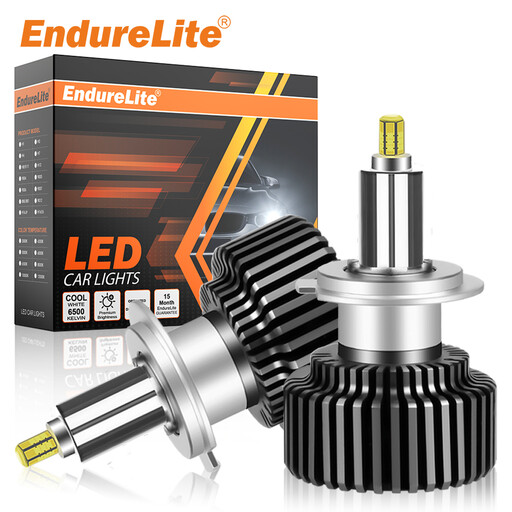
Why it suits this profile: This set is worth considering for DIY enthusiasts who want to compare several fitting types and are looking for a plug-and-play solution for a standard H1 connection.
The description mentions a 1:1 design, internal driver and CANbus-ready operation. Nevertheless, check the fitting yourself and test for error messages after installation.
A set of two, 6000K colour temperature, IP68 according to the product information and built-in fan cooling.
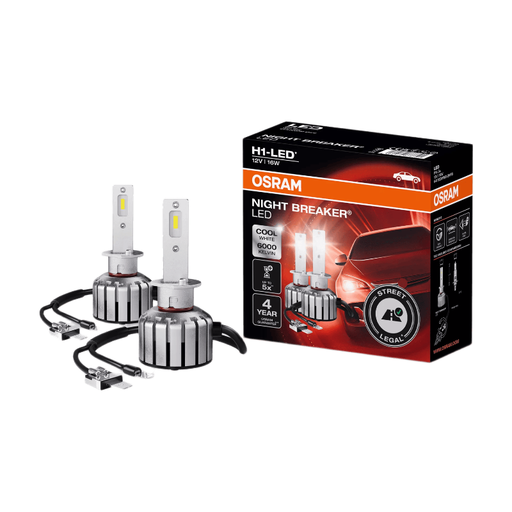
Why it suits this profile: Ideal for motorists who value approval checks and vehicle-specific suitability as much as LED technology.
According to OSRAM, approval applies only to the vehicles, functions and countries listed in the official compatibility list. Checking this list helps prevent a disappointing purchase.
6000K, 16 watts, 1550 lumens per bulb and, according to OSRAM, up to five times the lifespan of halogen.
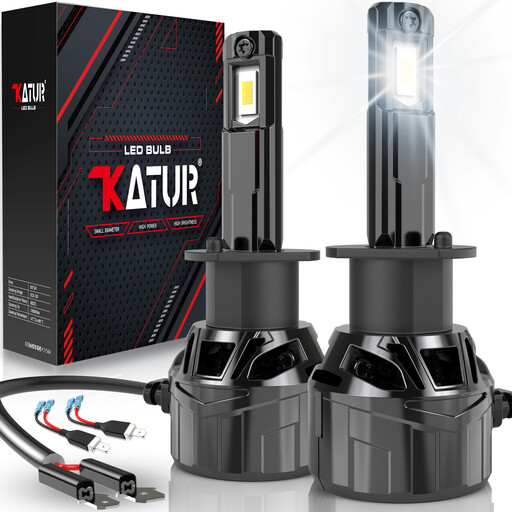
Why it suits this profile: This option is aimed at users looking for a compact H1 bulb with active cooling and an integrated CANbus solution.
The 1:1 mini design is intended for areas with limited space. After fitting, check that the dust cap closes and that the beam is correctly aligned.
According to the product description, 6000K, 120 watts per pair, a built-in fan and a stated lifespan of up to 60,000 hours.
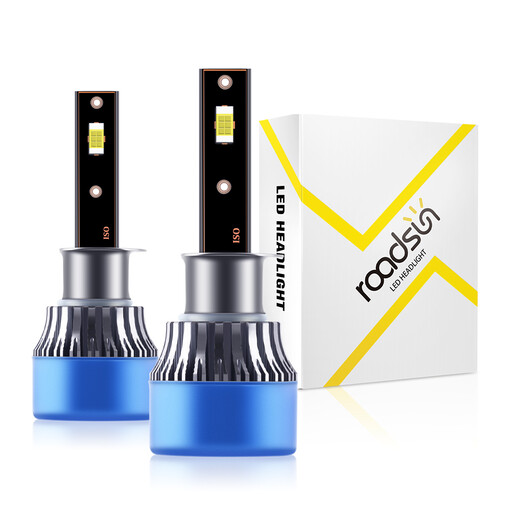
Why it suits this profile: A practical choice for anyone looking for H1 LED fog lights with a direct connection, 6000K light colour and protection for use in changing conditions.
The stated H1 fitting and plug-and-play installation reduce the need for modifications, but check beforehand that your fog light unit actually uses H1.
According to the product information, IP68, aluminium housing, 6000K and a stated lifespan of more than 50,000 hours.
A plug-and-play H1 LED bulb cannot always be fitted literally in just a few minutes. Work safely with this checklist:
We’ve put together a complete, up-to-date list of products that fully meet these strict selection criteria and the applicable European safety regulations.
No. First check the original bulb number, the available space, the mounting arrangement and the regulations for your vehicle. For approved retrofit products, you must also consult the official compatibility list.
Product descriptions often state 50,000 hours or more. This is a stated product specification, not a guarantee for every usage scenario. Heat, moisture, vibration and the quality of the headlight housing all affect the lifespan.
According to product information from some brands, the stated power consumption is lower than that of halogen bulbs. Always compare the wattage per bulb or per pair, and take your car’s electronics into account. Lower power consumption does not automatically prevent CANbus error messages.
