
Vandaag of morgen in huis

Kwaliteit gegarandeerd

Welkomstaanbiedingen ontgrendelen: GRATIS bezorging | Tot 80% korting | Gratis 30 dagen JoyPlus-proefperiode
Download de app
Driving in the dark or in bad weather with dim halogen bulbs is far from ideal. Visibility is limited, which feels unsafe, and the yellowish glow looks outdated. Many car owners want to upgrade to brighter, whiter light but are put off by a potentially complex installation or choosing the wrong bulb.
As a Joybuy Product Recommendation Officer, I'm here to help you see through the marketing claims. In this article, I'll provide practical information and a selection of H1 LED bulbs that focus on simple installation and improved performance. This will help you make an informed choice for your car.
Before you make a decision, there are a few key points to consider. These will help you find the right H1 LED car bulbs that suit your vehicle and your needs.
Nobody wants to spend hours replacing a car bulb. A H1 plug and play model is designed to fit perfectly into the socket of your old halogen bulb. These bulbs often have a 1:1 design, meaning they have the same dimensions as the original bulb. This makes replacing an H1 bulb a job you can do yourself in minutes, without special tools or wiring modifications.
The brightness and colour of the light are crucial for good visibility. The colour temperature is expressed in Kelvin (K). An H1 6000K or 6500K bulb produces a bright, white light comparable to daylight. This not only improves your view of the road and roadsides but also gives your car a modern look. Look for bright H1 car bulbs that provide a clear and uniform beam pattern without dazzling other drivers.
Modern cars are equipped with a CANbus system that monitors the vehicle's electronics. Because LED bulbs consume less power than halogen bulbs, the system might think a bulb is broken. This results in an error message on your dashboard or flickering lights. A CANbus H1 LED bulb has a built-in resistor or decoder that prevents this problem, ensuring error-free operation in most vehicles.
Based on product specifications and ease of installation, we have selected some interesting options for you.
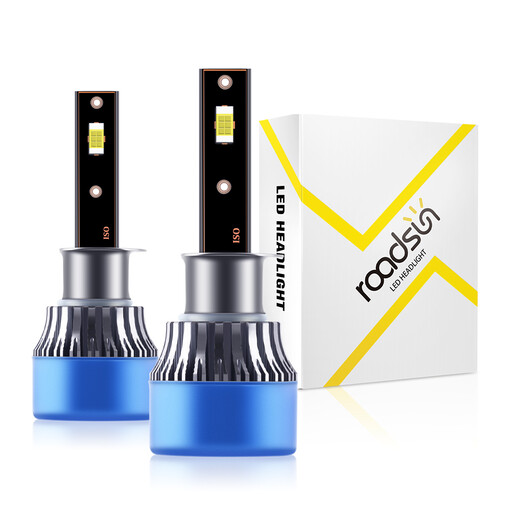
Why it stands out: The entire focus is on a quick and easy DIY installation, making it an ideal H1 LED fog light.
Benefits:
Who is it for? For car owners seeking a reliable and extremely easy-to-install upgrade for their fog lights, who don't want the hassle of tools or complex modifications.
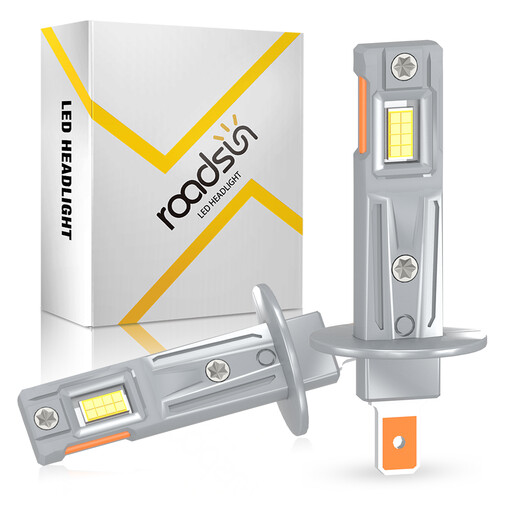
Why it stands out: The manufacturer's claimed high light output and exceptionally long lifespan.
Benefits:
Who is it for? For drivers who prioritise maximum brightness and durability, especially for use in larger vehicles like SUVs or pickups that often drive in challenging weather conditions.
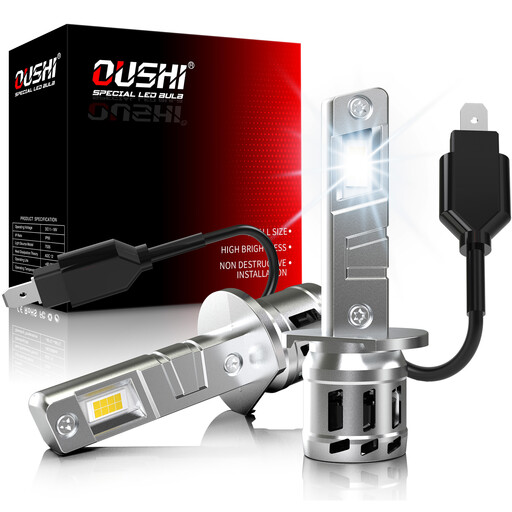
Why it stands out: Its broad compatibility, especially with European vehicles, thanks to the built-in CANbus system.
Benefits:
Who is it for? For owners of modern, particularly European, cars who are looking for a powerful headlight upgrade and are concerned about compatibility issues with the CANbus system.
Didn't find the perfect match for your car, or just want to explore more possibilities? There are various H1 LED bulbs available with different specifications and for different applications.
? Explore our full range of H1 bulbs for more choices.
Regulations for aftermarket LED lighting can be complex. For use on public roads, automotive bulbs within the headlight assembly must have an E-mark certification in some regions. Many aftermarket LED kits do not have this and are formally intended for off-road or track use only. Always check your local laws and your vehicle's specifications before performing an upgrade.
The process is generally straightforward, especially with a H1 plug and play model. Open the hood and locate the back of the headlight assembly. Unscrew the protective cap, disconnect the power connector from the old bulb, and remove the bulb (usually secured with a clip). Insert the new LED bulb, secure it with the clip, connect the power connector, and test that the bulb works before replacing the cap. For peace of mind, always consult your car's manual.
A CANbus H1 LED bulb is essential for many modern cars. The car's CANbus system measures the power consumption of the bulbs. Because LEDs are much more energy-efficient, the system might think the bulb is defective and display an error message on the dashboard. A CANbus-compatible bulb has built-in technology that corrects this signal, preventing error messages and flickering lights.
