
Vandaag of morgen in huis

Kwaliteit gegarandeerd

Welkomstaanbiedingen ontgrendelen: GRATIS bezorging | Tot 80% korting | Gratis 30 dagen JoyPlus-proefperiode
Download de app
Anyone searching for gut health supplements will soon come across terms such as probiotics, prebiotics, “billions of bacteria” and a healthy gut flora. That may sound straightforward, but the differences between products can be significant. A capsule containing bacterial cultures is not the same as a fibre powder or a lactase tablet.
The right choice therefore depends on your goal: do you want to support your gut flora, add more fibre to support bowel movements, digest lactose more easily or find a product for a sensitive gut? Below, you’ll find the key points to check, along with some popular options based on the available product specifications.
A high CFU count, or colony-forming units, may sound appealing. However, this figure does not tell you everything. Also check:
Two probiotic capsules may state the same number of bacteria but contain very different formulations.
Probiotics are intended to add bacterial cultures to your diet. They are not automatically suitable for constipation, lactose intolerance or symptoms associated with irritable bowel syndrome.
For fibre to support bowel movements, you should look towards psyllium husk or other dietary fibres. For lactose intolerance, a product containing lactase is the more logical choice. If you have persistent abdominal pain, blood in your stools, unexplained weight loss or prolonged diarrhoea, discuss this with a doctor.
A product may be vegan but still contain other ingredients you would not expect. Always check the current packaging. If you have a sensitive digestive system, pay attention to excipients, sweeteners, milk ingredients, gelatine and the recommended age.
Product information can also vary between packaging and sales channels. Use the ingredients list and directions on the label as your guide.
A product may contain one or more bacterial strains. Lucovitaal Prebiotics & Probiotics, for example, lists eight strains, including Bifidobacterium bifidum, Lactiplantibacillus plantarum and Lacticaseibacillus rhamnosus. The stated dosage is 20 billion CFU per capsule, with 50 mg of FOS.
The Lucovitaal 3-in-1 Bioticomel formula lists six live bacterial strains, 60 mg of prebiotics and 2 billion postbiotics. According to the product description, microencapsulation is used. This is a product specification, not a guarantee of a particular personal result.
Psyllium fibre absorbs moisture and is therefore often chosen by people who want to add extra fibre to their diet. According to the product information, Lucovitaal Colon Phyta Fiber Powder consists of 70% psyllium fibre and 30% inulin. The recommended amount is 25 grams per day, mixed into glasses of water or another drink.
Drink plenty of fluids and do not take fibre products alongside medicines without consulting a healthcare professional: the product information states that psyllium may affect how medicines work. Increase the amount gradually if you currently consume little fibre.
Taking one capsule a day is easy to incorporate into a regular routine. Sachets are convenient when you’re out and about, while powder may be suitable if you want to spread your fibre intake across several drinks. Chewable tablets can be useful for people who find capsules difficult to swallow, but check the sweeteners and allergens.
Store probiotics according to the label. Once opened, Lucovitaal 3-in-1 Bioticomel capsules should be closed securely and, according to the product information, preferably stored in the fridge. Also check the best-before date and do not use packaging if the seal has been broken.
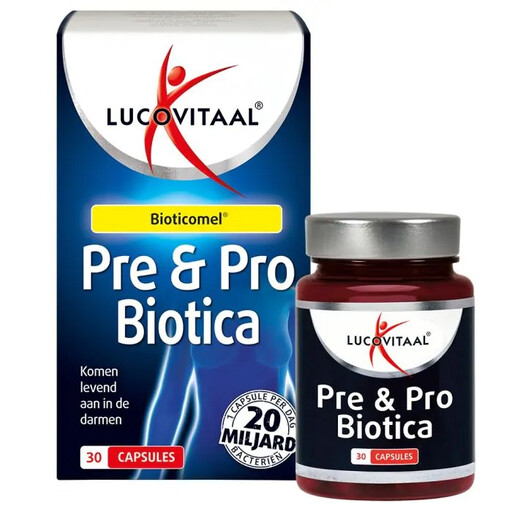
Why it suits this profile: A simple daily capsule for adults who want to combine probiotics and prebiotics in one formula.
The packaging states the number of strains, the CFU breakdown and 50 mg of FOS, so you do not have to rely solely on a general marketing term.
20 billion CFU per capsule, eight named bacterial strains and one capsule per day according to the product information.

Why it suits this profile: For adults who want to compare multiple bacterial strains, a vegan capsule and a larger pack.
The daily dose is listed separately: according to the product description, two capsules provide 20 billion CFU and 548 mg of inulin.
120 capsules, 20 named bacterial cultures, an acid-resistant capsule and a vegan formulation according to the product information.
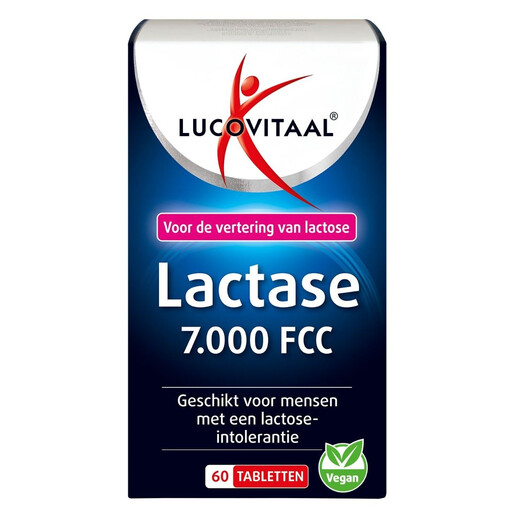
Why it suits this profile: For adults with lactose intolerance who want to take a targeted tablet with a meal containing lactose.
This is not a general probiotic capsule, but a product with one clearly specified ingredient: lactase at 7,000 FCC.
60 tablets, clear dosage information and intended for use with meals containing lactose.

Why it suits this profile: A practical option for people who want to add psyllium fibre and inulin to drinks or yoghurt.
The ratio is clearly stated: 70% psyllium fibre and 30% inulin, making up 300 grams of powder in total.
Vegan and free from sugar and salt according to the product information, with a recommended daily amount of 25 grams.
We’ve put together a complete, up-to-date list of products that fully meet these strict selection criteria and the applicable European safety regulations.
This varies from person to person. Start by comparing the number of bacterial strains, the dosage, any FOS or inulin, and the excipients. Follow the label when starting out and do not change several products at once. If your symptoms persist or are severe, it is wiser to consult your GP than to keep switching products yourself.
The recommended duration of use is stated on the label or in the product information. Some formulas are intended for daily use, while others are designed for a specific period. Store the product as directed and do not exceed the recommended daily amount. A supplement is not a substitute for a varied diet and healthy lifestyle.
If your main aim is to increase your dietary fibre intake, psyllium fibre is often worth considering. Probiotics and fibre have different compositions and purposes. Increase your fibre intake gradually and drink plenty of fluids. If you have long-term constipation, severe abdominal pain or sudden changes in your bowel movements, seek medical advice.
Before buying, always check the current ingredients, dosage, allergen information and warnings on the packaging. This helps ensure you do not pay for features that are not suitable for your situation.
