
Vandaag of morgen in huis

Kwaliteit gegarandeerd

Welkomstaanbiedingen ontgrendelen: GRATIS bezorging | Tot 80% korting | Gratis 30 dagen JoyPlus-proefperiode
Download de app
Gummies for children may look similar, but they fall into different categories. A bag of children’s sweets is intended as a treat, while children’s vitamins and multivitamins for children are food supplements. The shape and sweet taste may be comparable, but the composition, dosage and instructions for use can differ considerably.
Many parents mainly look at the colour, the character on the packaging or the flavour. This can lead to disappointing purchases. Check the following pitfalls first.
A gummy shaped like a fruit or a bear is not automatically a vitamin product. Haribo Kindermix, children’s sweet mixes and fruit gummies generally contain mainly sugar and carbohydrates. A supplement, on the other hand, contains added vitamins, minerals or, for example, vegetable oil.
So always check the product category and dosage. A supplement is not a substitute for a varied diet. Give it only according to the label and keep the packaging out of children’s reach.
Sugar-free gummies for children are often sweetened with polyols, such as maltitol, sorbitol or xylitol. These ingredients can have a laxative effect if consumed excessively. “Sugar-free” also says nothing about the age limit, allergens or the amount of active nutrients.
For example, Lucovitaal Multi+ Kids lists maltitol as a sweetener and, according to the product information, is suitable from 5 years of age. The recommended amount is one gummy per day. Do not exceed this amount.
Claims about immunity, energy, concentration or sleep may sound appealing. Assess them based on the ingredients, dosage and official instructions for use. According to information provided by the brand, certain vitamins can contribute to normal bodily functions; this is not a guarantee of noticeable results for every child.
Pay particular attention to age when choosing sleep gummies for children. The available product information for Lucovitaal Sleep Gummies states, among other things, that the product is not suitable for children aged 5 and under. The product details also specify an adult target group. Discuss use alongside medication, in the case of a medical condition or for persistent sleep problems with a doctor.
The age indication is a firm selection criterion. The range includes different age limits:
Also compare the daily serving. A jar containing 60 gummies may last 60 days at one gummy per day, but only 15 days at four gummies per day. This affects the actual cost per day.
Check whether the product contains gelatine, gluten, milk or other allergens. For example, Haribo Kindermix 550 g lists wheat/gluten and may contain milk. Haribo Kindermix is also unsuitable for vegans if gelatine appears in the ingredients list.
Products containing pectin and plant-based oils may be worth considering if you are looking for vegan gummies for children. Lucovitaal Omega 3 Kids lists perilla oil and pectin and has a vegan formulation. Check the current packaging if allergies or dietary choices are important.
For children’s sweets, the key details are sugars per 100 grams, serving size and total contents. Haribo Kindermix 550 g lists 46 grams of sugar per 100 grams. Cokoc Mega Trophy Gummies Mango lists 49 grams of sugar per 100 grams and contains colourings E110 and E102. According to the product warning, these colourings may have a negative effect on children’s activity and attention.
For children’s vitamins, look at the amount provided per daily dose. For example, Dagravit Kids-Xtra lists 10 micrograms of vitamin D per daily dose of two gummies. Davitamon Junior Strawberry states one gummy per day and contains, among other things, vitamin D3, vitamin C and zinc. This information can be checked on the label and helps prevent duplicate intake alongside other supplements.
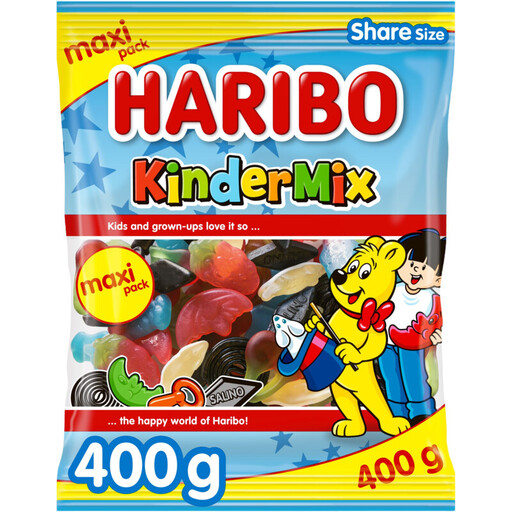
Why it suits this profile: A neatly packaged treat for a party, birthday or sharing with family and friends. This is children’s confectionery, not a vitamin supplement.
The product category and ingredients make it clear that this is confectionery. That way, you will not mistake it for a food supplement.
400 grams of confectionery; a mix including liquorice and fruit shapes; according to the product description, free from artificial colourings.
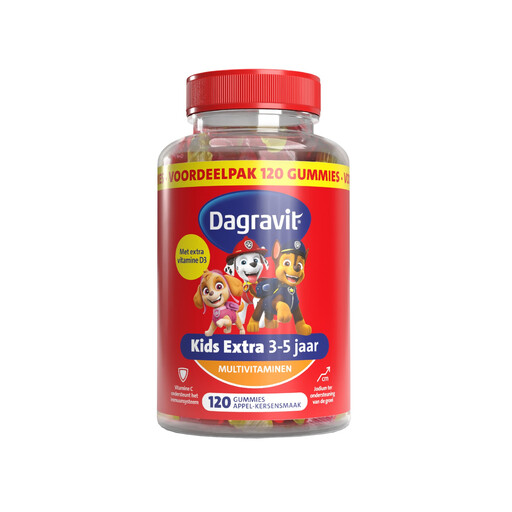
Why it suits this profile: Designed for children from 3 years of age who need clear dosing and a larger supply.
The product information states that it is suitable from 3 years of age, recommends 1–2 gummies and warns against exceeding the daily dose.
120 gummies; apple and cherry flavour; according to the label, free from artificial colourings and flavourings; contains vitamins D, C, zinc and iodine.
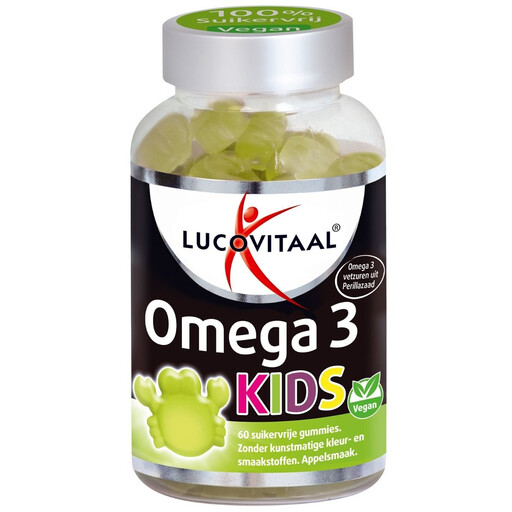
Why it suits this profile: For parents specifically looking for a plant-based source of omega 3 for children from 5 years of age.
The formulation lists perilla oil, while the product information clearly states the age limit, dosage and vegan claim.
According to the product information, 360 mg of omega 3 per four gummies; 100% sugar-free; vegan; apple flavour.
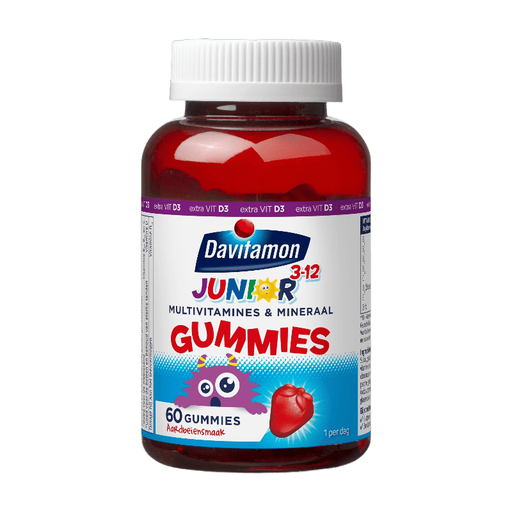
Why it suits this profile: One gummy per day is practical when parents want a short, consistent routine for children from 3 years of age.
The dosage is stated as one gummy per day. The ingredients list includes gelatine and sugar, among other ingredients, so you can check dietary requirements in advance.
60 gummies; strawberry flavour; according to the product specification, contains vitamins D3 and C, B vitamins and zinc; gluten-free and lactose-free according to the product information.
We have put together a complete, up-to-date list of products that fully meet these strict selection criteria and the applicable European safety regulations.
It depends on the product. Some multivitamins are suitable from 3 years of age, while others are only recommended from 5 or 6 years. Always check the age indication, dosage and warnings on the packaging. With small sweets, supervision while eating is advisable.
The duration of use depends on the number of gummies and the daily dose. A jar containing 60 gummies lasts approximately 60 days at one gummy per day. At two gummies per day, it lasts approximately 30 days. Also check the storage period after opening; some products state a period of 60 days.
No. Omega 3 gummies contain an oil source, such as perilla or algae oil, while multivitamins provide several vitamins and sometimes minerals. Compare the nutrients per daily dose and do not combine supplements without checking the total intake.
