Who is this for?

A cook who shares equipment

You share a kitchen with others and want to remove any grinding residue before someone else uses the equipment. If you have a food allergy, you’ll need to take extra care over which ingredients have been processed in it. The Netherlands Nutrition Centre recommends using clean utensils to prevent cross-contamination.

A cook preparing small quantities

You occasionally grind a little fennel seed and want to assess the texture as you prepare it. Cole & Mason describes a mortar and pestle as suitable for seeds and spices. It lets you crush the seeds or grind them more finely, to suit your preference.

A regular spice grinder

You grind dry spices more often and want to do less by hand, while keeping an eye on cleaning requirements and the limits of an electric appliance. Check which ingredients are permitted for each model and how its parts should be cleaned.

What should you look for when buying?

Mortar and pestle

A good choice if: you want to crush a small quantity now and then or control the texture yourself, without needing a plug socket.

Bear in mind: it takes effort to use, and a heavy granite mortar takes up space.

Manual spice grinder

A good choice if: you want a compact grinder that works directly over your dish and has an adjustable grind setting.

Bear in mind: a general description such as ‘spices’ doesn’t confirm that every model will grind small fennel seeds the way you want.

Electric blade or spice grinder

A good choice if: you grind quantities regularly and want to do less by hand.

Bear in mind: the grind may depend on how long you run the appliance. Follow the cleaning instructions and maximum running time too.

What to consider What to look for when buying Who is this important for?
Cleaning between users Check which parts can be removed and which cleaning method the manufacturer recommends for the exact model. If I share equipment, I want to be able to remove residue carefully between ingredients. Around 36% of consumers rank cleaning as their top buying priority.
Small quantities and texture Decide whether you want to crush or finely grind the seeds. For a hand grinder, check whether the manufacturer lists fennel seeds as a suitable ingredient. When grinding a little fennel seed, I want to judge for myself how coarse or fine it should be. Around 29% of consumers prioritise portion size and texture.
Less effort Compare permitted ingredients, controls, bowl design and the maximum continuous running time stated in the manual. If I grind regularly, I want to do less by hand without overlooking the instructions for use and cleaning. Around 21% of consumers put convenience first.
Storage and purchase Compare the dimensions and included parts, and consider how much space the bowls and motor base will take up. In a small kitchen, I want to know how much space the appliance and any separate parts will need. Around 14% of consumers care most about storage space and the overall purchase decision.

Common buying mistakes

  • Assuming an extra grinding bowl prevents cross-contact

    Residue can remain even in a removable bowl. If you have a relevant food allergy, it’s important to know which ingredients have previously been processed in shared equipment.

    Check the cleaning instructions for every part and agree how the equipment will be shared. Don’t assume that a second bowl guarantees a grinder is suitable for someone with a specific allergy.

  • Assuming every spice grinder can handle fennel seeds

    A general description such as ‘spices’ or an adjustable grinding mechanism doesn’t confirm how a particular model handles small fennel seeds.

    Check which ingredients are permitted for the full model number. Choose a mortar and pestle if you’d rather assess the texture as you crush the seeds.

  • Looking only at power when choosing an electric grinder

    Power alone doesn’t tell you how fine the grind will be, how loud a model is or how long it can run continuously. For the Rommelsbacher EGK 200, the manual specifies a maximum grinding time of 30 seconds at full capacity, followed by a break of at least 1 minute.

    Alongside power, compare the permitted ingredients, controls, cleaning requirements and model-specific running limits.

Brands to compare

Cole & Mason

The 10 cm Dorchester mortar and pestle is a manual option for crushing and grinding spices and seeds in small quantities.

  • Cole & Mason says the mortar has an unpolished granite interior and weighs 930 g.
  • The manufacturer recommends cleaning it with a damp cloth and drying it thoroughly. This is not an independent comparison of grinding performance.

WMF

The Mini 0648199990 is a compact manual spice grinder with an adjustable ceramic grinding mechanism.

  • WMF lists an adjustable grind setting and a 10-year manufacturer’s guarantee on the ceramic grinding mechanism, subject to the stated conditions of use.
  • WMF says this model is not dishwasher-safe; its suitability for fennel seeds has not been confirmed separately.

Rommelsbacher

The EGK 200 is an electric coffee and spice grinder with a grinding bowl for dry spices and a separate universal bowl.

  • Rommelsbacher lists two removable stainless steel bowls, each with a maximum capacity of 70 g.
  • The parts should be handled according to the accompanying cleaning instructions. The manufacturer’s claim that the model is quiet is not based on an independent noise test.

Krups

According to Krups, the F2034210 is an electric blade coffee grinder that can also process seeds and spices.

  • Krups lists a capacity of 85 g and a locking lid.
  • Don’t assume it has a removable grinding bowl. Compare its cleaning instructions with those for models that have a detachable bowl.

Severin

The KM 3879 is an electric coffee and spice grinder for, among other things, spices and nuts.

  • Severin says the model only operates when the lid is in place.
  • How long you run it affects the grind. Check the manual and make sure its parts suit your preferred cleaning routine.

Joybuy products

Electric grinder for coffee and spices; check the instructions for use and cleaning before sharing it with others.
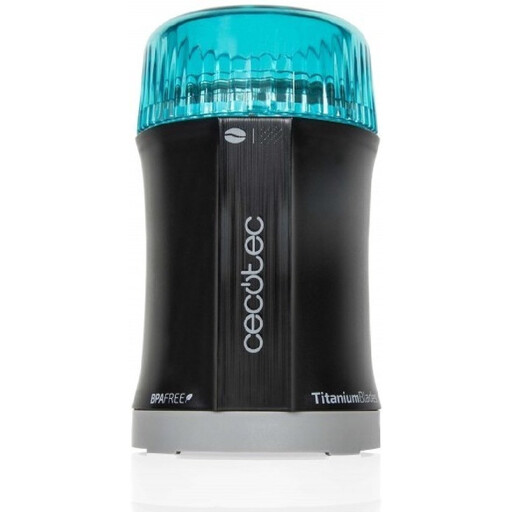
Cecotec TitanMill 200 electric coffee and spice grinder

Cecotec TitanMill 200 electric coffee and spice grinder

An electric option if you want to grind spices and wash the bowl and lid after use.

The product description mentions pulse grinding; the grind setting is not adjustable.

Run the appliance for no more than 1 minute at a time, then let it cool for at least 10 minutes.

Wash the bowl and lid. Clean the motor base with a cloth and do not immerse it.

View at Joybuy

Frequently asked questions

How can I grind a small amount of fennel seeds without an electric appliance?

Use a mortar and pestle to crush the seeds, then grind them more finely if you wish. Cole & Mason describes the Dorchester mortar and pestle as suitable for spices and seeds. Follow the cleaning instructions for the model you buy.

Can I put the grinding bowl in the dishwasher?

It depends on the model and the part. Rommelsbacher says the grinding and universal bowls and lids of the EGK 200 are dishwasher-safe, but the motor base is not. WMF says the Mini 0648199990 is not dishwasher-safe.

What should I do if someone in our shared kitchen has a food allergy?

Ask which ingredients have previously been processed in the equipment and use clean utensils. The Netherlands Nutrition Centre lists nuts, mustard and sesame seeds among allergens. An extra bowl or a quick wipe is no guarantee that a grinder is safe for someone with a specific allergy.

Who should I contact about a fault, and what applies when buying online?

According to the Government of the Netherlands, the seller must offer a solution if a product does not meet the statutory guarantee requirements; a manufacturer’s guarantee is separate. When you buy online from a business, you generally have 14 days to change your mind, although there are exceptions.

Which Dutch product regulations are relevant?

The Netherlands Food and Consumer Product Safety Authority (NVWA) outlines safety requirements for electrical equipment within the voltage range covered by the Low Voltage Directive, as well as requirements for materials that come into contact with food. These rules apply to the businesses concerned and, on their own, do not prove that a specific model meets every requirement. Check the product information and follow the manual.
