
Teacher working with small quantities
If you want participants to grind a few cardamom seeds themselves, a manual method can help demonstrate the process. Aziatische-ingrediënten.nl describes grinding small quantities with a pestle and mortar.


For small quantities that participants grind themselves, use a pestle and mortar or a hand grinder explicitly designed for cardamom seeds. For repeated batches, an electric grinder with removable bowls may be more practical. Aziatische-ingrediënten.nl describes grinding small quantities with a pestle and mortar, while FinaMill says its Everyday Pod is designed for cardamom seeds, but does not grind them as finely as typical ground spices. If you use an electric grinder, check its terms of use: the Rommelsbacher EGK 200 manual excludes commercial use.
If you want participants to grind a few cardamom seeds themselves, a manual method can help demonstrate the process. Aziatische-ingrediënten.nl describes grinding small quantities with a pestle and mortar.
If you’re preparing batches for several participants one after another, consider how easy the grinder is to clean between sessions, and whether the appliance is suitable for the setting in which you’ll use it. The Rommelsbacher EGK 200 manual excludes commercial use.
If you’re switching between ingredients during the same session, check whether the bowls or other parts are removable and how the manual says to clean them. Cuisinart says the SG21BE comes with two dishwasher-safe bowls.
First, choose a method that suits your workshop: participants can grind the seeds themselves, you can grind by hand without electricity, or you can prepare several batches with an electric grinder. Whichever method you choose, check that any parts which come into contact with the seeds are suitable for food contact.
Best for: participants grinding small quantities themselves, when hands-on preparation is part of the workshop.
Bear in mind: grinding takes time and effort; you may need to sift the seeds to get a very fine texture.
Best for: grinding without a power socket. FinaMill specifically recommends the Everyday Pod for cardamom seeds, when used with a compatible FinaMill motor.
Bear in mind: FinaMill says the Everyday Pod does not grind as finely as typical ground spices. The Grater Pod is designed for whole cardamom pods, among other things, rather than the seeds on their own.
Best for: preparing several batches or spices one after another, and when you want removable bowls that are easy to clean.
Bear in mind: you’ll need a power supply. The Rommelsbacher manual excludes commercial use of the EGK 200; when the grinder is fully loaded, the manufacturer specifies a maximum grinding time of 30 seconds, followed by a break of at least one minute.
| What to consider | What should you check? | Who should pay particular attention? |
|---|---|---|
| Small quantities | Check whether the manufacturer mentions individual cardamom seeds and what grind size the chosen method produces. | If you want participants to grind a few seeds themselves, having control over small quantities is important. Around 33% of consumers prioritise being able to grind small quantities with control. |
| Repeated sessions | Check the permitted environment for use, the operating time and any cooling-off period specified in the manual. | If you’re preparing batches for several participants one after another, you’ll want to minimise unnecessary interruptions. Around 25% of consumers give repeated sessions the highest priority. |
| Cleaning and keeping flavours separate | Check which parts are removable or dishwasher-safe, and follow the cleaning instructions for each part. | If you’re switching between cardamom and other ingredients, cleaning between preparations is important. Around 25% of consumers prioritise cleaning and keeping flavours separate. |
| Grinding without electricity | Choose between a pestle and mortar and a hand grinder; if you opt for a hand grinder, check that it’s designed for the type of seeds you’re using. | If you want to grind at a workbench without a power socket, a manual method may suit your setup better. Around 17% of consumers give working without electricity the highest priority. |
FinaMill lists loose cardamom seeds as suitable for the Everyday Pod and whole pods for the Grater Pod. The manufacturer also says the Everyday Pod does not grind as finely as typical ground spices.
Check that the ingredients and grind size specified match what your workshop recipe requires.
You may need a different grinding attachment or method for the type of seeds you’re using.
The Rommelsbacher EGK 200 manual explicitly excludes commercial use. The NVWA also sets out obligations for businesses that prepare, process or sell food.
Establish how your workshop is organised, then check the terms of use for the specific appliance and the relevant hygiene code.
A manufacturer may state that certain removable parts are dishwasher-safe; this doesn’t automatically apply to every part or the motor base.
Check the manual for each part and follow the recommended cleaning routine. The NVWA emphasises that equipment and kitchen utensils must be clean and well maintained.
The SG21BE is an electric spice and nut grinder with separate bowls.
The EGK 200 is an electric herb and coffee grinder with separate cups.
Kenwood says the Duo Prep CHP80.000SI combines a chopper with a separate grinder.
The interchangeable Everyday Pod is designed for use with a compatible FinaMill motor.
Peugeot says the manual Isen is designed for long pepper and larger spices.
These picks are electric grinders for salt, pepper or dry spices. Check whether each model is suitable for loose cardamom seeds and for the workshop you have in mind.
 No image available
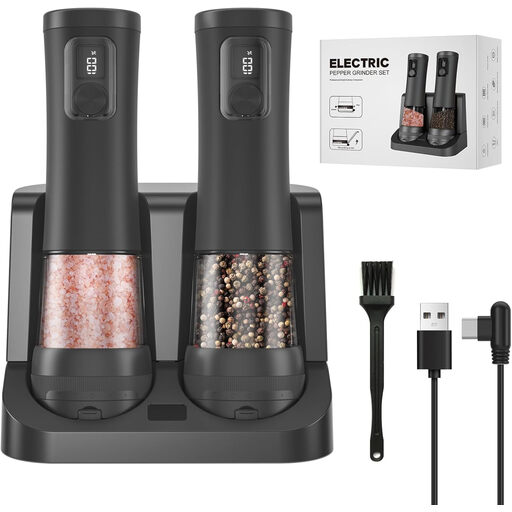
The product name mentions salt and pepper; check whether these grinders are suitable for the loose cardamom seeds you want to use.
The product information lists five grind settings, battery power and a digital display.
 No image available
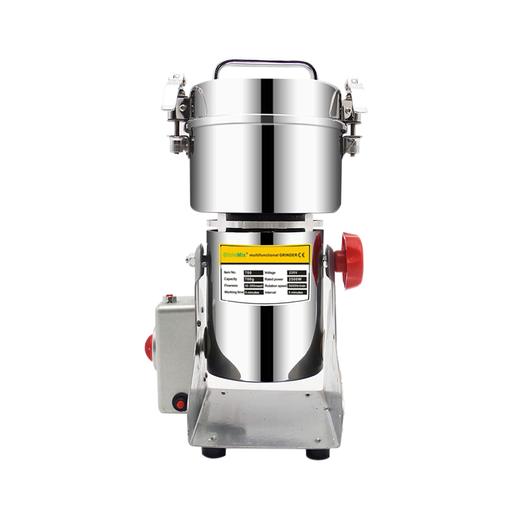
The product name identifies this model as a dry spice grinder; check whether it’s suitable for loose cardamom seeds and the quantity you want to grind.
The product name lists a capacity of 700 g, a power rating of 2500 W, a speed of 36000 rpm, three stainless steel layers and a 270-degree rotation range.
No image available
The product name identifies this model as a dry spice grinder; check whether it’s suitable for loose cardamom seeds and the quantity you want to grind.
The product name lists a capacity of 800 g, a power rating of 2500 W, a speed of 36000 rpm, three stainless steel layers and a 270-degree rotation range.
 No image available
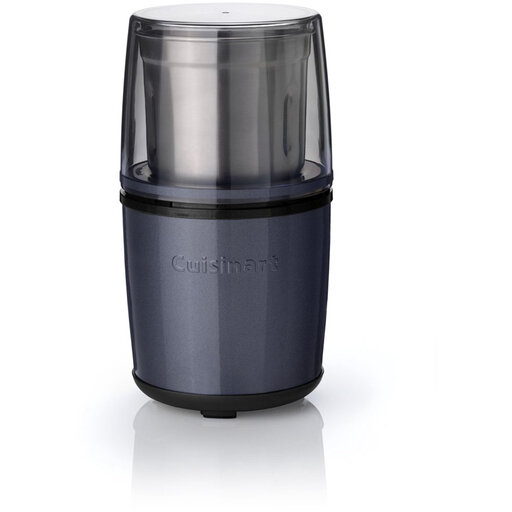
Cuisinart says the SG21BE has separate bowls for processing different ingredients; check that the grind size you want for cardamom is right for your recipe.
Cuisinart lists stainless steel blades, operation at the touch of a lid and a removable, dishwasher-safe bowl.
FinaMill specifically lists its Everyday Pod as suitable for loose cardamom seeds. The manufacturer says the separate Grater Pod is designed for whole cardamom pods, among other things. So check which form you’re using and choose the appropriate grinding attachment.
Follow the cleaning instructions for the exact model. Cuisinart says the two bowls supplied with the SG21BE are dishwasher-safe; Rommelsbacher describes removable parts for the EGK 200. The NVWA emphasises that equipment and kitchen utensils must be clean and well maintained when preparing food.
If you prepare, process or sell food as a hospitality or artisan business, the NVWA says you must follow a HACCP food safety plan or an applicable approved hygiene code. Whether this applies to your workshop depends on how it is organised; this requirement doesn’t automatically apply to a private workshop.
According to the Dutch government, consumers are entitled to a product that works as it should, and the seller is their point of contact if something goes wrong. The Netherlands has no fixed statutory warranty period of two years. Any manufacturer’s warranty is in addition to these statutory rights.
Not simply because it’s a spice grinder. According to the European Commission, CE marking is only required when specific harmonised EU rules prescribe it for that product. Different rules may apply to electrical appliances than to a manual grinder.