Which light is right for you?

Maker of glossy cards

You photograph cards with a glossy or reflective surface, for example, and want to move the highlight without losing detail. Adobe and broncolor explain how diffusion and light positioning can affect the appearance of reflections.

Maker of a consistent card collection

You want colours and brightness to look consistent across your portfolio photos, so you look for adjustable white light, a repeatable set-up and consistent white balance. Adobe discusses white balance as a way to manage colour casts; NEEWER and amaran publish model-specific specifications for their adjustable panels.

Maker working at a small desk

You have little room for a light and mount, or you often move your photo set-up. Ulanzi describes the VL81 as a small rechargeable light; test for yourself whether it also provides enough coverage for the whole card.

What should you look for when buying?

Larger adjustable panel

Best if: you photograph full cards or several cards in a fixed set-up and have room to position the panel.

Bear in mind: the space required and what’s included in the kit; a stand or battery isn’t included with every version.

Compact rechargeable panel

Best if: you have limited workspace or mainly want to light a detail on a card, and need to move the light easily.

Bear in mind: a small light won’t necessarily illuminate a full card evenly; check its coverage with a test shot.

What to consider What should you check? Who should consider this?
Reflections and finish Check whether you can position the panel securely at an angle, and whether a diffuser is included or available separately. Test both the gloss and texture on your own card. If a reflection obscures glossy details, you’ll want to move the highlight without losing the finish you want to capture. Around 36% of consumers prioritise controlling reflections above all else.
Consistent colours Compare the specifications for the exact model; use the same white balance for test shots and include a neutral reference surface. If paper and ink colours need to look consistent across your portfolio photos, a set routine can help you assess colour. Around 29% of consumers prioritise consistent colour reproduction.
Card coverage Measure the card and background you use, then check in a test shot whether the lighting is even enough from corner to corner. Only compare light output at the same distance and under the same conditions. If you want to show the whole card, you’ll also want to see the edges clearly; a larger light source can take up more space. Around 21% of consumers prioritise full coverage above all else.
Space and what’s included Check the space required, the mount and power supply, and which battery, cable, diffuser and stand are included with the exact version. If your workspace is small or changes regularly, consider how easily you can position and move the light, even if that means less coverage from a single light source. Around 14% of consumers prioritise a compact, portable set-up.

Common buying mistakes

  • Choosing based only on the highest lux rating

    Without the same measurement distance and settings, a light output figure won’t tell you how evenly your card will be lit or where a reflection will fall.

    Compare the measurement conditions and take a test shot of the whole card with the diffuser and light position you plan to use.

  • Assuming a panel is a complete studio kit

    The contents of the NEEWER NL660 package vary by version. NEEWER states that NP-F batteries aren’t included; only the version specified as including a stand comes with one.

    Check the contents of the exact version and make sure you have the power supply and mount you need.

    Depending on the version you choose, you may still need a stand or compatible battery.

  • Assuming a small battery-powered light gives you a large light source

    Ulanzi describes the VL81 as a compact portable light. That doesn’t automatically mean one unit will illuminate a full card evenly.

    Test the edges of your largest card before using a compact light as your only main light.

    To get the coverage you want, you may need to adjust the light position, add diffusion or use additional equipment.

Brands to consider

NEEWER

The NL660 range is a useful reference for an adjustable bi-colour panel in a fixed card photography set-up.

  • According to NEEWER, the NL660 has a diffuser and mains adapter, a colour temperature range of 3200–5600 K, and a stated CRI of at least 96.
  • A stand is included only with the specified version that comes with one; NP-F batteries aren’t included. These are manufacturer specifications, not an independent assessment of card photography.

amaran

The P60x is a 60 W bi-colour panel for anyone looking for a studio light that can be positioned as needed and powered by mains or compatible batteries.

  • amaran specifies a colour temperature range of 3200–6500 K, CRI 95+ and use with two NP-F-style batteries.
  • According to the manufacturer, the D-Tap cable isn’t included. The stated light output at one metre and 5600 K isn’t a comparative real-world test.

Godox

The LP800Bi is a wide, diffused panel for a more spacious, fixed tabletop set-up.

  • Godox specifies built-in diffusion, an included stand, a range of 2800–6500 K and mains power.
  • The stated weight is around 2.3 kg. Check that you have enough space before buying; colour claims are specifications supplied by Godox.

Ulanzi

The VL81 is a small rechargeable light for card details or a limited, portable set-up.

  • Ulanzi specifies a built-in 3000 mAh battery, a range of 3200–5500 K and a 1/4-inch mounting point.
  • These specifications don’t prove that one unit will illuminate a full card evenly; assess the coverage in your own set-up.

Compact lights for card details

This Joybuy product selection focuses on compact lights for small or portable set-ups and card details. Take a test shot to check whether the light provides enough coverage for a full card too.
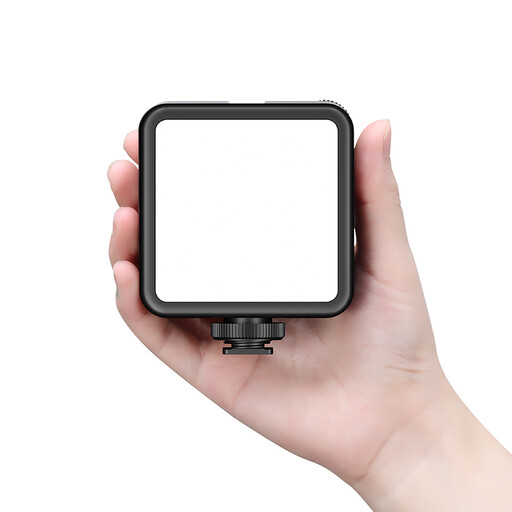
Ulanzi VL81 rechargeable LED video light, black

Ulanzi VL81 Rechargeable LED Video Light Black

A compact option for a small or portable workspace; check the coverage before using the light for a full card.

According to Ulanzi, the VL81 has a built-in 3000 mAh battery, a colour temperature range of 3200–5500 K and a 1/4-inch mounting point.

Joybuy
Ulanzi LM001 portable mini fill light with 500 mAh battery

Ulanzi LM001 Portable Mini Fill Light, 500 mAh

A mini fill light for product photography; check in your own set-up whether it provides enough coverage for the card size you’re photographing.

The product title specifies a 500 mAh battery.

Joybuy

Frequently asked questions

How do you get started photographing a card with glossy details?

First, take a test shot with the light angled beside the card, and change its position if a reflection covers a detail. Diffusion softens harsh light; also check that the gloss you want to show is still visible. This is set-up advice, not a guaranteed result for every type of paper.

How do you keep colours consistent across several portfolio photos?

Keep your lighting set-up as consistent as possible and set the white balance consistently; a neutral surface can help you assess any colour cast. A stated CRI doesn’t replace checking the results with your camera.

Do you need to buy a battery or stand separately?

That depends on the model and version. The NEEWER NL660 comes with a mains adapter but not NP-F batteries; only the version with a stand includes one. Check the contents of the exact offer before buying.

What protection do you have if a panel bought online turns out to be faulty?

For a consumer purchase in the Netherlands, the seller must supply a product that is fit for purpose and provide an appropriate solution if there’s a fault. The Dutch government states that there is no fixed statutory two-year guarantee period. In many cases, online consumer purchases from a business also come with a 14-day cooling-off period; check the applicable terms and exceptions.

What should you look out for when it comes to product safety in the Netherlands?

Electrical and electronic devices sold in the EU must comply with the applicable European product rules. The Dutch government’s Ondernemersplein website outlines, among other things, the requirements for CE marking and an EU declaration of conformity. This general regulatory framework doesn’t confirm that a specific unit complies; check the marking, product information and suitable power supply for the specific offer.
