Who is this guide for?

Card collection makers

If you photograph several cards for an online shop, a consistent background, controlled lighting and repeatable framing can help you create a cohesive series. Adobe, Shopify and Canon Netherlands identify these as relevant considerations for product photography.

Photographers capturing print details

If you also want to capture small lettering, embossing or paper texture, consider the lens, magnification and working distance. The camera sensor alone does not determine how large details appear in the image. MPB and Canon Netherlands discuss the importance of support and the specifications of your chosen lens.

Users sharing a work surface

If you need to put your setup away after use, a fixed camera position and the ability to check the image while arranging your cards are practical features. Canon Netherlands recommends using a tripod to help achieve consistent compositions.

What should you look for when choosing?

Your existing smartphone

Choose this if: you mainly photograph whole cards and your phone captures enough detail. Adobe and Shopify suggest that a suitable smartphone can be a good starting point for product photos.

Bear in mind: whether your phone offers the framing and settings you need. A fixed position and controlled lighting are still important.

Mirrorless camera with a standard zoom lens

Choose this if: you regularly photograph card series and want to adjust the framing or shooting settings. The Canon and Nikon kits reviewed pair a mirrorless camera with a zoom lens.

Bear in mind: a standard zoom lens is not automatically suitable for very small details. Check the full kit contents and make sure you have enough room for your setup.

Mirrorless camera with a separate close-up lens

Choose this if: fine lettering, embossing or paper texture is a priority and the kit lens does not offer enough magnification.

Bear in mind: the lens mount, magnification and working distance you need. A separate lens also requires extra storage space and time to set up.

What to consider What should you check? Who is this important for?
Consistent card colours Check whether you can set the white balance manually and whether there is room for a fixed lighting setup. Shooting in RAW can give you more flexibility when editing, but it requires extra processing and storage. When I place cards from different sessions side by side, I want the paper and colours to look similar. Around 36% of consumers give colour consistency top priority.
Repeatable framing Consider how you will support the camera above the work surface and whether you can check the image while arranging the cards. When photographing a series of cards, I want to be able to repeat the framing without repositioning the camera each time. Around 29% of consumers prioritise stable, repeatable framing.
Small print and paper details Check the magnification and focusing distance of the exact lens, as well as the space available between the camera and the card. If I want to show fine lettering or embossing, I need to be able to take close-ups from my workspace. Around 21% of consumers give small details top priority.
Setting up and packing away Consider how much space the complete camera setup takes up and check which items are included in the kit. When the work surface is used for different tasks, I want to be able to put the equipment away after taking photos. Around 14% of consumers prioritise a quick setup and pack-away.

Common pitfalls

  • Confusing megapixels with close-up capability

    The resolution of a camera body does not, by itself, tell you whether small lettering will appear large enough in your image. Canon lists different maximum magnifications for the RF-S 18-45mm at different focal lengths and focusing modes.

    Check the magnification and working distance of the exact lens against the smallest detail you want to photograph.

    If the kit lens is not suitable, you may need a separate compatible lens.

  • Comparing only the camera and forgetting the workspace

    A tripod can help you repeat the framing, but support, a background and lighting also take up space in a shared workspace.

    Plan in advance where the camera, card and lighting will go, and how you can set up and pack away everything safely.

    Support, a background and lighting may be extra items that you will need to store.

  • Assuming every camera kit is complete

    Kit contents vary. For example, Nikon states that the Z50II kit reviewed does not include a charger.

    Check the contents of the exact variant, including the camera, lens, battery and charger, before you decide.

Camera brands to consider

Canon

The EOS R50 kits reviewed pair an APS-C camera with interchangeable RF-S lenses. This gives you the option to photograph whole cards first and choose a different lens later for detailed shots.

  • Canon lists a 24.2-megapixel sensor and vari-angle screen for the EOS R50.
  • The RF-S 18-45mm kit lens is not automatically a macro lens, so check its magnification for the details you want to capture. The two-lens kit reviewed also includes a telephoto zoom, so consider whether it will be useful for photographing cards.

Nikon

The Z50II kit reviewed includes the camera and a NIKKOR Z DX 16-50mm f/3.5-6.3 VR zoom lens. Nikon lists image stabilisation in the lens.

  • The kit includes a retractable standard zoom lens for general card photography.
  • Nikon states that this kit does not include a charger. Assess its suitability for close-ups based on your chosen lens and working distance.

Sony

The ZV-E10 range uses an E-mount and may be worth considering if you want to make videos of card displays as well as taking photos.

  • Sony lists around 24.2 effective megapixels for the original ZV-E10. The ZV-E10 II is a separate model, for which Sony lists a kit with a 16-50mm power zoom lens.
  • Video features alone are not a reason to choose a particular model for photographing stationary cards. Check the exact version of the kit lens too.

Cameras on Joybuy

Below are cameras on Joybuy that are relevant to this topic. Check the features and included items for each model to see whether they suit your card photography setup.

Komery W6 digital camera with 12× optical zoom and Wi-Fi

Komery W6 digital camera, 12× optical zoom

The listed optical zoom may be useful if you switch between different crops. Check whether the camera meets your requirements for capturing card details.

The product title lists 12× optical zoom, Wi-Fi and 64 MP.

View on Joybuy

DJI Osmo Pocket 3 Creator Combo

DJI Osmo Pocket 3 Creator Combo

The product title focuses on video and vlogging. Consider this model for card photography only if those features also suit your needs.

The title lists a 1-inch CMOS sensor, 4K/120fps video, 3-axis stabilisation and a microphone. The product description mentions a rotating 2-inch touchscreen.

View on Joybuy
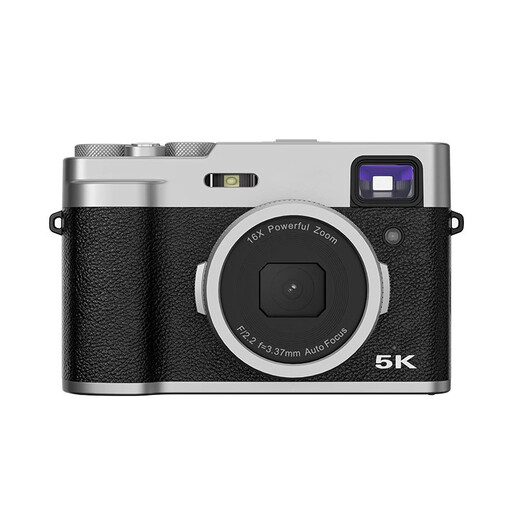
Songdian digital camera with autofocus and optical viewfinder

Songdian digital camera, 48 MP

If you want to look through a viewfinder while setting up, check whether the optical viewfinder suits the way you frame your card.

The product title lists 48 MP, autofocus and an optical viewfinder.

View on Joybuy
Sony ZV-E10 with 16-50mm zoom lens

Sony ZV-E10 with 16-50mm zoom lens

The zoom lens may suit different framing needs, while the vari-angle screen can help you check the composition as you arrange your cards.

Sony lists around 24.2 effective megapixels for the original ZV-E10. The product description mentions a 16-50mm kit lens and a vari-angle screen.

View on Joybuy
Sony Alpha A6100 with 16-50mm f/3.5-5.6 OSS II lens

Sony Alpha A6100 with 16-50mm f/3.5-5.6 OSS II

A tilting screen can be useful when framing a shot above a work surface. Check that the screen position works for your setup.

The product description lists a 24.2 MP APS-C sensor, autofocus, Wi-Fi, an electronic viewfinder and a tilting screen.

View on Joybuy

Frequently asked questions

Do you need to buy a separate camera for greeting cards?

Not necessarily. Adobe and Shopify suggest that a suitable smartphone can be a good starting point for product photos. First, try taking photos with your phone using controlled lighting and a stable setup to see whether it captures the whole card and the details you want. A mirrorless camera gives you more choice of lenses and shooting settings.

How can you keep the colours in a card series consistent?

Keep the lighting as consistent as possible and set the white balance deliberately. Adobe explains that different light sources have different colour temperatures, so check a test shot before photographing the whole series.

What extra items should you check when buying a camera kit?

Check the contents of the exact kit and decide whether you also need support, lighting or a different lens. Nikon states that the Z50II kit reviewed does not include a charger. For a consumer purchase in the Netherlands, the legal guarantee is separate from any manufacturer’s warranty. If a product is faulty, contact the seller. The applicability of consumer rights to a business purchase should be assessed separately.

Can you photograph identifiable colleagues in the workspace and publish the images?

Not without more. The Dutch Data Protection Authority considers identifiable people in photos to be personal data; a lawful basis under the GDPR is required for business photography and publication. If colleagues are not meant to be part of the image, frame the shot so it shows only the card. These considerations do not automatically apply to images in which nobody is identifiable.

Can you show other makers’ designs in your card photos online?

Do not assume you can publish a design just because the card is in your workspace. According to Ondernemersplein, original works may be protected by copyright, and the rights holder decides how they can be used. Check what permission or licence you need before publishing.
