
Colleagues who make their own green tea
They want to choose a temperature that suits their tea and would rather not brew their tea in a shared pot.


An adjustable-temperature kettle is a good fit for colleagues who make their own tea one cup at a time. An electric tea maker with a basket is more convenient when you often prepare loose-leaf tea together. Compare the temperature settings with the tea’s brewing instructions, and check the minimum and maximum fill levels. An automatic basket means less to do while the tea is brewing, but shared parts still need cleaning.
They want to choose a temperature that suits their tea and would rather not brew their tea in a shared pot.
They need a pot for several cups and have to choose between a removable and an automatic tea basket.
They consider cleaning, descaling, safe pouring and how much water is needed for each brew.
A good fit when: colleagues make their own cup or pot of tea at different times.
Keep in mind: you still need to measure the tea and time the brew yourself; there’s no integrated tea basket.
A good fit when: colleagues want to brew a pot of loose-leaf tea together and remove the basket once it’s brewed.
Keep in mind: agree on who will time the brew and clean the basket.
A good fit when: a group regularly makes tea together and wants to control the temperature and brewing time centrally.
Keep in mind: the pot and basket are still shared parts that need cleaning.
| What to consider | What should you check? | Who is this more important for? |
|---|---|---|
| Tea brewing temperature | Compare the settings on the exact model with the tea’s brewing instructions. Simon Lévelt generally recommends 70–85 °C for green tea, but gives 60 °C as the specific brewing temperature for Gyokuro. | If I drink tea with specific brewing instructions, I want to be able to set the temperature accordingly. This is a priority for around 36% of consumers when choosing what to buy. |
| Sharing loose-leaf tea | Check whether the basket is removable, how the brewing time is controlled and who will clean it after use. | If we brew loose-leaf tea together, I want the basket to be easy to remove and clean. Around 29% of consumers prioritise brewing and cleaning together. |
| Amount brewed each time | Compare both the minimum and maximum fill levels with how the kettle will be used at the office; don’t assume the minimum fill from the maximum capacity. Milieu Centraal advises heating no more water than you need. | For a round of tea together, I want to make enough water, but I don’t want to heat more than necessary for one cup. Around 21% of consumers say the amount brewed each time is their top priority. |
| Everyday use and care | Check the safety features of the exact model, follow the instructions and only use the keep-warm function when needed. | If several colleagues use and clean the appliance, I want its day-to-day care to be straightforward. Around 14% of consumers prioritise safe use and maintenance. |
Brewing instructions vary from one tea to another. For example, Simon Lévelt gives a specific recommendation of 60 °C for Gyokuro.
Before you choose, compare the tea’s brewing instructions with the settings on the exact appliance.
The maximum capacity doesn’t tell you how little water the appliance can heat. The minimum fill level may therefore matter if you’re making individual cups.
Check the minimum fill level and the water-level indicator. Milieu Centraal advises heating no more water than you need.
A basket lets you brew loose-leaf tea in the pot, but it’s an extra part that needs cleaning after use.
Choose a brewing method that suits the people making the tea, and agree in advance who will clean the pot and basket.
The TWK8613P is an adjustable-temperature kettle for anyone who brews tea in their own cup or pot.
The HD9359/90 combines temperature selection with a water-level indicator for making individual cups.
The Element BJ760D heats water and has a removable tea basket for brewing a shared pot.
The Tea Maker STM800BSS4EEU1 is designed for brewing loose-leaf tea together, with an automatically moving basket.
This selection of Joybuy products includes kettles for making one or several cups, as well as a larger herbal decoction pot. For the pot, check the instructions to make sure it’s suitable for preparing ordinary green tea.
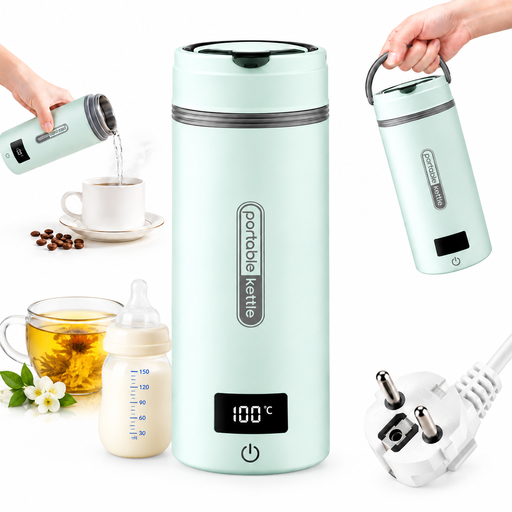 No image available
Its capacity and temperature settings suit making tea for one; you may need more than one brew for a group.
400 ml; four temperature settings; temperature display; stainless steel interior; keep-warm function; EU plug, 220–240 V.
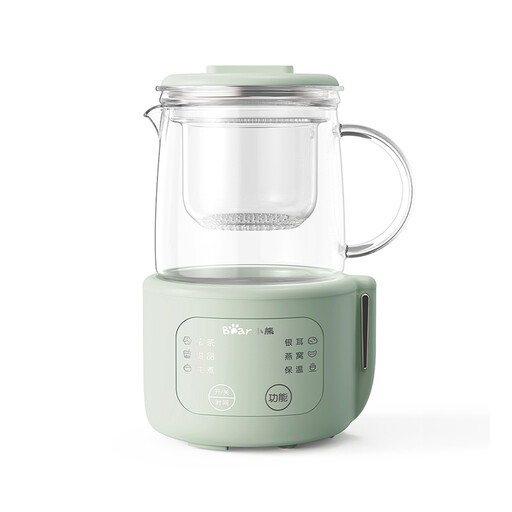 No image available
This compact cup is designed for an individual serving; take care when using the glass filter.
0.4-litre capacity; six functions; touch controls; glass filter; adjustable operating time.
Keep the glass cup and filter away from hard objects.
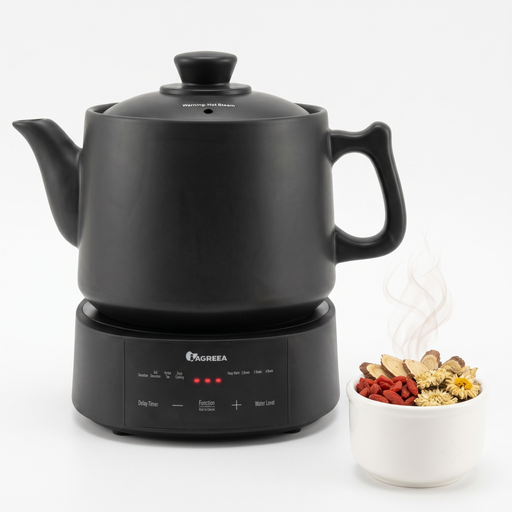 No image available
This model is described as a herbal decoction pot, not a standard kettle. Check the instructions to see if it’s suitable for the way you want to prepare green tea.
4.5-litre capacity; 600 W; programmable controls; four pre-set settings; adjustable water level; keep-warm function.
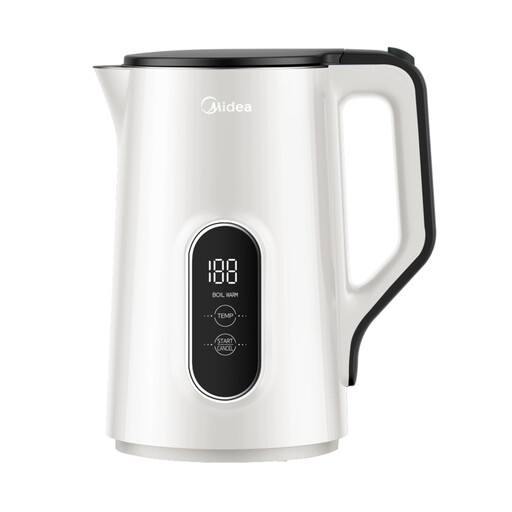 No image available
Its capacity is designed for making several cups at a time; check whether its temperature settings match the tea’s brewing instructions.
1.5-litre capacity; temperature range 45–100 °C; seven temperature settings; digital temperature display; double-walled; keep-warm function; 2200 W.
 No image available
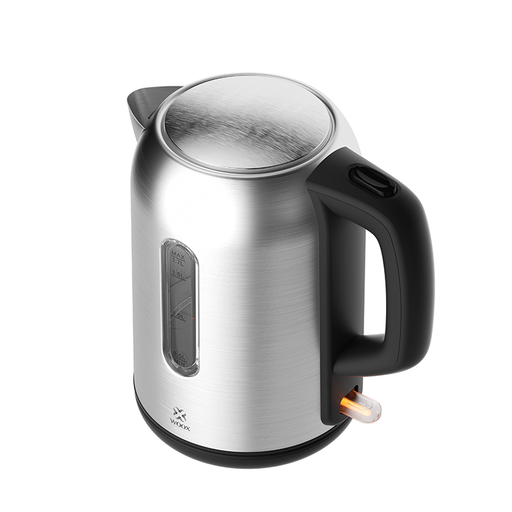
Its capacity may suit making several cups at a time; choose the amount according to how the shared kitchen is used.
1.7-litre capacity; stainless steel; designed for tea and coffee.
No. Simon Lévelt generally recommends 70–85 °C for green tea, but gives 60 °C as the specific brewing temperature for Gyokuro. Follow the instructions for your tea and pay attention to the recommended brewing time too.
Clean the tea basket and accessible parts after use, and descale the appliance according to the instructions for the exact model. Milieu Centraal advises descaling kettles regularly.
Not necessarily. According to Ondernemersplein, consumer law generally applies to private purchases. When a product is sold to a business, consumers don’t have a statutory cooling-off period and different warranty rules apply. Check the terms of sale and warranty before placing a business order.
The Netherlands Food and Consumer Product Safety Authority says electrical products covered by the relevant rules for electrical equipment must carry a CE marking. The low-voltage rules mentioned apply to equipment with a rated AC voltage of 50 V to 1000 V; check whether they apply to the specific appliance. A CE marking is the manufacturer’s declaration that the product meets the applicable requirements; it doesn’t automatically mean that an independent inspection has taken place.