
Vandaag of morgen in huis

Kwaliteit gegarandeerd

Welkomstaanbiedingen ontgrendelen: GRATIS bezorging | Tot 80% korting | Gratis 30 dagen JoyPlus-proefperiode
Download de app
A green tea drink may seem simple to choose, but the range varies considerably. Some bottles and cans contain mostly sugar, while others are completely sugar-free. Fruit drinks and soft drinks are also sometimes displayed alongside green iced tea, even though their ingredients and flavour profiles can differ significantly.
If you only look at the front of the packaging, you could end up buying a product that is not suitable for your everyday needs. Pay particular attention to the sugar content, size, ingredients and how you plan to use the drink.
A fresh colour, the word “green” or an image of tea leaves does not automatically mean that the drink contains a high proportion of tea extract. Check the ingredients list. For example, g'woon Ice Tea Green Lemon lists 0.1% green tea extract. The drink also contains fructose syrup, flavourings, citric acid and steviol glycosides.
A product such as McNulty Green Grape Ade 190 ml is a fruity Asian drink made with white grape juice concentrate and grape flavouring. It is not a classic green tea. That does not make it unsuitable, but it is different from a green iced tea.
Sugar-free green tea often contains sweeteners. According to the product information, Lipton Ice Tea Green Zero contains steviol glycosides from stevia and sucralose, among other ingredients. As a result, the drink contains 0 grams of sugar and 1 kcal per 100 ml, but its flavour may differ from that of a sweetened version.
So do not just compare terms such as “zero”, “low sugar” or “sugar-free”. Check the full ingredients list as well. If you are looking for a sugar-free soft drink, you may also want to consider the acids, flavourings and sweeteners used.
330 ml green tea cans are easy to take with you and quick to chill. However, a tray of 24 takes up more storage space. A 1.5-litre bottle is often more convenient at home, but once opened it should be stored in the fridge according to the product information and consumed within the stated period.
Decide in advance whether you mainly want a drink for the fridge, the office, lunch on the go or as a supply for several people.
Check the nutritional values per 100 ml and, if necessary, calculate them for the full package. A drink containing 2.21 grams of sugar per 100 ml would theoretically contain around 33.15 grams of sugar in a 1.5-litre bottle if the composition remains the same. g'woon Ice Tea Green Lemon lists 41 kJ and 2.21 grams of sugar per 100 ml.
Lipton Ice Tea Green Zero lists 0 grams of sugar per 100 ml. ITO EN Oi-Ocha Green Tea also lists 0 kJ, 0 kcal and 0 grams of sugar per 100 ml. These variants are therefore suitable for consumers specifically looking for sugar-free green tea, without making any health claim.
Green tea can be pure, lightly citrusy or distinctly fruity. Look out for terms such as:
For international products, also check the language on the label, the country of origin and the latest ingredients information. The packaging takes precedence if the online information differs.
For drinking on the go, portions of 190 to 500 ml are easy to manage. At home or in the office, a green tea multipack, a tray of cans or boxes of bottles are more practical. For example, a pack of 24 500 ml bottles provides a generous supply, but takes up more space than a tray of 330 ml cans.
For cans and bottles, check the closure, best-before date and storage instructions. As a rule, unopened drinks should be stored in a cool, dry place away from direct sunlight. Once opened, the packaging will usually need to be kept in the fridge.
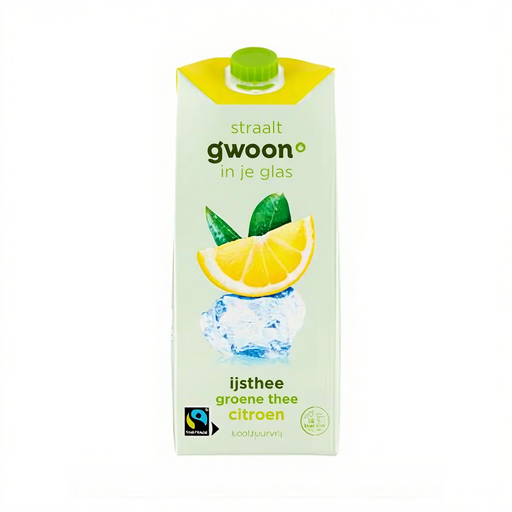
Why it suits this profile: The 1.5-litre bottle is practical for enjoying at home, with a meal or sharing. The lemon flavour makes it an accessible choice for anyone looking for an easy-drinking green iced tea.
The product information lists 0.1% green tea extract and 2.21 grams of sugar per 100 ml. This allows you to compare the drink without relying on its name alone.
1.5 litres; a clear lemon flavour profile; contains steviol glycosides according to the ingredients list.
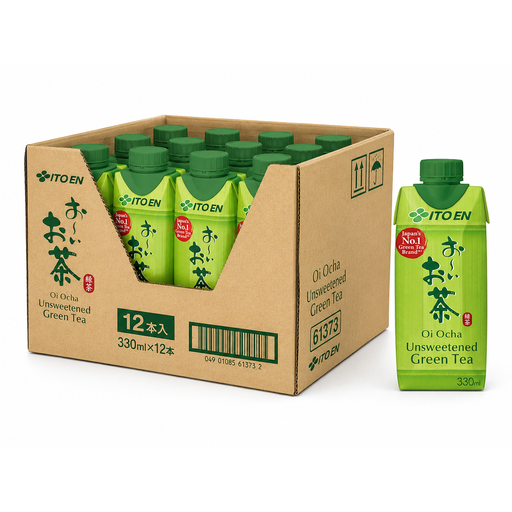
Why it suits this profile: This Japanese ready-to-drink tea focuses on a pure tea flavour with no added sugar. The twelve cans are ideal for use in the office, with lunch or chilled at home.
The nutritional information lists 0 kcal and 0 grams of sugar per 100 ml. This makes the difference from sweetened iced tea immediately clear.
12 x 330 ml; no sugar according to the product information; ingredients including green tea extract.
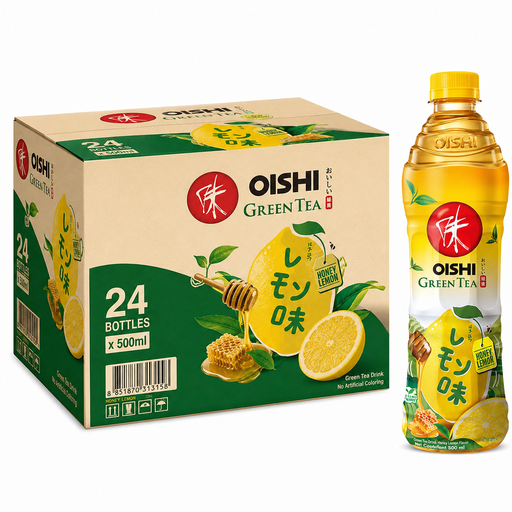
Why it suits this profile: The 500 ml bottle is suitable for everyday use, events and stocking in an office or hospitality setting. The combination of green tea, honey and lemon offers a distinctive flavour profile.
The packaging states that there are 24 bottles of 500 ml and 12 grams of sugar per 100 ml. This makes the total quantity and composition clear in advance.
24 bottles of 500 ml; ready-to-drink; honey and lemon flavour; from Thailand according to the product information.
We have put together a complete, up-to-date list of products that fully meet these strict selection criteria and the applicable European safety regulations.
No. Some varieties contain sugar, fructose syrup or honey. Others are sweetened with sweeteners or contain no sugar at all. Therefore, check the nutritional values per 100 ml and the ingredients list. ITO EN Oi-Ocha lists 0 grams of sugar, while g'woon Ice Tea Green Lemon lists 2.21 grams of sugar per 100 ml.
For drinking on the go, portions of 250 to 500 ml are usually practical. 330 ml green tea cans are suitable if you want a fixed portion and do not want to store an opened bottle. A 1.5-litre bottle is better suited to use at home or for several people. For an office, event or large household, a green tea multipack containing 12 or 24 units may be more convenient.
Store unopened ready-to-drink tea according to the label, usually in a cool, dry place away from direct sunlight. Once opened, the drink will generally need to be refrigerated and consumed within the stated period. Always check the packaging for the best-before date, ingredients, allergen information and storage instructions.
