
Fans of leafy green juice
You want to make juice from ingredients such as spinach or kale regularly and are looking for an appliance suited to the job.


If you often want to make juice from leafy greens, a slow juicer is the more obvious choice: the Dutch Consumers’ Association describes this type as better suited to leafy greens than a centrifugal juicer. A compact centrifugal juicer is a better fit if speed and firm, juicy ingredients are your priorities. A blender makes a smoothie, rather than juice with the pulp separated. For any appliance, measure its height and the clearance needed to use it, and factor in preparation and cleaning time.
You want to make juice from ingredients such as spinach or kale regularly and are looking for an appliance suited to the job.
You have limited space for the appliance and its separate parts. Its dimensions and how easy it is to clean will help determine whether a juicer fits into your routine.
You mainly want to make juice quickly from firm, juicy ingredients and are happy to accept that a centrifugal juicer is less suited to leafy greens.
Choose this if: you regularly want to juice leafy greens and have limited worktop space.
Trade-off: a slow juicer generally takes more time and preparation than a centrifugal juicer.
Choose this if: speed matters and you mainly use firm, juicy fruit and vegetables.
Trade-off: according to the Dutch Consumers’ Association, a centrifugal juicer is less suited to leafy greens.
Choose this if: you want a green smoothie and prefer to blend the whole ingredient rather than separate the pulp from the juice.
Trade-off: a smoothie is not the same kind of product as juice.
| What to consider | What should you check? | Who is this important for? |
|---|---|---|
| Processing leafy greens | Check the manual for the exact model to see which leafy greens it can handle and how to feed them in. The Dutch Consumers’ Association says slow juicers are better suited to leafy greens than centrifugal juicers. | If I mainly want to make juice from spinach or kale, the appliance needs to suit those ingredients. Consumers who prioritise leafy greens make up around 33%. |
| Fitting and storage | Measure the available width, depth and height, as well as the space needed to feed ingredients in. Hurom gives the H310A dimensions as 16 × 17,2 × 39,5 cm; also check the clearance above it. | If my worktop is small, there also needs to be room to operate the appliance and store its separate parts. Consumers who prioritise available space make up around 33%. |
| Preparation and cleaning | Check which parts can be removed and how they need to be cleaned. Hurom says the H310A has three parts to wash; Philips lists a QuickClean sieve for the HR1832/00. | If I want to use the appliance often, chopping and washing up need to fit into my daily routine. Consumers who prioritise easy clean-up make up around 20%. |
| Speed and routine | Compare preparation and cleaning for the ingredients you usually use. Don’t choose a centrifugal juicer based on its feed chute alone: that doesn’t prove the model handles leafy greens well. | If I mainly want to make juice quickly from firm, juicy ingredients, speed matters more than versatility with leafy greens. Consumers who prioritise speed and a quick routine make up around 14%. |
In the research cited, the Dutch Consumers’ Association reports no general advantage over centrifugal juicers for the vitamins and minerals mentioned. With both juicing methods, much of the fibre remains in the pulp.
Choose a juicing method based on your ingredients and how easy it is to use. If you want to use the whole ingredient, consider a blender too, and keep eating vegetables.
A narrow appliance may be too tall to fit beneath a wall cabinet or leave too little room to feed ingredients in.
Measure the width, depth and height of the space, and allow for the room you need to operate the appliance.
A larger opening doesn’t, by itself, show how well a centrifugal juicer handles leafy greens; the Dutch Consumers’ Association describes this type of appliance as less suited to them.
Let the ingredients you usually use guide your choice, and check the instructions for the exact model.
The H310A is a specific compact slow juicer to consider if you want to make juice from leafy greens.
The Viva HR1832/00 is a compact centrifugal juicer, designed for those who value speed and easy storage.
The REVO830 is a slow juicer option where it’s important to compare the version and the terms that come with it.
The PurEase SJ3100BK is a centrifugal juicer to compare if you’re looking for a wide feed chute and an anti-drip system.
This selection includes slow juicers for making juice from leafy greens, plus a mini blender as an alternative for smoothies. A blender doesn’t make juice with the pulp separated.
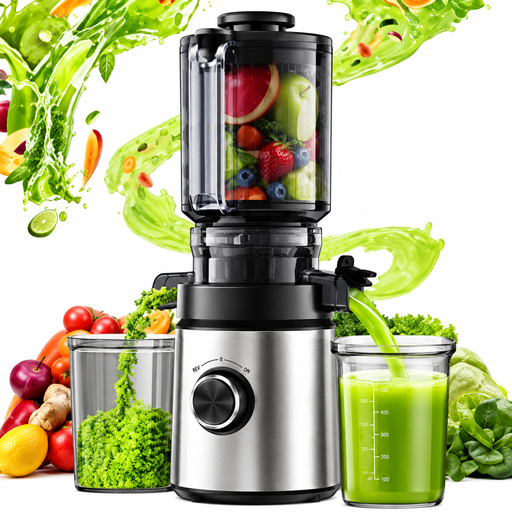 No image available
This slow juicer is suited to anyone who wants to make juice from leafy greens; check that its dimensions and operation work in your kitchen.
The product title lists 2 l, a 130 mm XL feed chute and 2 glasses.
 No image available
This slow juicer is a good fit for anyone who wants to make juice from leafy greens; also bear the user instructions in mind when choosing.
The product title lists 150 W. According to the instructions, cut fibrous vegetables such as celery and parsley into 3–4 cm pieces. Use the appliance for no more than 10 minutes at a time, then let it rest for 20 minutes. Thaw frozen ingredients first; do not process ice cubes.
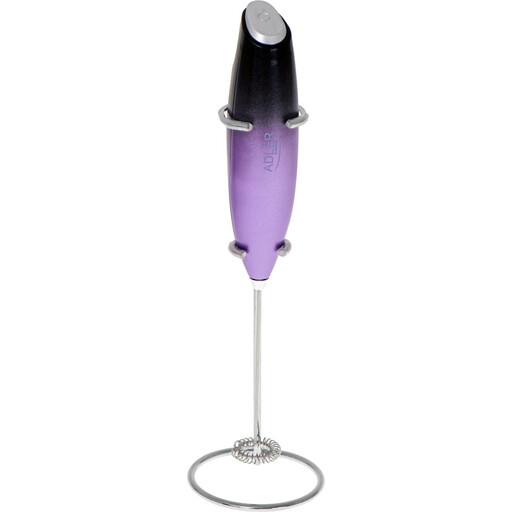 No image available
If by green you mean a smoothie rather than juice, this mini blender is an alternative worth considering.
The product title mentions a travel cup and a purple finish. A smoothie is not the same kind of product as juice with the pulp separated.
No. According to the Netherlands Nutrition Centre, vegetable juice does not count towards the recommended daily amount of vegetables. Juicing also leaves much of the fibre behind in the pulp.
Measure the clearance above the appliance too, and follow the manual for the exact model when assembling, adding ingredients and cleaning it. Hurom lists the H310A as 39,5 cm tall; also leave room to add ingredients.
In the Netherlands, the retailer is responsible under the statutory guarantee if a product does not meet what you could reasonably expect from it. These rights are separate from any limited manufacturer’s warranty. If the statutory conditions apply, the retailer must resolve the problem free of charge.
The Netherlands Food and Consumer Product Safety Authority (NVWA) says CE marking is mandatory for electrical products. Check the product and safety information for the specific offer; CE marking is not an independent performance test of the juicer.
No, there are exceptions. According to ACM ConsuWijzer, online purchases usually come with a 14-day cooling-off period after delivery; check the specific retailer’s returns policy before ordering.