Who is a juicer for green family breakfasts suitable for?

A family that eats plenty of leafy greens

Wants to juice spinach or other leafy greens and is comparing the juicing method, preparation and cleaning requirements. The Consumentenbond lists leafy greens as an ingredient that a slow juicer may be suitable for.

A family making several servings

Wants to prepare several glasses in the morning and is paying close attention to the feed chute and juice jug. Manufacturers provide different information about these features for their models, such as Hurom for the feed chute and Bosch for the juice container.

A family short on time in the morning

Prioritises quick processing and easy cleaning, but also wants to check that the appliance suits the ingredients. The Consumentenbond describes a centrifugal juicer as generally faster; how easy it is to clean varies by model.

What should you look for when choosing?

Slow juicer

Choose this option: if you mainly want to juice leafy greens and are happy to spend more time on preparation and washing up.

The trade-off: the Consumentenbond describes slow juicers as generally slower and often more expensive than centrifugal juicers. A large feed chute does not tell you how much juice the jug can hold.

Centrifugal juicer

Choose this option: if speed matters and you mainly use firm fruit and vegetables.

The trade-off: according to the Consumentenbond, centrifugal juicers are generally less suitable for leafy greens and are often noisier.

Blender

Choose this option: if a thicker green smoothie is just as appealing as clear, freshly pressed juice.

The trade-off: a blender processes the whole ingredient, but according to the Consumentenbond and Voedingscentrum, smoothies are no substitute for eating fruit and vegetables either.

What to consider What should you check? Who is this most relevant to?
Processing leafy greens Check which ingredients the exact model can handle and how much chopping is needed. The Consumentenbond lists leafy greens as an important consideration when choosing a slow juicer. If I mainly want to juice spinach or other leafy greens, I look at the juicing method and preparation required. Around 36% of consumers put suitability for leafy greens first.
Making several servings Compare the feed chute and juice jug capacities separately with the number of glasses you want to make; they are different capacities. If I’m making juice for several family members, I want to know how much produce I can feed in and how much juice the jug can hold. Around 29% of consumers prioritise making several servings.
Preparation and cleaning time Check how many parts you need to clean and follow the instructions for the sieve, other parts and dishwasher. If I’m short on time in the morning, I want both processing and washing up to be practical. Around 21% of consumers put saving time in the morning first.
Fibre and juice Decide whether you want pressed juice or a smoothie, and plan to include whole fruit and vegetables separately at breakfast. If I mainly want to retain fibre, I consider a smoothie instead of pressed juice. Around 14% of consumers prioritise fibre retention.

Common buying mistakes

  • Confusing a large feed chute with a high juice yield

    The feed chute and juice jug measure different things. Hurom lists a 2-litre feed chute for the H400; Bosch lists a 1000 ml juice container for the MESM731M. Neither capacity tells you how much juice you’ll get from a batch of ingredients.

    Compare the feed chute, juice jug and quantity of ingredients separately with the servings you want to make.

  • Choosing a slow juicer based on general claims about vitamins or yield

    The Consumentenbond explains that a slow juicer does not automatically produce more nutrients or juice than a centrifugal juicer; the result also depends on the appliance.

    Choose based on your ingredients and ease of use. Assess yield claims for the exact model and allow for extra preparation and cleaning.

  • Seeing juice as a substitute for fruit, vegetables or water

    According to the Consumentenbond, a lot of fibre-rich pulp is left behind when juicing. Voedingscentrum recommends eating fruit and vegetables rather than drinking them, and suggests water as a thirst-quencher for children.

    Keep whole fruit and vegetables on the breakfast menu, and offer children water as their main drink.

Brands to compare

Bosch

The MESM731M is a slow juicer with a stated juice container capacity of 1000 ml.

  • Bosch lists dishwasher-safe parts and adjustable juice thickness. Check the manual to see which parts are suitable.
  • The container capacity is not the same as the measured juice yield.

Hurom

According to Hurom, the H400 is a slow juicer with a 2-litre feed chute.

  • The feed chute and integrated pulp container may be useful if you’re processing larger batches.
  • The feed chute capacity is not the same as juice yield. Hurom’s claims about nutrient retention are manufacturer claims; the Consumentenbond has found no general vitamin advantage for slow juicers.

Philips

The HR1922/21 is a centrifugal juicer with a choice of juice textures.

  • Philips lists FiberBoost and claims up to 50% more fibre in the thicker setting.
  • This is a Philips claim and does not mean the juice contains as much fibre as a smoothie or the whole ingredient.

Kuvings

According to Kuvings, the AUTO10S is a slow juicer with a 3000 cc feed chute.

  • The stated feed chute capacity may be useful when processing larger batches of ingredients.
  • The feed chute capacity does not tell you how much juice the machine makes. Kuvings lists separate warranty periods for the motor and other parts; check the terms and dimensions.

Braun

The J700 is a centrifugal juicer with a large feed opening.

  • Braun lists a power rating of 1000 W and parts that are dishwasher-safe according to the instructions.
  • Check the manual to see which parts can go in the dishwasher.

Joybuy products for juice and smoothies

The products below include slow juicers for pressed juice and blenders for anyone considering a smoothie as an alternative. A blender does not make pressed juice.
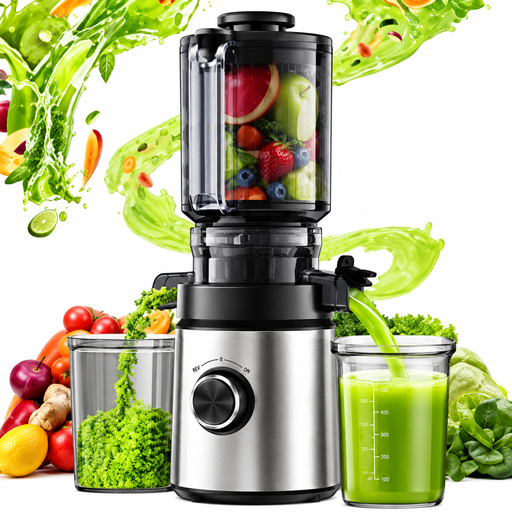
Slow juicer for fruit and vegetables with an XL feed opening

Slow juicer for fruit and vegetables, 2 l, 130 mm opening

A slow juicer to consider if you want to juice fruit and vegetables; check the instructions for the exact model to make sure it suits your ingredients.

The product title lists 2 l, a 130 mm opening and two glasses. Check what the 2 l capacity refers to; it is not a stated juice yield.

Joybuy
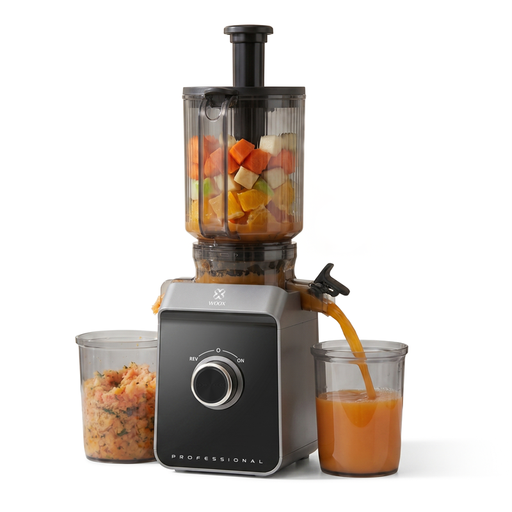
WOOX MX0289 slow juicer

WOOX MX0289 slow juicer, 150 W

A slow juicer may suit you if you want to process leafy greens; follow the model instructions for ingredients and preparation.

The product description lists a 600 ml juice cup and an 836 ml pulp cup. According to the instructions, continuous use is limited to 10 minutes, followed by a 20-minute rest; cut fibrous vegetables into 3–4 cm pieces.

Joybuy
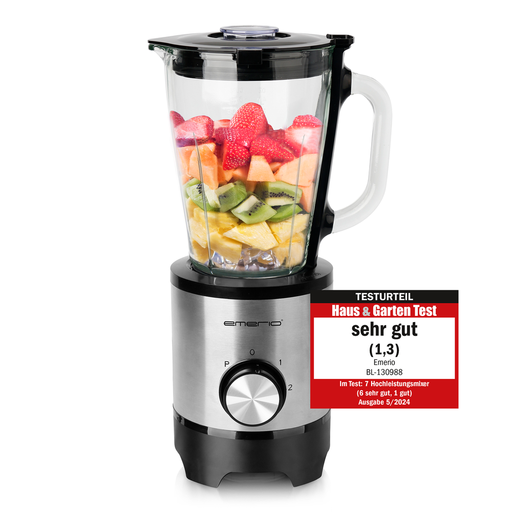
Emerio BL-130988 blender with glass jug

Emerio BL-130988 blender with glass jug, 1.5 l

An option if you’d rather make a thicker smoothie than clear, pressed juice.

The description lists a 1.5 l glass jug, two speeds, a pulse function and an ice-crushing function. According to the description, the jug is dishwasher-safe.

Joybuy
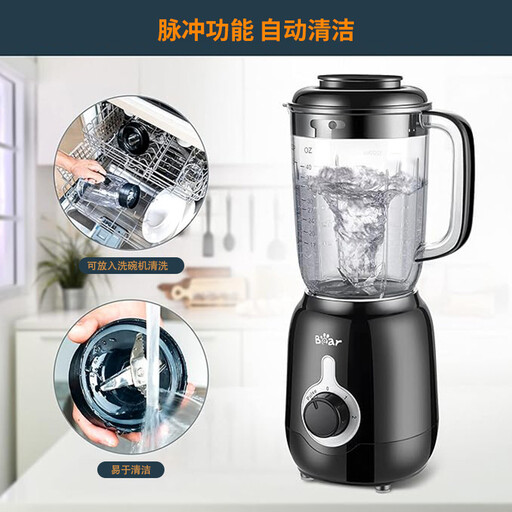
Bear Table Blender LLJ-B12K1

Bear Table Blender LLJ-B12K1, 1.2L

This blender is designed for smoothies, not pressed juice; consider it if a smoothie would suit your breakfast.

The product title lists 500W, two speeds, a pulse function and four stainless steel blades. The jug has a capacity of 1.2 l.

Joybuy
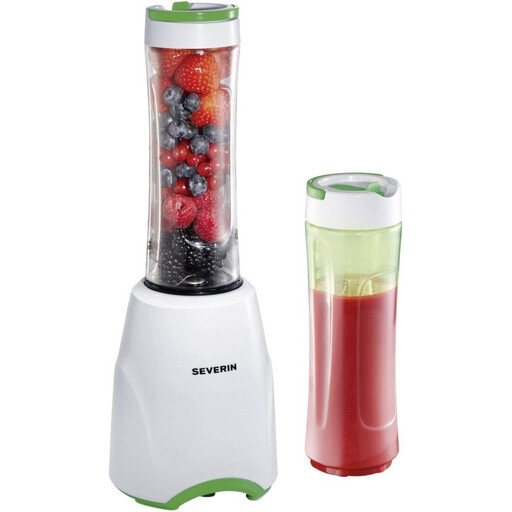
Severin SM 3735 smoothie maker

Severin SM 3735 Smoothie Mix & Go

A smoothie maker to consider if you want to take a smoothie with you instead of pressed juice.

The product description lists a power rating of 300 W and two removable drinking cups. According to the description, the parts are dishwasher-safe.

Joybuy

Frequently asked questions

Do you need a slow juicer for green juice?

Not necessarily: the ingredients you use most often are what matter. A slow juicer is generally more suitable for lots of leafy greens; a centrifugal juicer may be a good fit if you mainly want to process firm fruit and vegetables quickly, according to the Consumentenbond.

Is green juice a suitable everyday drink for children?

Voedingscentrum recommends water as a thirst-quencher for children aged 4 to 12, and says to offer juice no more than once a week if you do give it to them. This is dietary advice, not a legal usage limit for a juicer.

How should I prepare fruit and vegetables for a juicer?

Wash fruit and vegetables under running water before preparing them, even if you’re going to peel them afterwards. Don’t use soap or bleach, and follow the appliance instructions for chopping and suitable ingredients. Voedingscentrum advises handling pre-packed, pre-washed vegetables according to the packaging.

Does an electric juicer need a CE mark?

A CE mark is required if the appliance falls under the Dutch Commodities Act Decree on Electrical Equipment. The NVWA specifies the applicable limits as 50–1000 V nominal AC voltage or 75–1500 V nominal DC voltage. Check whether those rules apply to the appliance in question; the mark is a declaration by the manufacturer and is not, in itself, an independent practical test.

Does a large feed chute mean I can make lots of juice at once?

No, the feed chute does not tell you how much juice the jug can hold or how much juice you’ll get from the ingredients. Compare the feed chute capacity, juice jug and servings separately. For example, Hurom lists a 2-litre feed chute for the H400, while Bosch specifies a 1000 ml juice container for the MESM731M.
