Brands as a point of reference
These brands illustrate different juicing methods and model specifications. Their inclusion doesn’t indicate that they’re available from Joybuy.
Hurom
Slow juicers for those who want to juice leafy greens; the H310A is a compact model that the manufacturer describes as suitable for limited worktop space.
- Hurom lists dimensions of 16 × 17,2 × 39,5 cm and three parts to wash for the H310A.
- These details don’t prove that the model is quieter or quicker to clean than other juicers.
Panasonic
The MJ-L700 is a slow juicer with a stated 75 mm feed chute.
- Panasonic lists airborne noise of 63 dB(A) for this model.
- Check the specified operating cycle and assess the noise in the room where you plan to use it; the stated figure alone doesn’t predict how loud the appliance will sound there.
Braun
The J 500 BK is a centrifugal juicer for those who prioritise speed when juicing harder ingredients.
- Braun lists a 900 W motor, a large feed chute and an anti-drip system for this model.
- The speed claim comes from the manufacturer. The Consumentenbond says centrifugal juicers, as a type, are less suited to leafy greens.
Philips
The HR1870/70 is a centrifugal juicer with an inverted sieve and QuickClean technology, according to Philips.
- The cleaning features described may help you assess the design and cleaning instructions.
- The easy-clean claim comes from Philips; there’s no measured cleaning time or evidence that this model is suitable for leafy greens.
Joybuy products
This Joybuy selection includes slow juicers and a centrifugal juicer for making juice. If you mainly want to juice leafy greens, consider whether the type you choose is suitable.
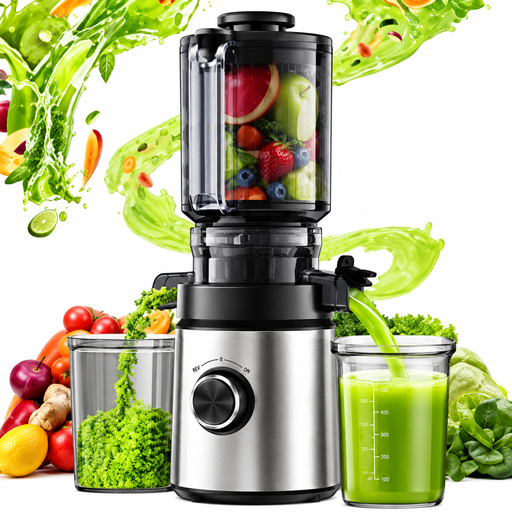 Image unavailable
Slow juicer for fruit and vegetables, 2 l, 130 mm XL feed chute, with 2 glasses
A slow juicer is worth considering for green juice; the stated XL feed chute may reduce the amount of chopping needed.
The product name lists a 2 l capacity, a 130 mm feed chute and 2 glasses.
View at Joybuy
 Image unavailable
WOOX MX0289 Slow Juicer, 150W
A slow juicer is worth considering if you want to make green juice with leafy greens; check the model instructions against your recipes.
The usage information limits continuous operation to 10 minutes, followed by a 20-minute rest, and excludes commercial use. Check that these conditions suit the intended use in your office.
View at Joybuy
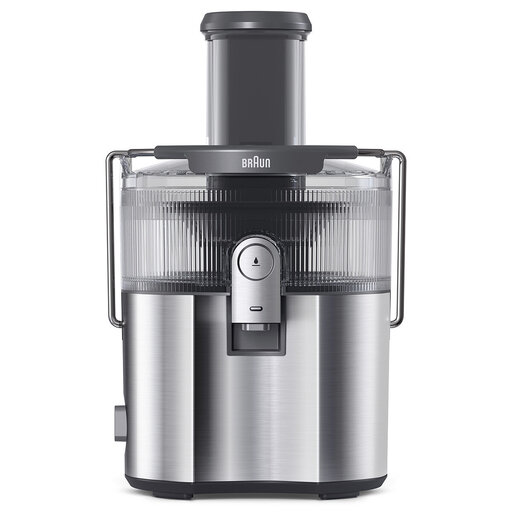 Image unavailable
Braun MultiJuice 7 Spin SJ7000 Juicer
This centrifugal juicer is a better fit for those who prioritise juicing harder ingredients than for those who mainly want to juice leafy greens.
According to the Consumentenbond, centrifugal juicers, as a type, are less suited to leafy greens.
View at Joybuy
Frequently asked questions
Is a slow juicer always more nutritious than a centrifugal juicer for green juice?
No. The type of juicer alone doesn’t prove that juice is more nutritious. The Consumentenbond says a slow juicer doesn’t automatically produce more juice and doesn’t identify any general increase in the levels of the vitamins and minerals discussed. Voedingscentrum recommends eating fruit and vegetables rather than drinking them; juice also doesn’t contain the whole vegetable.
How do you use a shared juicer hygienically?
Wash your hands before preparing food, rinse raw fruit and vegetables under running water, and clean any kitchen utensils you use. Voedingscentrum also recommends cleaning chopping boards and kitchen utensils thoroughly. In a shared kitchen, agree who will take the juicer apart and clean it after each use, and follow the model’s instructions.
What should you look for when it comes to the guarantee and spare parts?
Check which parts can be replaced and what guarantee conditions apply. According to ACM ConsuWijzer, statutory consumer rights apply alongside the seller’s guarantee when you buy as a consumer; if a product is faulty, the seller is responsible for providing an appropriate solution. If you’re buying on behalf of a business, check the business terms separately.
Does a shared office need to register with the NVWA to make green juice?
Sharing an appliance in an office doesn’t in itself mean that registration is required. The NVWA says that a business which sells food several times a year must register and have a food safety plan. If the office sells juice to consumers or prepares it as a food business, assess that activity separately against the relevant NVWA rules.


