
Vandaag of morgen in huis

Kwaliteit gegarandeerd

Welkomstaanbiedingen ontgrendelen: GRATIS bezorging | Tot 80% korting | Gratis 30 dagen JoyPlus-proefperiode
Download de app
A green bag can look attractive, but colour says little about carrying comfort, rain protection or usable space. If you focus only on appearance or a low price, you may find after a few weeks that the bag is too small, awkward to open or does not provide enough support.
Pay particular attention to these common pitfalls:
For an everyday bag, capacity is more important than the external dimensions alone. A compact green crossbody bag of around 1 to 4 litres is suitable for a phone, wallet, keys and small accessories. Work, shopping or a walk often requires more space.
A green backpack of 4 to 10 litres is suitable for light everyday items. A model of 10 litres or more provides space for documents, clothing or additional essentials. If you are travelling, you could choose a foldable travel bag with variable capacity. As well as the number of litres, consider:
A bag with lots of pockets is not automatically more practical. Pockets that are too small can actually limit what you can take with you.
Nylon and synthetic fabrics are often used for a lightweight bag. Check whether the product information describes it as water-repellent, splash-resistant or waterproof. In practice, these terms indicate different levels of protection.
A water-repellent bag may be suitable for light rain or splashes, but valuables will not stay dry in all conditions. A drawstring, covered zip or internal pocket can provide additional protection. When walking or cycling intensively, it is sensible to keep electronics in a separate waterproof pouch.
Also follow the care instructions. For several models in this selection, it is recommended that you clean the surface with a damp cloth, allow it to air-dry and avoid machine washing, harsh products and prolonged exposure to heat.
A shoulder bag distributes weight differently from a backpack. For short distances, a green shoulder bag or crossbody model is often sufficient. A green bum bag is useful when you want to keep your hands free while walking, cycling or running.
For commuting or longer walks, two shoulder straps can distribute pressure more evenly. Check whether the straps are adjustable and whether the size suits your build. For sports use, a secure fastening, quick access and a stable fit are more important than a large main compartment.
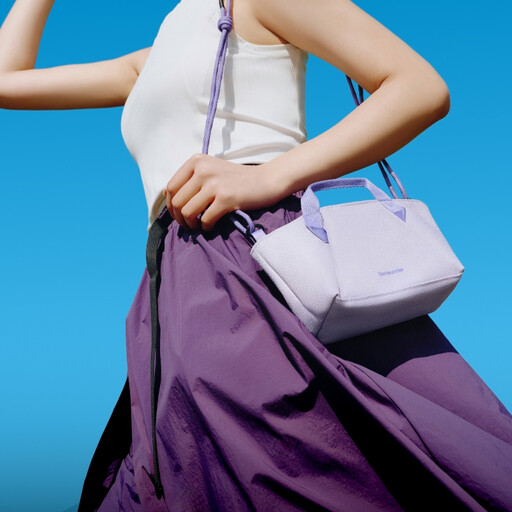
Why it suits this profile: This compact bag is ideal if you mainly want to carry your everyday essentials. According to the product specifications, the capacity can be adjusted from 1.2 to 3.6 litres.
The standard and expanded capacities are clearly stated. This makes it easier to match the space to your needs than with a bag that does not specify its capacity.
98 grams, washable according to the stated care instructions, and made from a material that, according to the product information, is resistant to oil, stains and water.
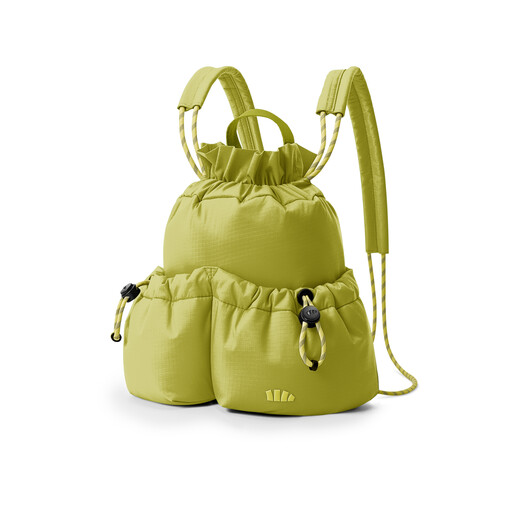
Why it suits this profile: This mini backpack combines a compact shape with four storage compartments. It is well suited to commuting, shopping and light outdoor activities.
The 4.4-litre capacity and internal organisation are clearly specified. The bag is described as water-repellent, not as guaranteed waterproof.
Compact size, stated weight of 4.73 oz and several internal and external pockets for organised storage.

Why it suits this profile: With a regular capacity of 10 litres and 13 litres when expanded, this model is designed for commuting, short trips and walks with varying amounts of luggage.
The expansion is specified as 30% additional capacity. The manufacturer states that it is resistant to wind, rain and stains; during prolonged rain, always check that your belongings are adequately protected.
Lightweight at 8.3 oz, expandable capacity and double shoulder straps according to the product description.
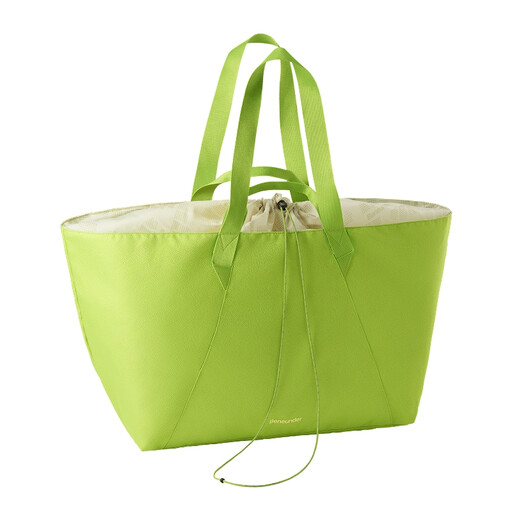
Why it suits this profile: This large, foldable travel bag is designed for long journeys, moving house or carrying bulky items when a compact bag is not spacious enough.
The regular capacity of 75 litres and expandable capacity of up to 140 litres are listed separately. This allows you to match the bag to the amount of luggage you are carrying.
Approximately 398 grams, foldable design and carrying options for hand or backpack-style use according to the product specifications.
We have put together a complete, up-to-date list of products that fully meet these strict selection criteria and the applicable European safety regulations.
Not every green bag needs to be a backpack. For the gym, swimming or a short training session, a green sports bag or drawstring bag may be sufficient. A model with a zipped pocket keeps keys and cards separate from clothing.
For running and cycling, a green bum bag is practical. Pay attention to the waist size, adjustability and fastening. A model with reflective details can help improve visibility in low-light conditions, but it does not replace lights or other road-safety measures.
A larger backpack is better suited to walking and travel, particularly when you are carrying water, an extra layer of clothing and snacks. Look at the shoulder straps, back panel and weight distribution. A bag with an expandable main compartment is useful if you buy additional items on the way, but avoid overloading it.
Yes, provided its size matches what you carry every day. A crossbody bag of 1 to 4 litres is often enough for a phone, wallet and keys. For lunch, documents or clothing, a backpack of around 10 litres is more practical.
Always follow the product’s care instructions. Nylon and synthetic fabrics can often be cleaned with a damp cloth. Allow the bag to air-dry and avoid machine washing, harsh cleaning products and prolonged exposure to heat unless these are specifically permitted.
Its lifespan depends on the material, seams, fastenings, load and care. A lightweight bag may be suitable for everyday use, but a bag that is consistently filled beyond its stated capacity will wear out more quickly. Before ordering, check the carrying method, capacity and any maximum load.
