
Vandaag of morgen in huis

Kwaliteit gegarandeerd

Welkomstaanbiedingen ontgrendelen: GRATIS bezorging | Tot 80% korting | Gratis 30 dagen JoyPlus-proefperiode
Download de app
A green backpack may look spacious and sturdy in a product photo, but some details can quickly disappoint in everyday use. A bag that is too small may not fit a laptop or sportswear, an awkward layout can make keys difficult to find, and “waterproof” may sometimes only mean that the outer fabric repels light splashes.
That is why it is wise to look beyond colour and price before buying. Pay particular attention to capacity, how the bag is carried, the material and the way it closes. Below, you will find the key points to consider, along with some popular options for different uses.
A bag’s shape can be deceptive. A compact bag with a wide base may sometimes look large, while in practice there is little room for a lunch box, water bottle or tablet. So check the stated capacity in litres and compare it with what you carry every day.
As a general guide:
A compact backpack is therefore not necessarily suitable as a travel backpack. Check the capacity in both its standard and expanded configurations.
Terms such as “waterproof”, “anti-splash” and “water-repellent” are not always used consistently. A water-repellent backpack may help keep out light rain or splashes, but that does not automatically mean that the seams, zips and inner compartments will stay dry for an extended period.
Therefore, check:
The Beneunder models in this overview are described as having water-repellent or protective fabric. That can be useful in changeable weather, but do not treat this information as a guarantee of complete protection during a prolonged downpour.
A lightweight backpack is comfortable when cycling, walking or travelling every day, but the actual weight varies considerably from one model to another. Also consider the construction. A bag with reinforced panels may be heavier, but could offer better shape retention.
Always compare:
A unisex backpack with adjustable straps can be worn by several users, but the fit is still a personal matter. Check the dimensions and strap length before ordering.
For commuting, a layout with a main compartment, a smaller zipped pocket and quick access to your phone or keys is useful. If you carry a laptop or documents, check whether there is a separate protective compartment for them. A bag with lots of pockets is not automatically well organised; their position and size determine whether you can store your belongings conveniently.
Do not rely solely on descriptions that mention “comfortable shoulder straps”. Check whether the straps are adjustable and whether the weight is distributed across both shoulders. A mini backpack with a single sliding shoulder strap offers a different carrying experience from a traditional backpack with two straps.
For sports and cycling, a bum bag or sling bag may be more practical than a backpack. A drawstring sports bag is easy to store, but generally offers less protection and structure.
Synthetic fabrics such as nylon are often lightweight and easy to clean with a damp cloth. According to the product description, some models should not be put in the washing machine. This is important if you use the bag frequently for sports, walking or commuting.
Also look out for:
The product information below is based on the listed specifications. Claims about protection or carrying comfort are not presented as universal results.
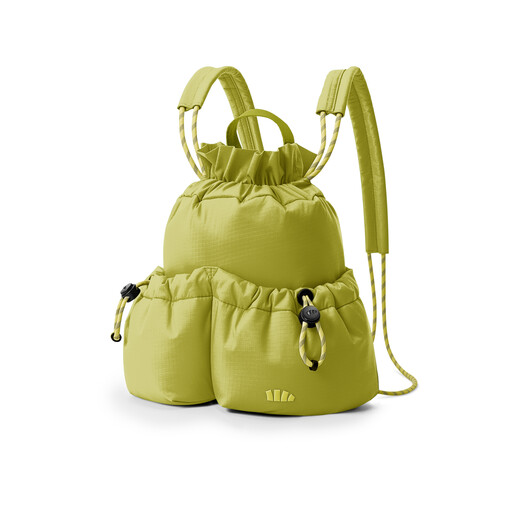
Why it suits this profile: With a 4.4-litre capacity and a listed weight of 4.73 oz, this is a compact option for everyday essentials, shopping or a short walk.
The capacity and dimensions are clearly stated, so you can judge in advance whether the bag is large enough. The product description mentions a layout with four compartments.
4.4 L capacity, lightweight design, water-repellent synthetic fabric according to the product description, and an adjustable sliding shoulder strap.

Why it suits this profile: This green backpack is designed for work, school and travel where the amount you carry varies from day to day.
The standard capacity is 10 L and, according to the specifications, can be expanded to 13 L. This means you do not always have to travel with a larger bag.
10–13 L capacity, weight of 8.3 oz, nylon fabric and double shoulder straps. The description mentions resistance to wind, rain and stains.
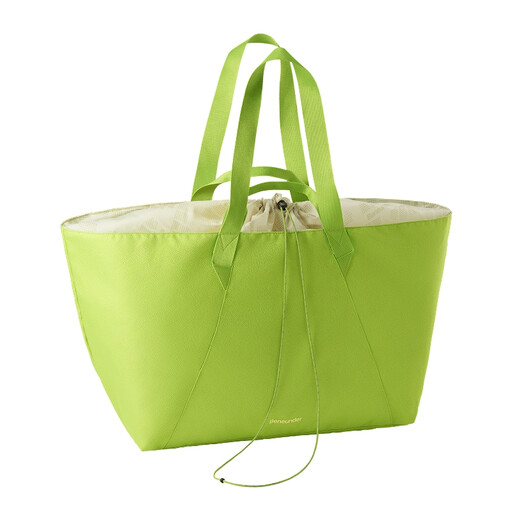
Why it suits this profile: The combination of a foldable bag, large expandable capacity and several carrying options makes it suitable for moving house, long journeys and transporting bulky items.
The specifications list both a standard capacity of 75 L and an expanded capacity of 140 L. The weight of approximately 398 grams is also stated.
Foldable design, expansion to 140 L, hand-carry and backpack options and, according to the product information, a carrying capacity of up to 50 kg.
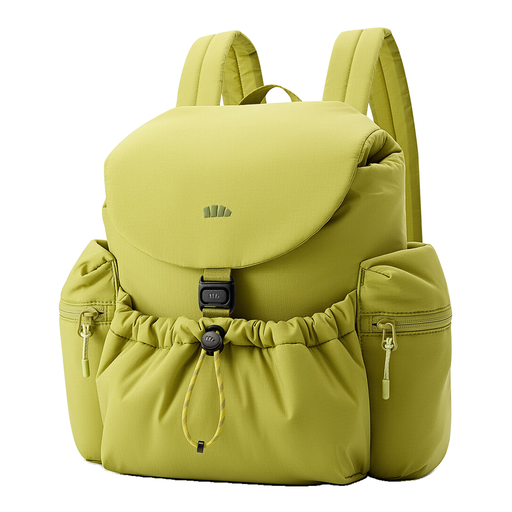
Why it suits this profile: The 10-litre bag offers more space than a mini model without the bulk of a large travel backpack. This makes it useful for commuting, shopping and light outdoor activities.
The product description gives a capacity of 10 L, seven storage compartments and a zipped pocket for privacy-sensitive items. This makes it easy to assess the layout in advance.
Weight of 8.78 oz, four internal and external compartments, drawstring closure and, according to the description, level 4 water-repellent fabric.
We have compiled a complete, up-to-date list of products that fully meet these strict selection criteria and the applicable European safety regulations.
A backpack is not necessary for every situation. A green bag with a handle may be suitable for a smart outfit or an evening out. According to the product information, the JW PEI Abacus Top Handle Bag measures 29 × 25 × 9 cm, has a fixed handle and a vegan leather exterior. For sports, a drawstring backpack may be sufficient. If you only carry your phone, cards and keys, you could also choose a bum bag or compact crossbody bag.
For these alternatives, pay attention to the same points: fastening, size, adjustability, material and protection against rain. For running or cycling, reflective details and a secure fit are practical features, while for travel, foldability and capacity are the main considerations.
For everyday belongings, around 8 to 15 litres is often a useful starting point. If you carry a laptop, lunch and an extra layer of clothing, check the dimensions of the main compartment rather than looking only at the number of litres.
A water-repellent backpack may help keep out light rain and splashes. For prolonged or heavy rain, additional protection is advisable, such as a rain cover or waterproof packaging for electronics. Always check the exact product description.
Follow the manufacturer’s care instructions. For the models mentioned, cleaning with a damp cloth and drying in the shade is generally recommended. Avoid machine washing, harsh cleaning products and prolonged exposure to direct sunlight if this is advised against in the product information.
