For indexing grave inscriptions, a 27-inch QHD monitor is an option if you mainly want to view a photo alongside data-entry fields. A 27-inch 4K monitor gives you more screen pixels for viewing photo details, but cannot restore information that isn’t in the original photo. Choose USB-C only if the video connection and charging power are compatible with your laptop, and treat creating and checking local backups as a separate process.
Who is this monitor for?
Reader deciphering hard-to-see inscriptions
You enlarge original photos to check letters and numbers. Pay attention to resolution and text legibility, but don’t expect a screen to add details that aren’t in the image. Historic England also describes methods for capturing surface details.
Indexer doing lots of data entry
You keep photos and data-entry fields open side by side for long periods. So consider the available workspace, stand adjustments and connection to your laptop. Arboportaal outlines separate requirements for certain types of screen-based work.
Manager of a local photo collection
You work with original photos and local copies. Keep your choice of monitor and ports separate from setting up and checking backups, as also emphasised by Veilig Internetten and Netwerk Digitaal Erfgoed.
What should you look for when choosing?
First decide whether you mainly want to view photos alongside data-entry fields or examine small details in photos. Then check that the connections are compatible, and arrange backups separately from your monitor.
These considerations can help consumers viewing photos of grave inscriptions and entering index data decide what matters most to them.
| Consideration |
What to look for |
Who is this most important for? |
| Assessing photo detail |
Compare the stated resolution with how much you usually enlarge photos and how legible the interface is at your preferred scaling. |
When checking weathered letters, I want to examine small characters clearly without expecting the screen to fill in missing image information; around 33% of consumers prioritise photo detail. |
| Viewing a photo and index side by side |
Check whether your photo and data-entry windows are both legible at your chosen text size. |
I want to read the photo and data side by side while entering information; around 27% of consumers give data entry top priority. |
| Connections and backups |
Check video output through your laptop’s connection, the charging power you need and the available data ports. Also make sure you have a separate copy that you can find again. |
I want to connect devices easily while managing local copies, but also be able to store and find those files separately; around 20% of consumers put this first. |
| Working posture |
Check the stand’s adjustment options and assess how the setup will fit in your workspace. |
During long data-entry sessions, I want to position the screen comfortably; around 20% of consumers prioritise their working posture. |
Common pitfalls
-
Confusing a USB hub with a backup solution
A monitor hub can connect devices, but it won’t store your photos and index as a separate, verified copy.
Plan your backup separately from your choice of screen, and keep track of where your files are and how to find them again.
Allow for separate storage in your workflow, as well as time to make and check copies.
-
Expecting extra screen pixels to fix a poor-quality original photo
A higher screen resolution won’t add details that weren’t captured in the photo.
Compare QHD and 4K using your own photos. If an inscription is still hard to see, consider the way it was photographed or lit as well.
-
Treating colour claims as proof of more accurate transcription
Colour specifications describe colour reproduction, not how easily you can read letters in a photo.
Give specialist colour features more weight if you’ll actually be assessing or editing photos for colour.
Relevant monitor brands to consider
Philips
The 27E1N5600AE/00 is a QHD option for data entry, while the 27E1N1800AE/00 is a separate 4K model.
- Philips lists USB-C on the 27E1N5600AE/00 for video, data and power for a compatible device.
- Philips lists a height-adjustable stand for the 27E1N1800AE/00. These features belong to different models.
Dell
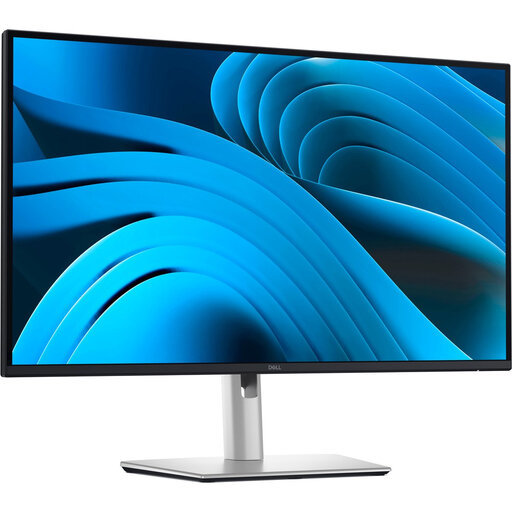
The P2725QE is a 27-inch 4K USB-C hub monitor for a laptop workstation.
- Dell specifies a resolution of 3840 × 2160 pixels and USB-C power delivery of up to 90 W for this model.
- Dell lists an eye comfort certification; this doesn’t prove that it will reduce discomfort for every user.
BenQ
The PD2705U is a 27-inch 4K model to compare if you use a colour workflow as well as transcribing inscriptions.
- BenQ lists 99% sRGB, 99% Rec.709 and a Delta E of no more than 3 for this model.
- These are manufacturer specifications, not an independent measurement of an individual unit. Colour accuracy also isn’t the same as being able to read photo details that aren’t there.
EIZO
The ColorEdge CS2740 is a 4K wide-gamut model for anyone who also does targeted photo editing.
- EIZO lists a 26.9-inch IPS panel, a resolution of 3840 × 2160 pixels and 164 ppi for this model.
- These features alone don’t show that wide gamut is necessary for text indexing only.
ASUS
The ProArt PA279CRV is a 27-inch 4K model to consider if you’re looking for wide colour reproduction and USB-C power delivery.
- ASUS lists 99% DCI-P3, 99% Adobe RGB, factory calibration and USB-C power delivery of up to 96 W for the PA279CRV.
- These are manufacturer claims, not independent performance measurements; they don’t automatically make this model better suited to transcribing inscriptions.
Monitors at Joybuy
These monitors are intended for viewing inscription photos and entering index data. None of them replaces a separate backup.
 No image available
Philips 27E1N1800AE/00 27-inch 4K UHD monitor
An option if you want to view photos and data-entry details on a 4K screen and adjust the stand.
27 inches; 3840 × 2160 pixels; 60 Hz; 4 ms; HDMI and DisplayPort; height-adjustable stand.
View at Joybuy
 No image available
INNOCN CB27U1 27-inch 4K UHD monitor
An option if you want to view photo details and connect a laptop via USB-C.
27 inches; 3840 × 2160 pixels; 120 Hz; USB-C with 90 W Power Delivery; HDMI and DisplayPort; adjustable stand.
View at Joybuy
 No image available
Dell Pro Plus P3225QE 31.5-inch 4K monitor
An option if you want a larger 4K screen for viewing photos alongside data-entry details.
31.5 inches; 3840 × 2160 pixels; USB-C with 90 W Power Delivery; RJ45; adjustable stand.
View at Joybuy
 No image available
Dell Pro Plus P2725DE 27-inch QHD monitor
An option if you’re looking for a QHD screen to view photos alongside data-entry fields.
27 inches; 2560 × 1440 pixels; USB-C with 90 W Power Delivery; RJ45; adjustable design.
View at Joybuy
 No image available
ASUS ProArt PA278CV 27-inch QHD monitor
An option if you want to pair a QHD screen with USB-C for a laptop workstation.
27 inches; 2560 × 1440 pixels; USB-C with 65 W Power Delivery; HDMI and DisplayPort; height and tilt adjustment.
View at Joybuy
Frequently asked questions
Does a monitor with a USB hub automatically create a local backup?
No, a hub doesn’t create a separate backup by itself. Make a copy of your photos and index files, and check where those files are stored; Veilig Internetten lists an external drive as one possible backup location.
Can 4K help if an inscription in a photo is unreadable?
A 4K screen has more display pixels than QHD, but it can’t show details that are missing from the original file. The way a photo was taken may also matter for hard-to-see surface details; Historic England describes a method using photos taken under different lighting conditions.
What happens if a monitor develops a fault in the Netherlands?
According to Rijksoverheid, when you buy as a consumer you’re entitled to a product that works properly, and the retailer is your point of contact if there’s a problem. The Netherlands doesn’t have a fixed statutory warranty period of exactly two years; the assessment depends in part on what you could reasonably expect from the product.
Is an online index of grave inscriptions always outside the scope of the GDPR?
No, not automatically. According to the Autoriteit Persoonsgegevens, information relating solely to deceased people isn’t personal data under the GDPR, but information may also say something about living people. Identifiable living people in photos and the publication of those photos therefore require an assessment of the applicable privacy requirements.
What workplace rule applies if you spend more than two hours a day working at a screen?
According to Arboportaal, for employees who do more than two hours of screen-based work a day, the screen and keyboard must not be attached to each other. This rule applies to this particular work context and doesn’t, by itself, mean that every buyer needs a height-adjustable monitor.


