
Scan retoucher with limited desk space
You edit scans on an existing monitor and want to use a pen for local corrections without keeping an extra screen on your desk. Adobe lists removing dust from scanned photos as one use for retouching software.


If you use a computer with an existing monitor, a compact graphics tablet without a screen is a sensible place to start. You can keep the image on your monitor without adding another display to your desk. Compare the tablet’s overall dimensions with its active area, and check the connection and software compatibility. Choose a pen display if you’d rather work directly on the image beneath the pen and have room for one.
You edit scans on an existing monitor and want to use a pen for local corrections without keeping an extra screen on your desk. Adobe lists removing dust from scanned photos as one use for retouching software.
You regularly make small corrections, so you compare the active area, shortcut keys and connection options. Manufacturers such as XPPen and Huion list different working areas and control options for each model.
You want to work on the image beneath the pen and can make room for a pen display. The XPPen Artist 10 (2nd Gen) is an example of a model with a built-in screen.
Best for: editing scans on an existing computer and monitor, using a pen for local corrections.
Bear in mind: you look at the monitor rather than the pen tip, and a smaller working area may leave less room for longer pen strokes.
Best for: repeated retouching where customisable buttons or a wireless connection are important.
Bear in mind: features vary by version. Check what’s included and whether your computer supports the connection you need.
Best for: working directly on the image when you have room for an extra display.
Bear in mind: check the desk space required and the connections available on the version you choose.
| What to consider | What to look for | Who is this important for? |
|---|---|---|
| Local corrections | Check that the tablet works with your computer and editing software. Adobe describes removing dust from scanned photos as a local software edit. | If you mainly want to remove small specks of dust from scans, look for pen control that suits the way you work; around 40% of consumers prioritise targeted corrections. |
| Space and working area | Measure the available space and compare both the overall dimensions and active area of the same model. | If you have a small desk and want to fit the tablet alongside your other things, its footprint matters; around 30% of consumers give saving desk space top priority. |
| Controls and connectivity | Compare customisable buttons, connections and operating system support for each model. | For repeated retouching, you’ll want to control commands quickly and use a suitable connection; around 20% of consumers prioritise working speed and controls. |
| Working directly on the image | Decide whether you want to look at your existing monitor or work directly on the display beneath the pen, then check the connections. | If you prefer to work directly on the image and have room for an extra screen, a pen display could suit you; around 10% of consumers prioritise working directly on the image. |
The tablet itself takes up more space than the area you draw on. Huion lists the H640P’s working area separately as 160 × 100 mm and its overall dimensions as 260 × 147.7 mm.
Measure the space available and compare both dimensions for the exact model.
Pressure levels are a pen specification; on their own, they don’t tell you how well dust will be removed from a scan. Adobe describes dust removal as a local software edit.
For this kind of work, look for a workflow that suits you, a manageable working area and compatibility with your software.
Bundle contents can vary. For example, Xencelabs says the Quick Keys module is included only with the Medium Bundle and is sold separately with other versions.
Check the contents of the exact version before relying on extra controls.
The Wacom One S is a graphics tablet without a screen. Its Dutch product page mentions Bluetooth and photo editing.
The Deco mini4 is a small graphics tablet without a screen, while the Artist 10 (2nd Gen) is a model with a screen.
The H420X is a very compact model, while the H640P has a larger stated working area.
The Pen Tablet Small is a screen-free option for comparing pen control and wireless use.
This selection includes graphics tablets and tablets with a pen for pen control when retouching scans. Check whether each model suits working on your existing monitor or directly on a screen.
 No image available
A graphics tablet for pen control when editing photos. Check that the connection and software work with your computer before buying.
 No image available
A compact graphics tablet to consider for pen control during retouching. Check the connections and software support for your computer.
 No image available
A small graphics tablet for pen control at your desk. Check which connection and included accessories come with this version.
 No image available
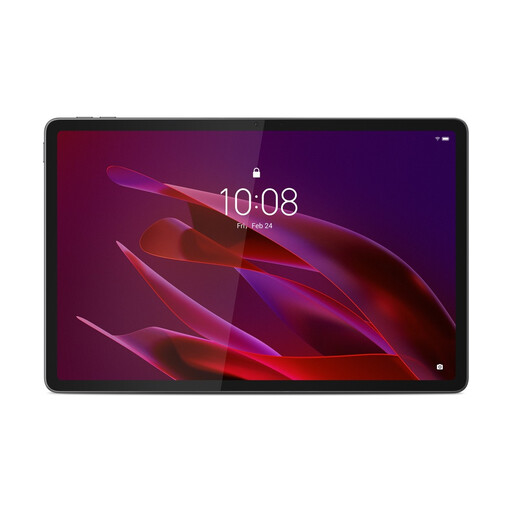
A tablet with an included pen for anyone who wants pen control on a screen. Check that the editing software you need works on the device.
The product name lists an 11.1" touchscreen, 3.2K resolution and a Tab Pen Pro.
 No image available
A tablet with an included pen for drawing, sketching or annotating. Check that it’s compatible with the editing software you use.
The product name lists a 12.1-inch 2.5K screen, 8GB RAM, 256GB storage and a pen.
No, not necessarily. With a graphics tablet without a screen, you see the result on your computer monitor. A pen display lets you work directly on the image. Choose based on how you work and the desk space you have, rather than assuming a screen will remove dust more effectively.
For Photoshop on desktop, Adobe describes using a new blank layer with ‘Sample All Layers’ for local corrections with the Spot Healing Brush. This is a software workflow, not a feature of the tablet itself.
For the exact model, check which operating systems it supports, whether you have a suitable USB port or Bluetooth, and what accessories are included. For example, Huion lists Micro-USB for the H640P, while the Dutch product page for the Wacom One S mentions Bluetooth.
According to ACM ConsuWijzer, online consumer purchases generally come with a cooling-off period of up to 14 days after delivery, subject to legal exceptions. If a product becomes faulty too soon under normal use, you also have a statutory guarantee from the seller. This is not simply fixed at two years for every product.
The Dutch government states that electronic devices placed on the market in the EU must carry a CE marking. Check the information for the specific version and seller; a general brand or product page does not confirm the marking on every item offered for sale.